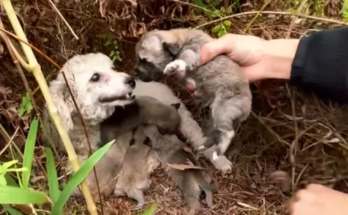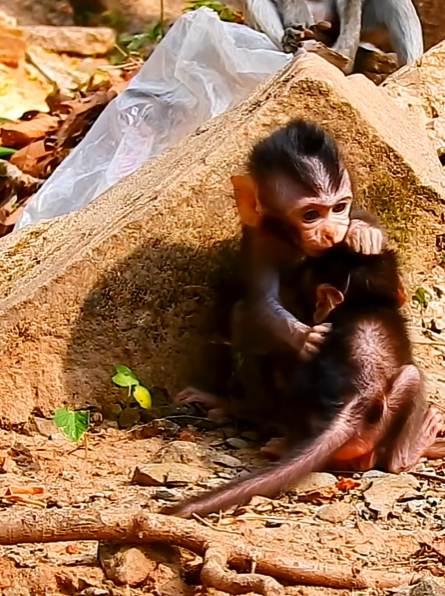
The forest is alive with chatter, movement, and curiosity, and nowhere is that more evident than among the youngest members of a monkey troop. Baby monkeys are full of energy, excitement, and curiosity—but sometimes, when one baby monkey spots another, instead of greeting or playing, they act aggressively and seem to want to fight. This behavior may seem surprising or even confusing to human observers, but in the world of monkeys, it is deeply rooted in social development, learning, and survival instincts.
Early Lessons in Social Hierarchy
Monkeys live in highly structured social groups, or troops, where each member has a place in a hierarchy. Even at a very young age, baby monkeys are learning the rules of this social structure. When one baby monkey encounters another, especially one from a different part of the troop or a new arrival, aggression can be a way to test boundaries.
These small skirmishes are rarely about real harm. Instead, they are a way for the young monkeys to figure out:
- Who is more assertive
- Which behaviors are accepted or rejected by the group
- How to establish temporary social positions
In essence, a little fight is a natural part of learning the unwritten rules of monkey society.
Territorial Instincts
Even baby monkeys can display territorial behavior. While they are small and depend on adults for protection, they still develop preferences for space, feeding spots, and favorite branches. When two babies meet and their personal “spaces” overlap, their instinct may be to defend that area, leading to a playful—or sometimes serious—confrontation.
Territorial behavior helps monkeys prepare for adulthood, when competition for resources like food and resting spots becomes more significant. By practicing these behaviors early, babies learn how to assert themselves without endangering the troop’s harmony.
Testing Strength and Confidence
Fighting, or mock fighting, is a way for baby monkeys to test their own strength and capabilities. They are learning how their bodies work—how to grip, leap, swing, and push without causing injury. These early contests build confidence in movement and coordination, which are crucial skills for survival in the forest.
For example, a baby monkey that hesitates in a confrontation may become more cautious in later interactions, whereas a monkey that successfully asserts itself may gain confidence in exploration and play.
Play and Aggression Are Closely Linked
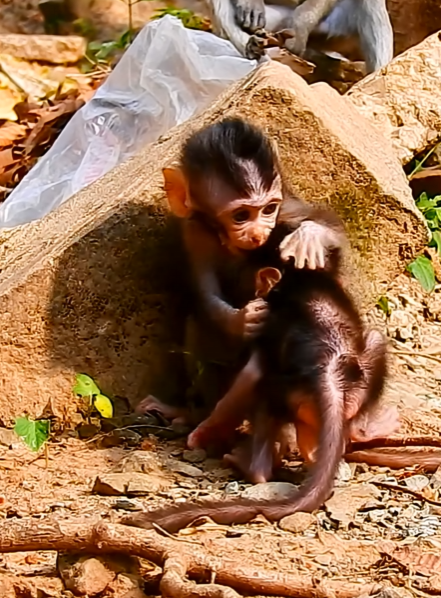
What may appear to be aggression is often play disguised as conflict. Baby monkeys are naturally curious and energetic. When two babies meet, they might engage in chasing, tugging, or mock hitting. To human eyes, it looks like a fight—but to the monkeys, it is a way of practicing social and physical skills.
Through these interactions, they learn:
- Bite inhibition
- How much force they can use safely
- How to read signals from other monkeys
- When to stop to avoid real injury
This combination of play and controlled aggression ensures that baby monkeys develop important social skills before they face adult challenges.
Attention and Resources
Another reason baby monkeys “fight” is competition for attention or resources. Babies crave attention from their mothers and other adult caretakers. When one baby approaches another, it may inadvertently compete for space near a favored adult, a desirable branch, or a food source.
A scuffle in this context is not unusual. It is a form of communication—a way to signal: “I want to be noticed too,” or “That spot is mine for now.” These early confrontations teach babies how to negotiate access to resources without resorting to extreme aggression.
Sibling Rivalry in Monkey Families
In families where multiple babies are born around the same time, rivalry can be particularly strong. Even when adults are nearby, baby monkeys may see each other as competitors. Sibling rivalry is natural and helps the troop maintain balance, teaching each baby how to assert itself while respecting older or more dominant members.
Sometimes, what looks like a fight between two babies is simply testing who will get the mother’s attention first. These interactions are brief and usually end without serious injury, but they leave important lessons about patience, timing, and social signals.
Communication Through Body Language
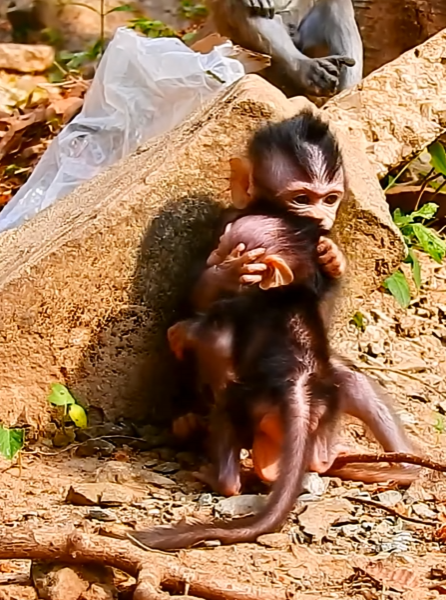
Monkeys are masters of non-verbal communication. Baby monkeys communicate with expressions, posture, tail movements, and vocalizations. A perceived “fight” often begins with a warning signal: a stare, a squeak, or a stiff posture. The other baby reacts—either backing down, responding similarly, or engaging in play.
By observing these signals, babies learn how to interpret the moods and intentions of others. Understanding when another monkey is serious, playful, or submissive is crucial for social survival.
Why Fights Rarely Escalate
Even though baby monkeys seem aggressive at times, serious harm is rare. Adults closely supervise, and the troop’s social structure discourages prolonged or dangerous conflict. Fights are usually:
- Short in duration
- Energetic but controlled
- A way to establish temporary social cues
These interactions are rehearsals for later life. By the time they reach adolescence, monkeys have learned how to compete without jeopardizing the troop’s cohesion.
Learning Through Mistakes
Baby monkeys also learn from their mistakes. If a “fight” goes too far, an adult might intervene with a loud call or a physical gesture. This teaches boundaries and appropriate behavior. Over time, the babies internalize these lessons and adjust their interactions.
Interestingly, some baby monkeys are naturally more assertive, while others are more cautious. These personalities affect how often they engage in mock fights and how they navigate social life as they grow.
Emotional Growth
Aggression in baby monkeys is also tied to emotional development. These interactions teach impulse control, empathy, and frustration management. For example:
- A baby that tries to dominate another learns patience when resisted.
- A baby that gets pushed back learns resilience.
- Observing fights teaches babies to predict and respond to social tension.
These early emotional lessons are critical for building confidence, social intelligence, and long-term survival skills.
Conclusion: Understanding Monkey Behavior
So why does one baby monkey want to fight when it sees another? It is rarely about cruelty or malice. Instead, it is a combination of:
- Testing social hierarchy
- Practicing physical skills
- Exploring territory
- Seeking attention and resources
- Learning emotional regulation and communication
In the wild, these small skirmishes are essential. They prepare the baby monkeys for the complex social environment of their troop, where strength, wit, and awareness determine survival.
Life Lessons for Humans
Watching baby monkeys interact can also offer lessons for humans. Conflict, competition, and play often coexist in our own social lives. Just as baby monkeys learn to communicate, negotiate, and respect boundaries, humans can take inspiration from these natural behaviors. Aggression, when controlled and guided, becomes a tool for learning and growth—both socially and emotionally.
Final Thoughts
The next time you see baby monkeys appear to fight, remember this: they are learning, growing, and testing the world around them. Every squeak, leap, and playful scuffle is a building block for their future. What looks chaotic to human eyes is actually a carefully choreographed dance of survival, curiosity, and social development.
In the world of monkeys, even tiny conflicts are not just fights—they are lessons in life, growth, and the intricate art of living in a community.