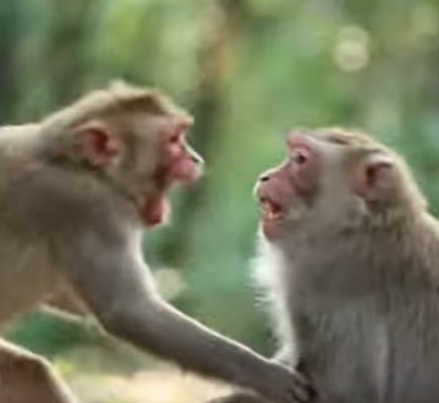
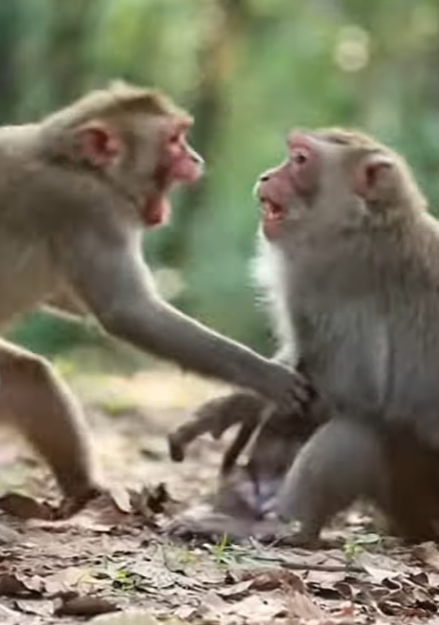
In the dense green canopies of tropical forests, life among monkeys is full of complexity, emotion, and intricate social dynamics. Among the many fascinating behaviors of these highly intelligent primates, one stands out for both its curiosity and its implications: why mother monkeys sometimes mistake each other’s babies. This phenomenon, while surprising to human observers, is rooted in biology, social structure, and survival instincts, offering a glimpse into the sophisticated world of primate behavior.
To understand this behavior, it is first important to appreciate the environment in which monkeys live. Monkey troops are typically large social units, consisting of multiple adult females, a few adult males, and numerous infants and juveniles. Life in the troop is dynamic and fast-paced. Mothers must constantly balance vigilance, foraging, and protection of their offspring while maintaining social bonds with other members. Within this bustling environment, infants are highly dependent on their mothers but also constantly moving, vocalizing, and interacting with their peers.
Mistaking another mother’s baby can occur for several reasons, ranging from the limitations of recognition to the pressures of social dynamics. In many monkey species, infants share similar physical characteristics: size, fur color, facial features, and even vocalizations. Particularly in species where newborns are small and fragile, babies may appear almost identical at first glance. A mother relying solely on visual cues may momentarily confuse an unfamiliar infant with her own, especially in the chaos of a crowded troop.
Scent plays a crucial role in infant recognition, but even this is not foolproof. Newborn monkeys emit unique odors that help mothers identify their babies. However, in dense groups, these scents can mingle or be masked by the presence of other infants, environmental smells, or the mother’s own physiological state. For example, if a mother has recently been grooming multiple infants, her olfactory senses may be temporarily overwhelmed, increasing the likelihood of misidentification. Similarly, if she is exhausted, hungry, or stressed, her attention to sensory cues may decrease, making her more prone to momentarily confusing one infant for another.
Vocalizations add another layer to this complex system. Infant monkeys often emit high-pitched cries to signal hunger, discomfort, or the need for attention. These calls can be remarkably similar across babies in the same troop. A mother who hears a cry may instinctively respond, moving toward the source without immediately confirming that the baby is hers. The initial response is often protective and nurturing—a necessary adaptation in a social environment where slow reactions could put infants at risk. Only after closer inspection does she typically realize her mistake.
Another factor contributing to maternal confusion is the presence of allomothers—other females who assist in caring for infants that are not their own. In many monkey species, it is common for mothers to allow other females to hold, groom, or temporarily carry their babies. This cooperative childcare has survival benefits: it allows the mother to forage, reduces stress, and strengthens social bonds within the troop. However, the practice can also blur the lines of recognition. Infants may be held by multiple females, creating opportunities for momentary misidentification when a mother encounters a baby in close proximity to others.
Social hierarchy also plays a role. In some species, higher-ranking females may assert influence over access to infants, food, or prime resting locations. Subordinate mothers may allow higher-ranking females to handle their babies temporarily, either voluntarily or under subtle social pressure. This fluidity in caregiving can lead to confusion, especially in large or crowded groups where mothers cannot constantly monitor their infants. Even well-attentive mothers can momentarily mistake another infant for her own in the midst of these complex interactions.
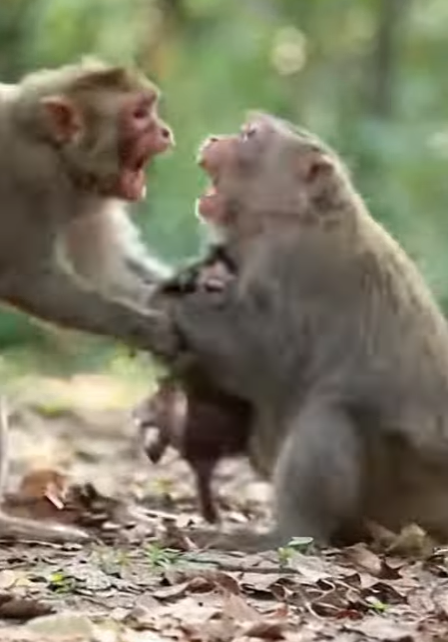
Mistaken identity can sometimes lead to interesting and even humorous interactions. Observers have noted instances in which a mother monkey attempts to nurse or groom another baby, only to realize her error and quickly redirect her attention to her own infant. In other cases, two mothers may approach the same infant, each believing it is hers, leading to a brief standoff until recognition is established. While these situations may appear chaotic, they are actually a testament to the adaptability and intelligence of monkeys. Mistakes are rare, but when they occur, the mothers respond quickly to correct them, demonstrating a high degree of social awareness and emotional sensitivity.
The evolutionary explanation for occasional maternal confusion is linked to the balance between vigilance and adaptability. Mothers are under constant pressure to protect and nurture their infants in a dynamic environment full of predators, rivals, and environmental hazards. Rapid, instinctive responses to cries or movements are often more adaptive than slow, deliberate verification. From an evolutionary perspective, the occasional misidentification is less costly than delayed reactions that might endanger the infant. In other words, it is better for a mother to momentarily care for the wrong infant than to fail to respond quickly to her own baby’s needs.
Mistaken maternal care also illustrates the importance of flexibility in social learning. Infant monkeys are constantly learning about their environment, social hierarchy, and survival skills. Being temporarily handled by a non-mother can teach the infant important lessons in trust, social cues, and adaptability. While mothers generally reclaim their infants quickly, these brief interactions with other caregivers may enhance the infant’s social competence, preparing them for interactions with peers and adults as they grow.
However, there are limits to maternal confusion. Mothers typically have strong instincts to protect and recognize their own offspring. If the infant is genuinely threatened or if confusion persists, corrective actions—such as vocal protests, physical retrieval, or defensive gestures—ensure that the mother maintains custody and care. This balance between flexibility and instinctual accuracy allows mothers to navigate the social complexity of the troop while safeguarding the well-being of their own young.
Research on primate behavior has shown that maternal misidentification is more common under certain conditions. For example, in large troops with many infants, where visual and olfactory cues are more easily mixed, mistakes occur more frequently. Similarly, during periods of stress, such as after predator sightings, food scarcity, or social tension, mothers may be more prone to momentary confusion. These findings underscore the interplay between environmental pressures, social structure, and maternal cognition in shaping behavior.
Mistaken identity also highlights the cognitive abilities of monkeys. Mothers must constantly monitor multiple sensory inputs—visual, auditory, olfactory—while tracking their infant’s location, the position of other troop members, and potential threats. Errors, while seemingly accidental, occur within a system of remarkable complexity. When a mother corrects her mistake, she demonstrates rapid assessment, decision-making, and social negotiation skills, all of which are essential for the survival of both herself and her infant.
Interestingly, humans can draw lessons from this behavior. The occasional confusion among monkeys reminds us that caregiving, even with the best intentions, is a complex and sometimes imperfect process. Just as a mother monkey may momentarily mistake another infant, human parents and caregivers occasionally misinterpret cues, overreact, or misjudge situations. Observing how monkeys respond—correcting mistakes calmly, using social cues, and maintaining vigilance—can inspire approaches to patience, observation, and responsiveness in human parenting.
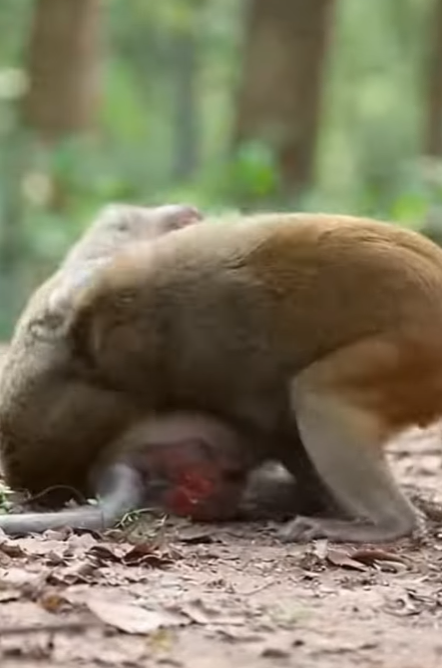
Another fascinating dimension of maternal confusion involves adoption or alloparenting. In some cases, a mother may adopt an orphaned or abandoned infant, caring for it as though it were her own. While this is not the same as a momentary misidentification, it illustrates the flexibility and emotional depth of monkey maternal instincts. The ability to extend care beyond one’s biological offspring may have evolutionary advantages, fostering cooperation and strengthening social bonds within the troop. Even when mistaken identity occurs, it demonstrates the primacy of care and nurturing over rigid exclusivity.
Observation of these behaviors also provides insight into the emotional lives of monkeys. Maternal care is not purely instinctual; it is deeply emotional. Mothers show attachment, protectiveness, and empathy. Mistaken identity can lead to confusion, stress, or even gentle frustration, but it also underscores the investment mothers make in their offspring. The emotional intelligence required to navigate these situations—recognizing cues, responding appropriately, and correcting mistakes—speaks to the sophisticated cognitive and social abilities of primates.
In conclusion, the question of why mother monkeys sometimes mistake each other’s babies is a window into the complexity of primate life. Factors such as physical similarity among infants, overlapping scents, high social density, allomothering practices, and environmental pressures all contribute to momentary misidentification. These occurrences, though rare, reflect the delicate balance between vigilance and flexibility, instinct and learning, protection and social cooperation. Mothers respond quickly, correcting errors and maintaining the well-being of their own infants while also allowing brief interactions that can be beneficial for social learning.
The phenomenon is a testament to the intelligence, adaptability, and emotional depth of monkeys. It reminds us that even in the animal kingdom, caregiving is complex, nuanced, and occasionally imperfect. Mistaken identity is not a flaw but a natural outcome of the challenges inherent in raising young in a dynamic social and environmental context. Through observation, correction, and social learning, monkeys ensure the survival and development of the next generation while maintaining the cohesion and harmony of the troop.
Next time you see a mother monkey with her infant, or observe interactions among juveniles in the wild, consider the subtle dynamics at play. What may seem like a mistake at first glance—one mother momentarily holding or responding to another’s baby—is actually part of a sophisticated system of care, learning, and social navigation. It reflects the beauty and complexity of primate life, a world where instinct, intelligence, and emotion converge to shape the survival of the troop and the growth of its youngest members.