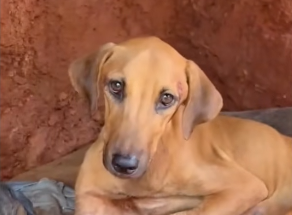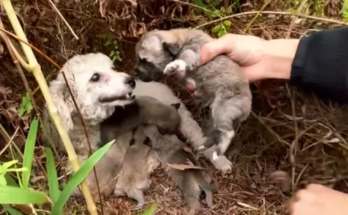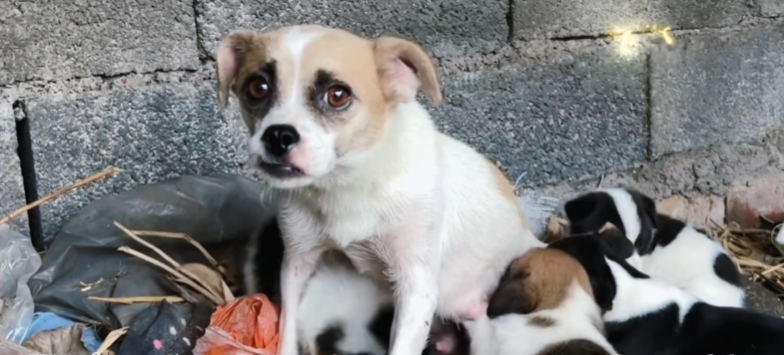
It was a cold, rainy evening when we first heard about her. Reports had come in from the neighborhood: a stray dog, a mother, living near the abandoned warehouse on the edge of town, carrying the weight of her world on her own. She was said to be protective, alert, and fiercely wary of humans. She had a litter of puppies, and the locals had noticed that she had been struggling for days—or maybe weeks—trying to keep them alive in a world that had already shown her very little kindness.
We had been on countless rescue calls before, but something about her story stayed with me. Perhaps it was the sense of vulnerability, or perhaps it was the way she had managed to survive so long under impossible conditions. Either way, when we finally arrived at the warehouse, we were not prepared for what we were about to witness.
The First Glimpse
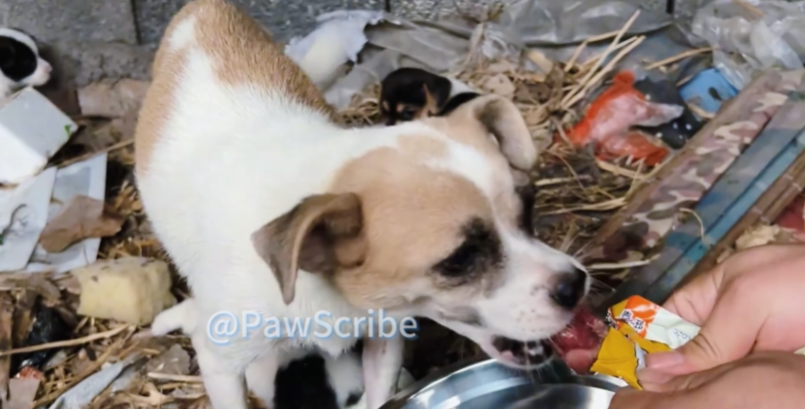
The rain had softened to a drizzle by the time we approached the makeshift den she had created under a rusted metal overhang. Her puppies were huddled close, tiny bodies pressed together for warmth, their soft whimpers barely audible over the sound of dripping water.
At first, she didn’t move. She was lying down, her body curled protectively around them, her eyes sharp and calculating, taking in every movement we made. We had encountered wary mothers before, but something in her gaze told us that she had survived this long by trusting no one. She had no leash, no collar, no name, no one to rely on—except herself.
We slowly stepped back, careful not to frighten her. Our plan was simple: assess the situation, gauge her behavior, and then strategize the rescue. But the moment we opened our mouths, she did the unthinkable.
The UNTHINKABLE
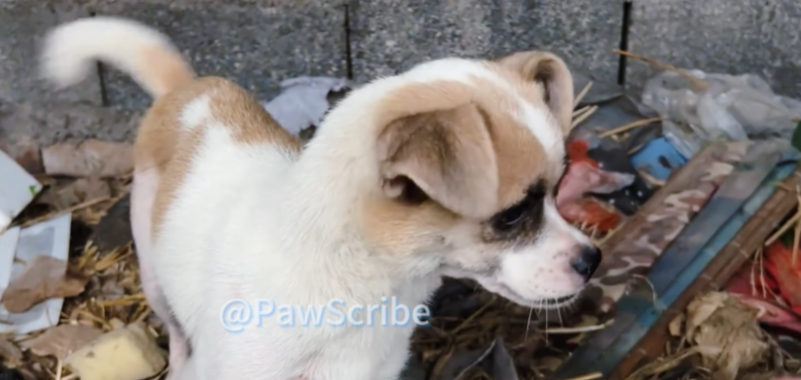
Instead of growling or running, she stood up. Slowly. Eyes fixed on us, but not in the aggressive way we had expected. Instead, she approached. She approached us.
Every muscle in her body was tense, but her movement carried purpose. She didn’t circle us. She didn’t bark. She simply came closer, and then, to our surprise, she nudged one of the puppies toward us.
It was shocking. A stray dog, a mother, had decided to trust us enough to hand over her child—even temporarily—so that it could be safe. For a mother who had been abandoned herself, this was no small gesture. It was a moment that made our hearts stop.
We crouched down, letting her see that our hands were empty and our intentions gentle. She nudged the puppy again. Slowly, carefully, we lifted it into a blanket. She watched the entire process, eyes unwavering. And then she did something even more extraordinary—she allowed us to gently move the other puppies, one by one, into the protective warmth of our blankets.
The Reluctant Trust
Mothers of all species can be incredibly protective, but there is usually a threshold beyond which they will not compromise. In this case, her threshold was different. She was wary—but she understood the stakes.
Her unthinkable act wasn’t just about trust. It was about survival and instinct. She knew that if the puppies stayed in the rain-soaked corner, they would be in danger. Perhaps she knew that their survival could depend on humans. And even in her fear, she acted selflessly.
We kept our movements slow. We didn’t reach out to pet her. We didn’t make sudden gestures. We simply worked to secure her puppies. And the entire time, she remained nearby, watching, evaluating, and in a way, guiding us with her presence.
The First Step Toward Rescue
With the puppies secured in blankets and ready for transport, we turned our attention to her. She didn’t resist as we approached this time, though she remained cautious. Each step we took toward her was met with a careful pause, as if she was calculating whether the risk was worth it.
The rain had soaked her fur, and her body shivered from cold. Her ribs were visible beneath her coat. Hunger and fatigue had left their mark. But there was a quiet strength in her stance—a resilience born of months, perhaps years, of surviving on her own.
We spoke softly, encouraging her. And then, almost imperceptibly, she allowed herself to be gently guided toward the vehicle. She had done the unthinkable once before: she had handed over her puppies for their safety. And now, she was taking a leap herself, placing trust in the humans who had arrived at her door.
The Journey to Safety
The ride to the shelter was tense but quiet. She didn’t bark. She didn’t struggle. Instead, she sat, occasionally glancing at the puppies in their blankets. It was clear that, even in the midst of this rescue, she was constantly monitoring them, making sure they were safe.
The shelter staff prepared a space for the puppies and their mother, and we moved them inside carefully. She remained hesitant at first, pacing the edge of her new surroundings, but the puppies’ soft whimpers drew her in. Slowly, she allowed herself to settle near them, nuzzling them gently and checking that all were accounted for.
The unthinkable act of the first encounter—the nudging of her puppies toward us—had been repeated in spirit. She was still protective, but she understood now that safety didn’t come from isolation. It came from accepting help when it was necessary.
Healing Begins
Over the next few days, the mother dog adjusted to the safety and warmth of the shelter. She received veterinary care, proper nutrition, and gentle attention from staff who understood her trauma.
Her puppies thrived quickly, nursing and playing, gaining weight, and slowly learning that humans could be a source of care instead of fear. And through it all, their mother watched closely, still cautious but increasingly relaxed.
What struck us most was her continued intelligence and thoughtfulness. She wasn’t a wild, untamed stray. She was a mother who had done everything in her power to keep her family alive under impossible conditions. And now, she was beginning to allow herself to experience something she hadn’t known in a long time: relief.
The Unthinkable Act Explained
To most people, what she did seems impossible. How could a stray dog trust humans enough to allow them to handle her children? But those who work with animals understand that acts like hers are rooted in deep intelligence and maternal instinct.
She weighed risk against reward. She had survived on the streets, avoided danger, and fended for her puppies every day. And yet, she made the conscious decision that survival sometimes requires cooperation. She did what many humans struggle to do: she chose hope over fear.
It was unthinkable to those of us who had expected resistance, growls, and flight. But it made perfect sense to her. She was a mother. And mothers will do whatever it takes to protect their young—even if it means breaking the rules of fear and isolation that survival on the streets had taught them.
A Lesson in Trust and Courage
Watching her, we learned something profound. Trust isn’t given lightly—it’s earned. But sometimes, trust is an act of courage, a deliberate choice to step into the unknown because the alternative is too dangerous.
This mother dog, living as a stray, taught us that courage doesn’t always roar. Sometimes, it is the quiet, deliberate decision to do what’s right, even when fear is screaming. She taught us that love, instinct, and selflessness can manifest in the most unlikely forms—and that rescue is as much about understanding as it is about action.
The Road Ahead
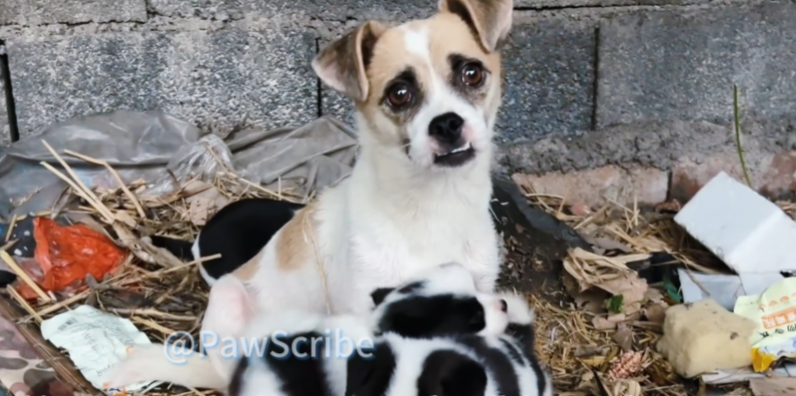
Now, weeks after that first encounter, she has begun to blossom. The puppies are thriving and will soon be ready for adoption, each one healthy, strong, and full of life. Their mother has grown more relaxed, comfortable in her surroundings, and gradually learning to enjoy human attention.
She is still wary, still cautious, and we honor that. She has survived through fear, hardship, and neglect. She has earned the right to take her time. But she is also learning something remarkable: that safety and love can exist outside the streets, that trust can be extended, and that life can be gentler than she ever imagined.
Why Her Story Matters
Stories like hers remind us why rescue work is so important. They show us the incredible strength of animals—especially mothers—who do everything in their power to protect their families. They remind us that trust, courage, and love can manifest in unexpected ways.
And they show us something else: that we, as humans, have the power to change lives—not just by saving animals physically, but by honoring their instincts, their intelligence, and their incredible capacity for selfless love.
This stray dog mom did the unthinkable. She trusted us when fear told her not to. She allowed herself to step into a new world. She nurtured her puppies even in impossible circumstances. And in doing so, she reminded us all of the extraordinary strength and wisdom that exists in even the smallest, most overlooked creatures.
Conclusion
The first day we met her, we thought we were there to rescue a dog.
But the truth is, she rescued us.
She rescued us from our assumptions about fear, about stray animals, and about the limits of maternal love. She reminded us that courage comes in quiet, subtle forms. That love is patient, deliberate, and, at times, unthinkable.
Her story is now part of our lives, a testament to the resilience of stray mothers everywhere. And it is a reminder that sometimes, the most extraordinary acts of love happen in silence, in small gestures, and in the quiet trust of a mother protecting her family.
She is no longer a stray. She is a survivor. She is a mother. She is hope in fur and eyes, teaching us that even in the hardest circumstances, love finds a way—and sometimes, the unthinkable is the most powerful act of all.