In the heart of a bustling tropical forest, life moved with energy, chaos, and endless surprises. For the troop of monkeys that called this forest home, every day was an adventure. Among them was a particularly curious little monkey named Milo, a tiny bundle of fur with wide eyes, nimble fingers, and a mischievous streak that often left the older monkeys shaking their heads. Milo had earned quite a reputation in the troop—not for being strong or particularly brave, but for his endless curiosity and unpredictable antics.
One sunny morning, Milo woke up buzzing with energy. The forest was alive with sounds: birds singing, leaves rustling in the gentle breeze, and distant calls of monkeys echoing through the canopy. Milo immediately leapt out of his sleeping spot, ready to explore. His little hands clutched the branch above him, and his tiny feet found balance on a thin limb as he scanned the forest for something exciting to investigate. Today, however, he would discover a lesson in curiosity, chaos, and hilarity that no monkey in the troop would soon forget.
Milo’s mother, a gentle and watchful monkey named Lila, had been keeping an eye on him from a nearby tree. She was used to Milo’s antics, knowing that they ranged from harmless pranks to chaotic messes. As she groomed another young monkey, she noticed Milo crouched on a branch, sniffing the air and twitching his little nose. Something had caught his attention—a small, brown object on the forest floor that seemed to fascinate him more than anything else.
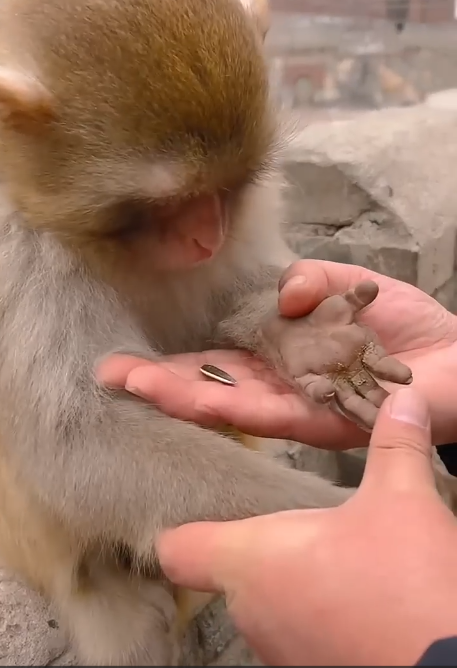
Milo’s little mind worked quickly. He had observed older monkeys inspecting the forest floor before, and in his own curious way, he decided that this object deserved a closer look. Without hesitation, he climbed down the branch, careful yet excited, until he reached the mysterious item. In his tiny hands, he grabbed it—and then his eyes widened in astonishment. Milo had picked up a piece of monkey poo!
For a moment, he stared at it, unsure whether it was a toy, a curiosity, or something he should have left alone. Then, giggling at his own audacity, he waved it in the air. “Haha!” he squealed, clearly proud of his discovery. The other young monkeys nearby immediately noticed, squealing with delight and curiosity. Some jumped back in mock horror, while others edged closer, fascinated by Milo’s boldness.
Lila gasped from her perch above. “Milo! Put that down right now!” she called, her voice a mixture of warning and exasperation. But Milo, ever mischievous, only giggled louder, holding the object up like a trophy. His tiny fingers squeezed it, and he made a series of playful squeaks, seemingly amused by the texture and the reactions of those around him.
The troop watched in a mixture of amusement and disbelief. Milo had taken curiosity to an entirely new level, turning a simple, gross object into a source of endless entertainment. The older monkeys shook their heads, muttering warnings and shaking their tails, but Milo was unstoppable. He tossed it lightly into the air and caught it, squealing each time it bounced off his hands.
“Careful, Milo!” Lila shouted, rushing down the tree to intervene. “That’s not a toy! You’ll get sick if you play with it!”
Milo, however, was already one step ahead. He hopped onto a low branch and waved it in front of his friends, who squealed in laughter and horror at the same time. The little chaos he had created was contagious. Other young monkeys started chattering excitedly, some imitating him, some keeping a safe distance. The forest was alive with squeals, laughter, and the unmistakable scent of mischief.
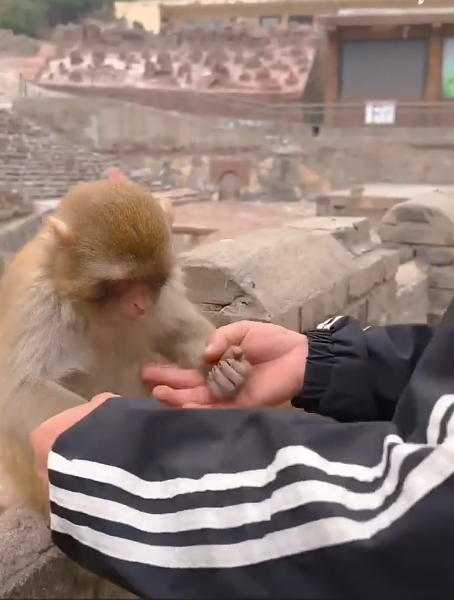
Eventually, Lila managed to grab Milo’s tiny hands, gently prying the object from him. Milo squealed in mock protest, kicking his legs in the air, but the mother’s firm hold reminded him who was in charge. She scolded him softly while wiping his hands on a nearby leaf, teaching him, as she often did, a lesson about curiosity, boundaries, and hygiene.
Even after the incident, Milo’s energy was not dampened. He shook off his disappointment, chattered excitedly to his friends, and began exploring other parts of the forest. His curiosity remained insatiable, but he had learned—at least temporarily—about limits when it came to what one should touch.
The other young monkeys, meanwhile, were still talking about the incident. Some were fascinated by Milo’s audacity, some were horrified by his boldness, and others were simply laughing at the sheer absurdity of the situation. For a troop of monkeys, moments like these became part of the stories passed down among the group—tales of the little ones who tested boundaries, made everyone laugh, and reminded the adults why patience was so essential.
Throughout the day, Milo continued to explore, climb, and play. He chased butterflies, swung on vines, and tumbled playfully from branch to branch. His little adventures often involved minor chaos—a knocked-over pile of leaves here, a startled bird there—but they also showed his energy, intelligence, and adaptability. Milo was learning about his environment in ways that were messy, funny, and sometimes gross, but always educational.
By afternoon, Milo was tired but still curious. He sat beside his mother, gently grooming himself and occasionally reaching for a small fruit nearby. Lila stayed close, keeping her protective gaze on him while letting him rest and absorb the day’s lessons. Milo’s small misadventure with the poo had not dampened his spirit; rather, it had become another story in his growing experience of the forest.
In the evening, as the sun began to dip below the canopy, casting golden hues across the trees, the troop gathered in their usual resting spots. Milo nestled beside his mother, tired but happy, reflecting in his own baby-monkey way on the morning’s adventures. Even the small, gross incidents had value—they taught curiosity, boundaries, and the limits of exploration. Milo’s boldness, combined with his mother’s guidance, ensured that each day brought growth, learning, and laughter.
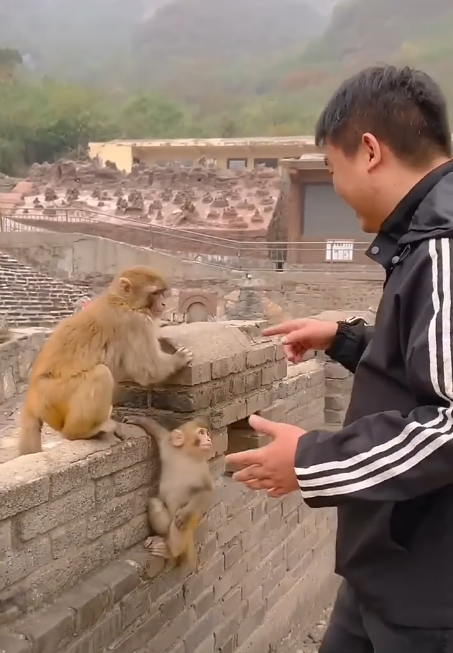
The story of Milo and the poo became a tale repeated among the younger monkeys for days. It was told with squeals, laughter, and exaggerated gestures, becoming a lesson about curiosity, playfulness, and the importance of listening to one’s elders. Milo himself seemed proud of his story, even if he knew he had been scolded. For a small monkey in the wild, these moments of exploration and mischief were vital—they shaped his character, taught him social and environmental awareness, and made life in the forest endlessly exciting.
By nightfall, Milo had learned something new about the world, even if it was a messy lesson. His curiosity remained strong, his playful energy intact, and his bond with his mother reinforced. She tucked him close with her tail, protecting him as he drifted into sleep, dreams full of adventure, mischief, and endless possibilities.
In the jungle, life is unpredictable, exciting, and often hilarious. Milo’s adventure with the poo is a perfect example of this—the small, funny, and sometimes gross events that make every day in the wild memorable. They remind both monkeys and humans alike that curiosity, playfulness, and a sense of humor are as vital as caution, wisdom, and care. Milo’s morning antics may have caused chaos, but they also created joy, laughter, and unforgettable memories for the entire troop.
The next morning, Milo would be back at it again—exploring, climbing, and finding new ways to test his limits. But the lesson of the previous day remained: curiosity is wonderful, but some things are best left alone. Even so, his mischievous spirit, his playful energy, and his unstoppable sense of adventure ensure that life in the forest is never dull. And for the troop of monkeys, Milo’s antics provide endless entertainment, teaching moments, and laughter—proof that even the smallest monkey can leave a huge impression on the jungle world around him.