In the sprawling forests where sunlight filters through layers of green leaves, monkeys live a life of constant activity. Branches sway under their weight, chattering fills the air, and the scent of fruits and vegetation permeates the forest. Among the diverse species of monkeys, social structure is a crucial aspect of daily life, and at the top of most troops sits the alpha male. Strong, alert, and confident, the alpha leads, protects, and ensures that the troop remains cohesive. Yet, even the alpha has moments of simplicity and indulgence—like enjoying a meal of fresh, sweet corn.
In a lively troop of macaques, the alpha male, a large and muscular monkey named Bruno, commanded respect from every member. His presence was both intimidating and reassuring. Younger monkeys scrambled to stay out of his way, while older males observed his behavior to understand the boundaries of their roles. Bruno’s leadership was not limited to displays of strength or dominance; it extended to ensuring access to food, mediating disputes, and teaching younger monkeys about survival in the forest.
Corn, a relatively recent addition to the forest from nearby fields, had quickly become a favorite among the troop. The humans in the nearby village sometimes left discarded ears of corn along the edge of the forest, and the monkeys were quick to notice. It was a rare treat, sweet, satisfying, and relatively easy to access. Most of the troop would rush to these spots, competing for the juiciest ears, squeaking with excitement, and chattering as they pulled the kernels from the cob.
On one sunny morning, the troop approached the edge of the forest where a pile of freshly harvested corn had been left. The scent carried through the air, reaching every monkey in the vicinity. The younger monkeys immediately leaped forward, squeaking and scuttling to reach the first ears. Mothers held their infants close while simultaneously trying to gather corn for them. Even the older males moved quickly, each aware that competition for this treat could become tense.
Bruno, the alpha, approached more deliberately. His large frame moved with calm authority, and his gaze swept over the troop, observing the younger monkeys scrambling and squabbling. While most of the troop expected him to claim the largest ears immediately, Bruno demonstrated a more measured approach. He paused at the edge of the corn pile, surveying the scene, and letting his presence assert authority before taking action.
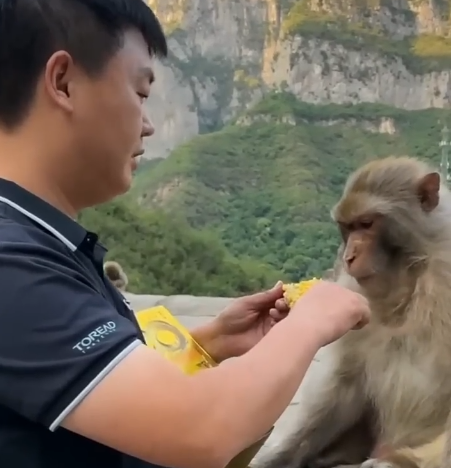
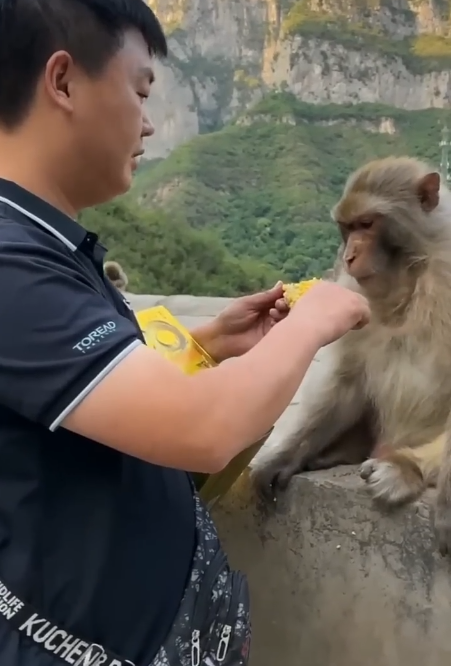
When he finally moved forward, it was with deliberate purpose. Younger monkeys stepped aside instinctively, their squeaks mixing with nervous excitement. Bruno selected a large, fresh ear of corn and sat down comfortably on a low branch, peeling it carefully with his dexterous hands. The act was almost ceremonial: the alpha enjoying a simple meal, showing both his power and his capacity for calm indulgence.
As Bruno nibbled on the kernels, the troop watched closely. The babies chirped excitedly, and the younger males exchanged glances, as if silently communicating: Even the alpha eats corn like everyone else! This moment reinforced a key truth of the forest: no matter how powerful or respected, even the strongest monkey is still part of the troop, subject to the same pleasures and basic needs.
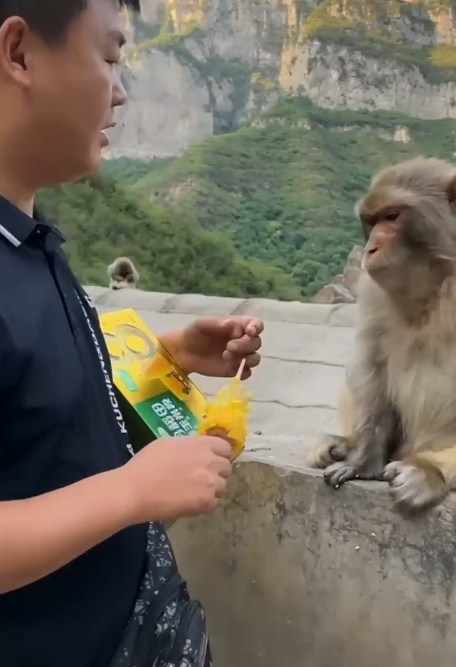
The alpha’s approach to eating corn was methodical and careful. He peeled the husk slowly, exposing the bright yellow kernels beneath. Each bite was deliberate, his sharp eyes occasionally scanning the troop for signs of mischief or challenge. The other monkeys respected this ritual; they understood that interrupting the alpha could lead to confrontation, but at the same time, observing him eat was a valuable lesson in patience, restraint, and focus.
Younger monkeys often tried to imitate Bruno. Tiny hands clumsily peeled husks, and curious eyes watched his every move. Occasionally, a baby would squeak or grab at a nearby kernel, prompting a warning grunt from Bruno. The alpha’s voice was commanding but not aggressive, teaching boundaries in a subtle yet effective way. Even playtime could turn into a lesson, and the simple act of eating corn became an educational moment for the troop.
Interestingly, the alpha’s enjoyment of corn had social implications. By allowing certain subordinate monkeys to approach and eat nearby, Bruno reinforced bonds and demonstrated leadership through generosity. Monkeys that had been previously nervous or anxious around him now saw a different side of their leader: approachable, attentive, and even a little indulgent. Sharing the corn in controlled ways also reduced tension, preventing unnecessary squabbles over food while maintaining the alpha’s dominance.
One young male, Milo, attempted to sneak a kernel from Bruno’s ear. His small hand darted toward the bright yellow corn, but Bruno’s eyes caught him instantly. With a swift but gentle movement, he nudged Milo away and gave a warning grunt. Milo squeaked and jumped back, but he wasn’t upset—he understood the lesson. Even the alpha could be playful in enforcing rules, combining authority with humor in a way that strengthened social cohesion.
As the morning progressed, the troop continued to gather corn, each monkey benefiting from the shared bounty. Mothers tore kernels for their infants, adolescents learned proper peeling techniques, and older males claimed modest portions without challenging the alpha. Bruno continued his leisurely meal, occasionally tossing a kernel toward a nearby monkey or allowing a small subordinate to sample from his own ear. These moments highlighted the delicate balance of leadership in monkey society: dominance paired with selective generosity, power coupled with social intelligence.
The alpha’s calm enjoyment of corn also served another purpose: reducing tension in the troop. In wild monkey societies, competition over food can lead to conflict. By modeling patience and measured behavior, Bruno showed that abundance could be shared without aggression. Younger monkeys learned that boldness was best tempered with caution, and that respect for the alpha included observing both his authority and his demeanor during simple acts like eating.
By midday, the corn pile had been largely consumed. The troop moved together deeper into the forest, satisfied and energized. Bruno’s role remained central: he led the group to new foraging areas, scanned the canopy for danger, and occasionally stopped to observe interactions between younger members. The corn episode, though brief, had reinforced social bonds, established lessons in patience and sharing, and reminded every monkey of the importance of hierarchy and respect.
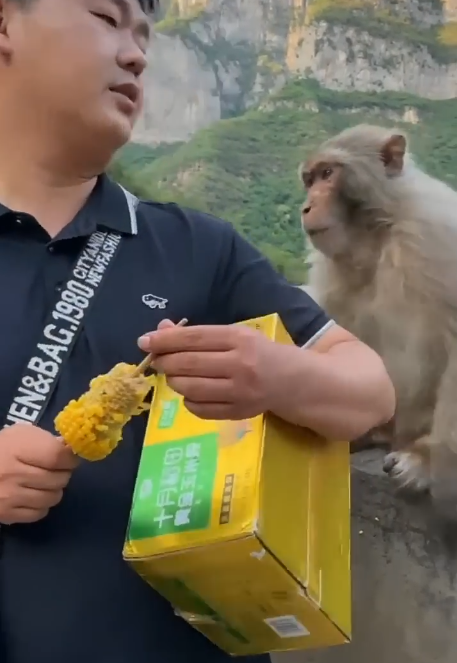
Evening brought a quieter moment. The troop rested along a riverbank, basking in the warmth of the fading sun. Bruno, still mindful of his position, occasionally gnawed on the last few kernels of corn he had saved. The younger monkeys observed him with admiration, and the babies, now full, dozed in the arms of their mothers. In these calm moments, it was clear that life as the alpha was not only about strength and vigilance—it was also about understanding the troop, balancing needs, and enjoying simple pleasures.
The story of Bruno and the corn illustrates several key truths about monkey life. First, even the most powerful individuals have basic needs and can enjoy simple delights. Second, leadership is as much about social intelligence and generosity as it is about strength. Third, shared experiences like a meal can teach lessons about patience, cooperation, and hierarchy. And finally, moments of calm indulgence, such as enjoying a fresh ear of corn, provide opportunities for bonding and observation, helping to maintain the social fabric of the troop.
Observers often find these moments both entertaining and educational. Watching the alpha male peel kernels with careful precision, occasionally toss a morsel to a subordinate, or gently correct a mischievous younger monkey offers insight into the intelligence and social complexity of primates. The simple act of eating corn becomes a lens through which we can appreciate leadership, social learning, and the playful, dramatic, and sometimes humorous dynamics of monkey society.
In conclusion, life in a monkey troop is a complex mix of hierarchy, survival, learning, and joy. The alpha male, while commanding respect and authority, also participates in everyday pleasures, like eating corn. These moments reveal the balance of power, generosity, and social intelligence required to lead successfully. Bruno’s calm yet commanding presence, combined with his enjoyment of a simple meal, reminds us that leadership is multifaceted and that even the strongest creatures have moments of delight and indulgence.
Corn, in this story, is more than just food—it is a catalyst for social learning, a medium for teaching patience and respect, and a symbol of the shared experiences that bond a troop together. Bruno, the alpha male, enjoys it like everyone else, but with style, intelligence, and a touch of generosity that ensures both respect and camaraderie. And so, life in the forest continues: vibrant, playful, and full of lessons hidden in the simplest of acts—like an alpha male eating corn. 🌽🐒