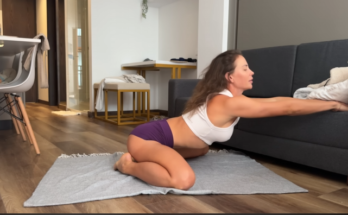
Tight hamstrings are one of the most common complaints among people who sit for long hours, exercise intensely, or simply move through life without enough stretching. When the hamstrings become tight, they can affect posture, limit mobility, and even contribute to lower back discomfort. The good news is that with a short, mindful yoga practice, you can gently release tension in the hamstrings while also opening the quads and hips. This quick yoga sequence is designed to help you feel looser, lighter, and more comfortable in your body—even if you only have a few minutes.
Before beginning, find a quiet space where you can move freely. A yoga mat is helpful, but not essential. Take a moment to check in with your body. Notice where you feel tightness or restriction, and remind yourself that this practice is not about forcing flexibility, but about creating space with patience and breath.
Begin in a comfortable standing position, feet hip-width apart. Take a deep inhale, reaching your arms overhead, lengthening through the spine. As you exhale, fold forward gently, bending your knees as much as needed. This is your first hamstring stretch, and it should feel accessible. Let your head hang heavy, releasing tension in the neck and shoulders. Take several slow breaths here, allowing gravity to do the work.
On your next inhale, lengthen your spine halfway, placing your hands on your shins or thighs. Feel the stretch travel along the backs of your legs. Exhale and fold again, softening into the pose. Repeat this gentle movement a few times, warming the muscles and increasing circulation.

Step your right foot back into a low lunge, keeping your left knee stacked over the ankle. Lower your right knee to the mat if you’d like extra support. This pose begins to open the hips and quads, which play an important role in hamstring tightness. As you inhale, lift your chest and reach your arms overhead. As you exhale, sink the hips slightly forward, feeling the stretch along the front of the right thigh and hip flexor.
Stay here for several breaths, keeping the core gently engaged. If you want a deeper stretch, bend the back knee and reach for the foot, drawing the heel toward the glutes. Only go as far as feels comfortable. Remember, sensation is welcome, pain is not.
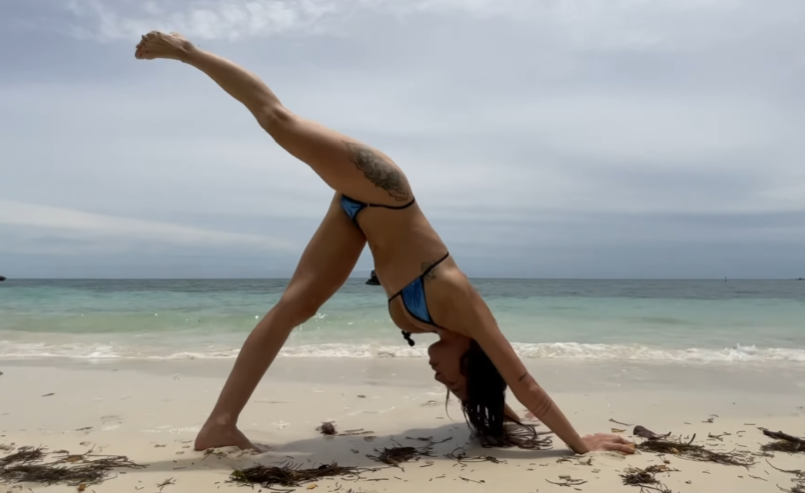
From the low lunge, shift your hips back into Half Split pose. Straighten the front leg, flexing the toes toward the sky. Place your hands on the mat or on blocks for support. This is a focused hamstring stretch, and it can feel intense if your muscles are tight. Breathe slowly and steadily, allowing the muscle fibers to relax over time.
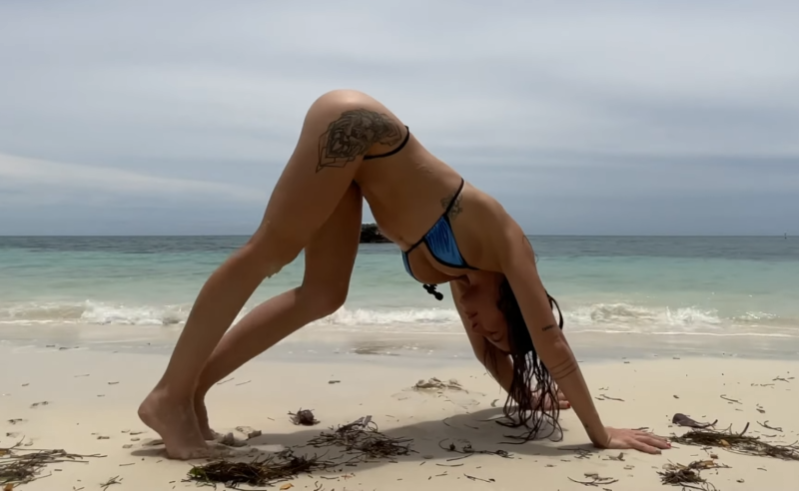
After several breaths, return to the low lunge, then step back into Downward-Facing Dog. This pose offers a full stretch for the hamstrings, calves, and spine. Bend one knee at a time, pedaling the feet to ease into the stretch. Focus on lengthening the spine rather than forcing the heels to the mat.
From Downward Dog, walk your feet toward your hands and come into a wide-legged forward fold. Turn your toes slightly inward and hinge at the hips, folding forward with a long spine. This pose stretches the inner thighs and hamstrings while decompressing the lower back. Let your hands rest on the mat or hang freely. Sway gently side to side if that feels good.
Slowly rise to standing and step your feet together. Move into Chair Pose, bending the knees and sending the hips back as if sitting into an invisible chair. Raise your arms overhead and engage your thighs and core. While this is a strengthening pose, it also warms the quads, which helps balance the work you’re doing in the hamstrings. Stay for a few breaths, then straighten the legs and shake them out.
Lower down to the mat and extend your legs in front of you for a seated hamstring stretch. Inhale and reach your arms overhead, lengthening the spine. Exhale and hinge forward from the hips, reaching toward your feet. Keep the chest open and avoid rounding the back excessively. If you can’t reach your feet, place your hands on your shins or thighs. This classic stretch helps lengthen the entire back line of the body.
To deepen the stretch gently, use a yoga strap or towel around the soles of your feet. Hold the ends and keep the spine long as you lean forward slightly. Stay here for several breaths, allowing the stretch to soften gradually.
Next, bring the soles of your feet together for Bound Angle Pose. Let your knees fall open and sit tall. This pose targets the inner thighs and hips, which often contribute to tight hamstrings when restricted. You can stay upright or fold forward gently, supporting your knees with blocks or cushions if needed.
From Bound Angle, transition onto your back. Hug one knee into your chest, then extend the leg upward for a Supine Hamstring Stretch. Hold behind the thigh or calf, keeping the leg as straight as comfortable. This position allows you to stretch the hamstrings without putting pressure on the lower back. Switch sides after several breaths.
With both legs extended, bend your right knee and cross it over the left leg, dropping it to the side for a gentle spinal twist. Twists help release tension in the hips and lower back, supporting overall mobility. Switch sides after a few breaths.
Now it’s time to relax and integrate the practice. Lie flat on your back in Savasana, arms by your sides, palms facing up. Let your legs rest naturally, feeling the difference in your body. Notice any increased ease, warmth, or space in the backs of your legs and hips.
Take slow, deep breaths, allowing your nervous system to calm. Tight hamstrings are often connected to stress and overuse. By slowing down and breathing deeply, you encourage the muscles to release more fully.
When you’re ready, gently wiggle your fingers and toes, then roll to one side and slowly come up to a seated position. Take a moment to thank your body for showing up and doing its best today.
This quick yoga sequence for tight hamstrings, quads, and hips can be practiced daily or whenever you feel stiffness creeping in. Over time, consistency will bring more flexibility, better posture, and a greater sense of ease in your movements. Remember, progress in flexibility is not about pushing harder—it’s about listening closely and moving with care.