
Monkeys are some of the most expressive animals in the animal kingdom. Their facial expressions, body language, and vocalizations convey emotions in ways that are surprisingly relatable to humans. Among these expressions, anger—or what appears to be anger—can be both fascinating and hilarious to observe, especially when paired with the playful antics of monkeys. The title “Monkey Funny: So Angry?” perfectly captures this duality: the mix of emotion, mischief, and humor that makes watching monkeys an endlessly entertaining experience.
Anger in monkeys, like in humans, is a natural response to frustration, boundary violations, or social tension. Male monkeys may growl when a younger monkey encroaches on their space, a female may snap at a mischievous infant, or a juvenile may display annoyance when denied a treat or toy. These reactions are instinctive, part of complex social hierarchies, and serve important purposes such as asserting dominance, teaching social boundaries, or defending resources. However, to human observers, the intensity of these expressions often comes across as comical. A monkey puffing up its fur, baring its teeth, and shaking a branch can look like an exaggerated, over-the-top tantrum, triggering laughter and amusement.
One of the funniest aspects of monkey anger is its exaggerated nature. Monkeys communicate their feelings very physically, and even minor irritations can lead to dramatic displays. A small dispute over a piece of fruit may result in flailing arms, loud screeches, and comically intense stares. The combination of seriousness in the monkey’s expression and the playful absurdity of its movements often leaves viewers doubled over in laughter. These moments show that even in the animal world, emotional reactions can be both meaningful and entertaining.
Monkeys are also masters of timing. Their displays of anger often occur at the most unexpected moments. For example, a young monkey might attempt to steal a snack from an older troop member, only for the adult to respond with a sudden, exaggerated scowl or a dramatic chase. The baby monkey’s panicked reactions, combined with the adult’s mock ferocity, create a scenario that appears both chaotic and humorous. Observing this, humans can’t help but laugh, marveling at how the monkey’s emotional display mirrors the exaggerated antics of toddlers or small children having a tantrum.
Vocalizations play a key role in the humor of angry monkeys. Monkeys use a wide range of sounds to express frustration or annoyance—grunts, shrieks, growls, and chattering noises. To a human observer, these sounds can seem incredibly dramatic, almost as if the monkey is staging a theatrical performance. Imagine a monkey grumbling loudly over a tiny inconvenience, then throwing its hands in the air and running in exaggerated circles. The scene is inherently funny because of the contrast between the small scale of the provocation and the large scale of the response.
Body language adds another layer to the comedic effect. Monkeys arch their backs, puff up their fur, shake branches, and stomp their feet when irritated. Each movement amplifies the sense of anger while simultaneously appearing absurd to an outside viewer. A monkey’s expressive face—furrowed brows, bared teeth, wide eyes—makes the emotion readable, relatable, and funny. It’s almost as if the monkey is performing for an audience, exaggerating feelings for maximum effect.
Social dynamics often amplify the humor. In a group of monkeys, the angry reaction of one individual can trigger a chain of reactions. Other monkeys may join in the fray, escalate the drama, or react in their own comical ways. For instance, one monkey might charge forward threateningly, while another clings to a branch and screams in mock fear. Young monkeys often exploit these moments, teasing or chasing the adult, which intensifies the absurdity. Observing these interactions, humans are treated to a live performance of chaos, emotion, and comedy.

Even seemingly small annoyances can provoke hilariously dramatic reactions. A monkey might be annoyed by a leaf falling on its head, a branch brushing against its fur, or a younger sibling tugging at its tail. In response, the monkey may scream, shake its fists, or make exaggerated gestures of frustration. To human eyes, the intensity of the display for such minor irritations is both ridiculous and endearing. These moments remind us that monkeys, like humans, experience and react to emotions in ways that are simultaneously serious and amusing.
The element of surprise makes these interactions even funnier. Monkeys are unpredictable, and their responses often catch observers off guard. A monkey quietly grooming may suddenly snap at a nearby sibling, or a calm adult may erupt in a dramatic display after a minor provocation. This unpredictability adds tension and comedy, keeping humans engaged and entertained. It also highlights the intelligence and awareness of monkeys, who carefully assess social situations and respond accordingly—even if the response seems comically exaggerated.
The funniest moments often involve baby monkeys. Infants and juveniles are naturally playful and mischievous, testing boundaries, exploring, and sometimes irritating older monkeys in the process. Their actions—stealing food, teasing adults, or climbing over each other—often provoke angry responses that appear highly disproportionate, creating a scenario filled with slapstick humor. The baby’s innocence and curiosity contrast sharply with the adult’s exaggerated anger, resulting in scenes that are hilarious, heartwarming, and educational.
Observing monkey anger can also provide insights into their intelligence and social skills. Although funny, these displays are not meaningless; they are important for establishing social order, teaching lessons, and negotiating relationships. Young monkeys learn through these interactions, understanding boundaries, dominance, and acceptable behavior. The fact that these lessons are conveyed in such dramatic, exaggerated ways adds to the humor, as humans recognize both the seriousness of the behavior and the ridiculousness of its presentation.
Humans are naturally drawn to these moments because they are highly relatable. The exaggerated displays of anger, the tantrum-like behavior, and the clever responses of young monkeys mirror human experiences. We laugh because we recognize familiar patterns in another species, seeing ourselves in their antics. This shared emotional expression, combined with the absurdity of the situation, creates universal appeal, making “angry monkeys” some of the most entertaining subjects in wildlife videos and photography.
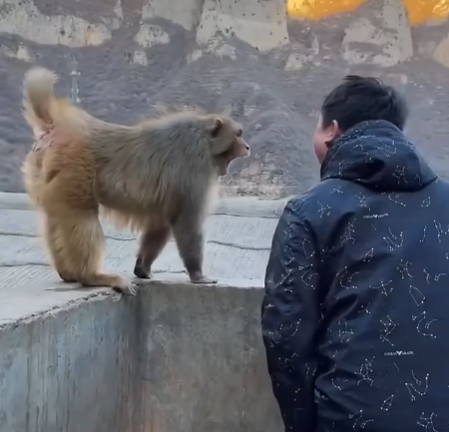
Humor also arises from the contrast between expectation and reality. Humans might expect an adult monkey to handle a situation calmly and rationally. Instead, the monkey reacts with over-the-top gestures, vocalizations, and movement, subverting expectations. This incongruity between anticipated behavior and actual behavior is a key element of comedy, and monkeys provide it naturally and consistently. Observers often find themselves laughing at the seriousness with which the monkey expresses irritation over trivial matters, just as we might laugh at a child’s overblown reaction.
Even outside of social interactions, monkeys display funny reactions that appear angry to human eyes. Encountering new objects, unusual sounds, or minor obstacles can elicit exaggerated responses. A monkey might screech at a camera, wave its arms at a reflection, or stomp on the ground in mock frustration. These behaviors are fascinating because they show emotional intelligence and problem-solving in action while simultaneously entertaining viewers. The humor lies in the intensity and expressiveness of the reaction, not in the actual level of threat or danger.
In many wildlife videos, “Monkey Funny: So Angry?” becomes a perfect description for clips capturing these dramatic moments. Viewers are drawn to the combination of expressive emotion, unpredictable behavior, and playful context. The exaggerated gestures, vocalizations, and interactions create stories that feel almost human, evoking laughter, delight, and amazement. Each clip is a mini-drama, unfolding in real time, showcasing the intelligence, creativity, and humor of monkeys in natural or semi-natural environments.
In conclusion, monkeys are not only intelligent and social animals but also incredibly entertaining. Their anger, expressed through dramatic gestures, vocalizations, and playful interactions, often appears funny to human observers. The title “Monkey Funny: So Angry?” perfectly captures the delight of witnessing these moments—the combination of emotion, humor, and social interaction that makes monkey behavior so captivating. From exaggerated displays to comical tantrums, from baby monkeys teasing adults to adults overreacting to minor irritations, these scenes are a testament to the complexity, expressiveness, and charm of primates.
Watching a monkey’s exaggerated anger reminds us of the universality of emotion, the playful absurdity of life, and the joy that comes from observing animals in their natural behaviors. It demonstrates that while anger serves important social and survival functions, it can also provide moments of laughter, connection, and wonder. Indeed, monkeys teach humans that life is both serious and funny, dramatic and playful, all at once.