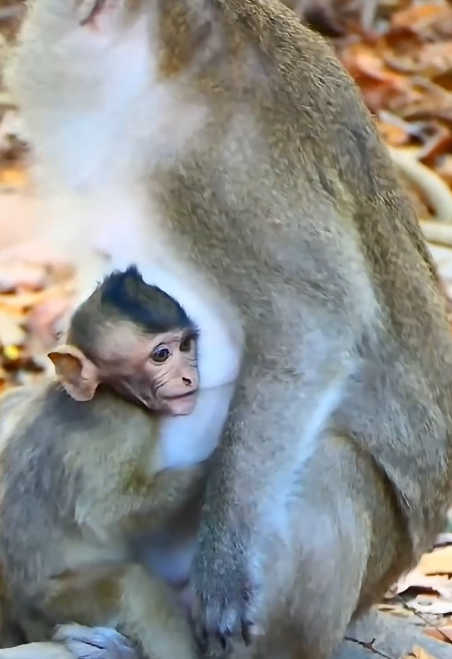
In the dense canopies of the forest, life is a constant dance of survival, play, and social bonds. Among the many fascinating behaviors of primates, one of the most endearing—and sometimes exasperating—is the relationship between a mother and her growing offspring. In particular, big monkeys, even as they approach adolescence, often struggle to let go of the comfort and security their mothers provide. This delicate balance between independence and attachment becomes especially vivid when a young monkey continues to seek maternal attention, despite the mother’s firm, intentional boundaries.
Meet Kiko, a large juvenile monkey of the macaque species, whose story captures this struggle perfectly. Kiko had always been a mama’s boy, the type of infant who clung tightly to his mother even while she foraged or rested. As he grew, his body expanded rapidly—muscles thickened, his fur grew lush, and his playful energy seemed endless. Yet despite his imposing size, Kiko’s favorite place remained right beside his mother’s side. Whether she was eating, grooming, or simply resting in the shade, he was there, reaching for pats, cuddles, and playful nuzzles.
Mom, like all mothers in the wild, faced a dual challenge: nurturing her offspring while also encouraging independence. In monkey species, especially those that live in groups, survival often depends on learning self-reliance at the right age. A juvenile who refuses to let go risks missing opportunities to develop essential skills, from foraging for food to navigating social hierarchies. Kiko’s mother knew this instinctively. She tolerated his persistent attention when he was small, understanding the delicate bond of infancy. But as he grew bigger and more capable, she began to enforce boundaries.
Kiko’s attempts at pampering were persistent. He would climb onto her back while she rested, gently pat her fur, or lean against her for comfort. Sometimes, he would follow her through the forest, trying to initiate playful wrestling or nudges, despite her deliberate attempts to move away. The contrast was striking: a big, strong monkey with an almost childlike attachment, and a mother who remained firm yet loving, setting clear limits.
This dynamic is common among many primate species. Mother monkeys face a balancing act: they must provide security and guidance while also teaching independence. Kiko’s mother demonstrated a careful approach. She didn’t push him away aggressively or abandon him; instead, she redirected his attention. When he climbed onto her back, she would shift slightly, encouraging him to explore nearby branches. When he reached out for playful contact, she would gently nudge him toward a toy or a patch of food, turning his attachment into an opportunity for learning.
The emotional intelligence of both mother and juvenile becomes apparent in these interactions. Kiko learned to read subtle cues—where to nudge, when to pause, when a playful gesture was welcome, and when it was not. Meanwhile, his mother displayed patience and strategic guidance, ensuring he felt loved but also learning that he couldn’t rely solely on her for comfort. Such interactions are crucial for social development. They teach emotional regulation, the ability to cope with frustration, and the beginnings of social independence—all skills that Kiko will need as he matures into a fully independent adult.
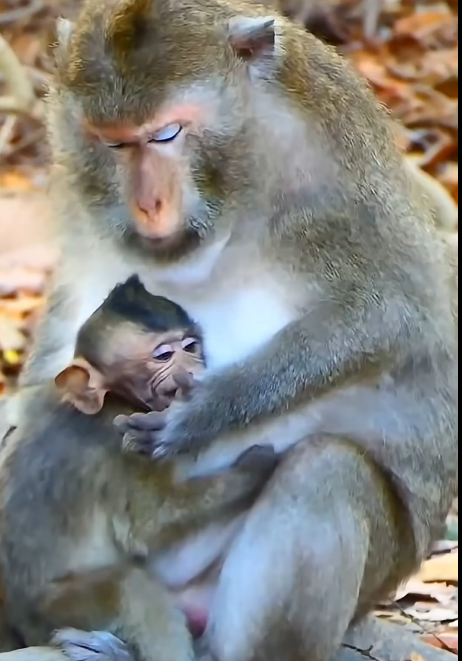
Interestingly, Kiko’s size sometimes worked against him. In many primate groups, being bigger offers advantages in play and in asserting dominance. Yet, his mother’s firm but gentle rejection reminded him that size does not override relationships or rules. Even the biggest juvenile must respect boundaries, a lesson that would carry over into his interactions with other group members. Observing Kiko, researchers can see how attachment behaviors evolve: the same monkey that clings for comfort can also learn to negotiate boundaries, a critical skill for future social integration.
Despite repeated rejections, Kiko’s persistence never entirely faded. His mother’s firmness did not extinguish his affection; rather, it reshaped it. He began to find comfort in brief touches, quick grooming sessions, and moments of shared attention, learning that quality of interaction mattered more than quantity. The mother’s approach fostered resilience. He learned to cope with temporary disappointment while maintaining trust and attachment—a vital combination for healthy emotional development.
These behaviors highlight a key aspect of primate parenting: attachment does not disappear with age, even in juveniles that appear physically independent. The drive to seek maternal attention is deeply rooted in emotional security. In Kiko’s case, his persistence was not mere misbehavior; it was an expression of an ongoing need for reassurance, safety, and social bonding. His mother’s measured responses, balancing affection with firm boundaries, allowed him to grow emotionally while still feeling secure.
Kiko’s story also underscores the universality of maternal challenges across species. Human parents, too, encounter similar dynamics when children resist independence or cling for comfort beyond what seems necessary. The key is consistency, patience, and guidance: allowing space for growth while maintaining emotional support. In primates, the stakes are survival; in humans, it is emotional resilience. Yet in both cases, the principles are strikingly similar.
As weeks and months passed, Kiko began to adjust. He still sought attention, but he also started exploring on his own. Climbing higher in the trees, interacting with peers, and engaging in independent play became more frequent. His mother’s boundaries had gently guided him into a balanced approach: affectionate yet self-reliant, connected yet capable.
This transformation demonstrates the remarkable adaptability of young primates and the critical role of maternal guidance. Without his mother’s firmness, Kiko might have remained overly dependent, struggling to integrate with peers or take responsibility for his own survival. Without his persistent affection, his mother might have been forced to be more distant or even reject him entirely. Their relationship evolved because of both needs: his desire for comfort and her responsibility to foster independence.
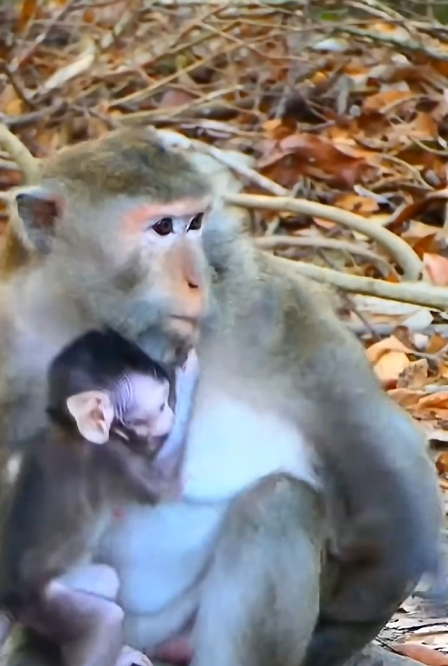
Observing Kiko and his mother offers a window into the complex social and emotional lives of monkeys. Affection and attachment are not static—they shift and grow in response to age, size, and social context. The big monkey who still desires pampering is not weak; he is learning, adapting, and negotiating the world through the lens of one of life’s most important relationships: that with a caring mother.
In the end, Kiko’s persistence and his mother’s firmness created a balance. Their interactions were filled with both tension and tenderness, struggle and connection. He learned patience, respect for boundaries, and emotional resilience. She maintained her role as a guide and protector, ensuring he developed the skills needed to thrive independently.
For anyone studying primate behavior, stories like Kiko’s are more than endearing anecdotes—they reveal the foundations of social learning, attachment, and emotional growth. For Kiko, the big monkey who still craved his mother’s touch, these lessons were life-shaping. And for observers, they remind us that love and guidance, persistence and patience, rejection and affection, all coexist in the messy, beautiful process of growing up.
In the forest canopy, life continues as it always has: food is sought, hierarchies are navigated, and friendships are formed. But in one corner of the jungle, a big monkey curls briefly beside his mother, receiving a soft nuzzle before venturing out again. His eyes, still full of affection and longing, carry a message for all of us: growth is a journey, and even when love comes with boundaries, it is enough to teach resilience, connection, and the courage to explore the world independently.
Kiko’s story is a reminder that attachment does not end with size or age. Even big monkeys need the comfort of their mother’s care—but learning when to accept limits is part of the journey toward maturity. In the delicate dance between clinging and letting go, between desire and discipline, we witness the miracle of development unfolding in real time.