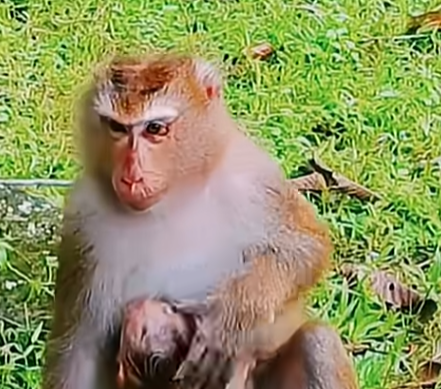
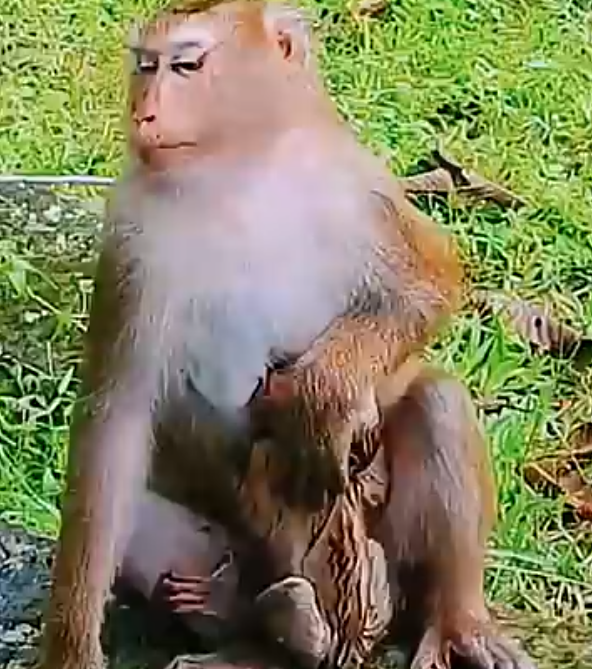
At first glance, it can be surprising—sometimes even shocking—to see a baby monkey pushing away its mother, screaming at her, ignoring her calls, or behaving as if it owns the world. To human eyes, this behavior may look rude, spoiled, or downright arrogant. After all, the mother monkey feeds, protects, carries, and comforts her baby day and night. So why would a baby monkey act so boldly toward the very one who gives it everything?
The answer lies deep in nature, instinct, and survival. What looks like arrogance is actually a complex mix of learning, independence, communication, and emotional development. Baby monkeys are not being ungrateful—they are growing.
A Mother’s Endless Devotion
From the moment a baby monkey is born, its mother becomes its entire universe. She carries the baby tightly against her chest or back, nurses it frequently, cleans it, protects it from danger, and defends it against other monkeys. For weeks or months, the baby rarely leaves her body.
This intense bond creates safety and trust. The baby knows—without doubt—that its mother will respond. And it is precisely this certainty that allows the baby to behave boldly.
In nature, confidence is built on security. A baby monkey dares to push limits because it knows someone is there to catch it.
What Looks Like Arrogance Is Actually Testing Boundaries
When baby monkeys pull their mother’s fur, bite her gently, scream when denied milk, or refuse to come when called, they are not being disrespectful. They are testing boundaries.
Just like human children, baby monkeys learn what is allowed and what is not by pushing limits. They experiment with behavior to understand the rules of their world.
- “If I scream, will she come?”
- “If I push her away, will she still stay?”
- “If I refuse to listen, what happens next?”
These actions are essential for learning social structure, hierarchy, and communication within the troop.
The Role of Emotional Security
A baby monkey behaves most boldly toward the individual it trusts the most—its mother.
This is why babies rarely show the same “arrogant” behavior toward dominant adult monkeys. They know the consequences would be immediate and harsh. With their mothers, however, they feel emotionally safe.
This safety creates space for emotional expression. The baby can cry, scream, push, or protest because it knows its mother’s love is stable.
Ironically, the stronger the bond, the more confident—and sometimes rude—the baby may appear.
Independence Begins Early in Monkey Life
Monkeys must grow up fast. In the wild, danger is everywhere: predators, rival troops, food scarcity, and environmental threats. A baby monkey that remains too dependent for too long is less likely to survive.
This is why nature encourages independence early.
When a baby monkey pushes away from its mother, insists on walking alone, or refuses help, it is practicing autonomy. This behavior may look arrogant, but it is actually preparation for survival.
The baby is learning:
- How to make choices
- How to assert itself
- How to navigate social space
Milk, Weaning, and Conflict
One of the most common times baby monkeys appear “arrogant” is during weaning.
As the mother begins to reduce nursing, the baby often reacts strongly. It may scream, slap the mother’s chest, pull at her nipples, or throw tantrums. This is not manipulation—it is frustration.
Milk represents comfort, safety, and connection. Losing easy access to it feels like loss.
From the baby’s perspective:
“I still need this. Why are you taking it away?”
From the mother’s perspective:
“You must learn to eat on your own.”
This conflict is natural, emotional, and necessary. The baby’s resistance may look disrespectful, but it is part of a painful but essential transition.
Learning Power and Social Rank
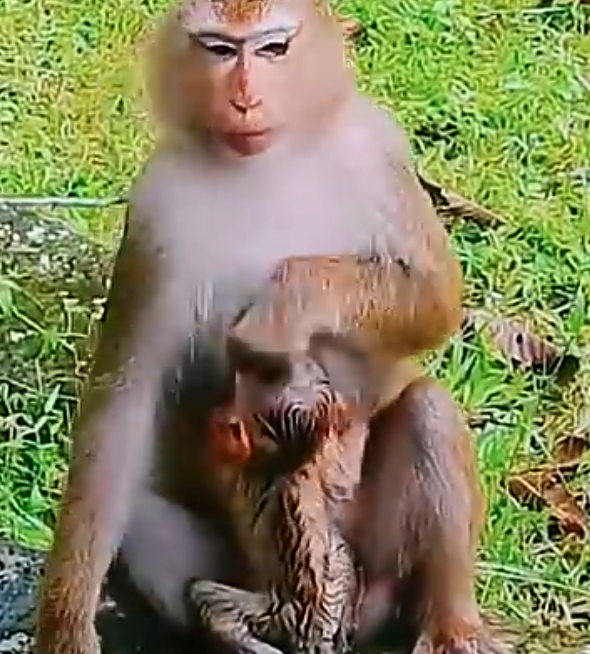
Baby monkeys also begin learning about power through interactions with their mothers.
In many monkey species, mothers are not the highest-ranking members of the troop. Babies observe how others treat their mothers and begin to understand social hierarchy.
When a baby monkey acts boldly toward its mother, it is often rehearsing social dominance behaviors in a safe environment. The mother tolerates behavior that others would not.
This practice helps the baby learn when to assert itself—and when not to.
Play and Aggression Are Closely Linked
Play in baby monkeys often includes rough behavior: grabbing, biting, jumping, screaming, and pushing. These actions may look aggressive or arrogant, but they are actually training tools.
Through play, baby monkeys learn:
- How strong they are
- How others react to their behavior
- How to read emotional signals
Mothers allow a great deal of this behavior, stepping in only when it becomes dangerous or excessive.
Why Mothers Tolerate This Behavior
Mother monkeys are remarkably patient.
They endure hair pulling, climbing, biting, screaming, and rejection without retaliation. This tolerance is not weakness—it is strategy.
By allowing their babies to express themselves, mothers help them develop confidence, resilience, and social intelligence.
A mother who constantly punishes her baby risks creating fear and dependence. A mother who allows controlled freedom raises a capable survivor.
When Arrogance Turns Into Discipline
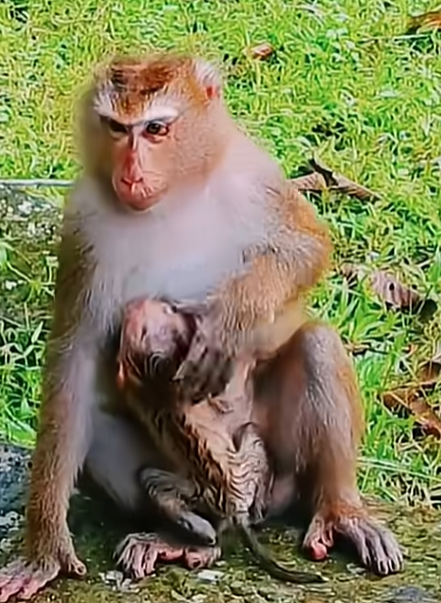
There is, however, a limit.
If a baby monkey becomes too aggressive or disobedient, the mother will correct it—sometimes firmly. This may involve a sharp bite, a push away, or a stern warning sound.
These moments teach boundaries.
The baby learns:
- Love does not mean no rules
- Freedom exists within limits
- Actions have consequences
This balance between tolerance and discipline is key to healthy development.
Human Judgment vs. Animal Reality
Humans often project moral values onto animals. We label behavior as “arrogant,” “rude,” or “ungrateful” because we view it through a human lens.
But animals do not operate on moral judgment. They operate on instinct, survival, and learning.
A baby monkey is not trying to hurt its mother emotionally. It is responding to internal drives shaped by millions of years of evolution.
The Emotional Side We Often Miss
Despite moments of defiance, baby monkeys remain deeply attached to their mothers.
When frightened, they run back to her.
When hurt, they cry for her.
When tired, they sleep against her body.
Arrogance is temporary. Attachment is permanent.
Even the most rebellious baby monkey still depends on its mother’s presence and protection.
A Universal Pattern Across Species
This behavior is not unique to monkeys.
Human children, puppies, kittens, and many mammals show similar patterns. The ones who push hardest are often the ones who feel safest.
Independence grows best in the soil of security.
The Bigger Lesson
So why are baby monkeys arrogant to their mothers?
Because:
- They feel safe
- They are learning boundaries
- They are developing independence
- They are preparing for survival
- They trust their mother’s love
What looks like arrogance is actually growth in action.
A Mother’s Silent Strength
The true hero of this story is the mother monkey.
She absorbs frustration.
She endures rejection.
She allows struggle.
Not because she doesn’t care—but because she cares deeply.
Her patience shapes a confident, capable monkey ready to face the world.
Conclusion: Not Arrogance, but Growth
In the end, baby monkeys are not arrogant—they are evolving.
They are learning who they are, where they stand, and how to survive in a complex social world. Their mothers understand this better than anyone.
And that is why, even when pushed away, ignored, or screamed at, a mother monkey stays close—watching, waiting, and loving.
Because growth is never quiet. 🐒💛