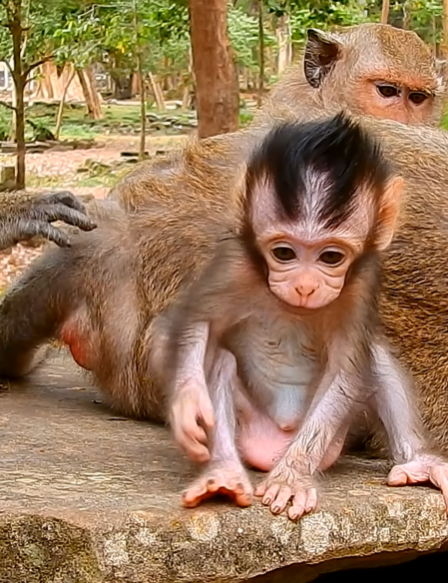
In the dense forests, bustling cities, and remote villages across the world, monkeys live lives that are both fascinating and, at times, heartbreaking. Observing them can inspire awe, compassion, and disbelief. How do these intelligent, social, and playful creatures survive in such harsh, unpredictable, and often dangerous environments? This question strikes anyone who witnesses their daily struggles, their tender moments, and their resilience. From scavenging for food in urban streets to navigating treacherous cliffs in the wild, monkeys face constant challenges that test their strength, ingenuity, and will to survive.
Life in the Wild: Nature’s Tough Lessons
For wild monkeys, survival is never guaranteed. Every day is a test of adaptability, alertness, and skill. Predators lurk everywhere—large cats, snakes, eagles, and even humans. Food is not always abundant, and shelter can be scarce. In many habitats, especially those affected by deforestation and human encroachment, monkeys struggle to find safe spaces to live.
Imagine a troop of macaques living on a rocky cliffside. The young cling to their mothers’ fur while leaping between unstable branches and jagged rocks. One misstep could result in serious injury or even death. Mothers must constantly watch over their babies, guiding them through dangerous terrain, teaching them to forage, and keeping them safe from predators. Observing this delicate dance evokes awe at their agility, but also sympathy for the constant risks they endure.
In the dense jungles of Southeast Asia, monkeys like the langur and gibbon face a different kind of challenge. The canopy may provide some protection, but food is scattered and sometimes inaccessible. Rain can be relentless, rivers can flood, and storms can destroy nests or shelters. Yet, these animals persist, learning to navigate their environment with astonishing intelligence. Their survival depends on social cooperation, quick thinking, and constant vigilance—a harsh existence that makes one wonder how they manage to thrive at all.
Urban Survival: The City Jungle
In cities, the challenges shift but do not lessen. Urban monkeys, such as rhesus macaques in India or long-tailed macaques in Thailand, have adapted to live among humans. Yet, their survival here is fraught with danger. They scavenge for food in crowded streets, dig through trash, and steal from markets. They must avoid traffic, aggressive humans, and domestic animals while maintaining social bonds within their troop.
Watching a baby monkey cling desperately to its mother as they dart through busy streets, one can’t help but feel both amazement and concern. The mother’s protective instincts are in overdrive, yet the environment is chaotic and unforgiving. Food may be easy to find in garbage, but it is often unhealthy, and danger lurks in every corner. Urban life is a constant balancing act, requiring monkeys to be clever, cautious, and fast.
In some tourist areas, humans exacerbate the problem. Visitors may feed monkeys snacks or treats that are harmful to them. Aggressive interactions sometimes occur, resulting in injuries to both humans and animals. Despite these hazards, monkeys continue to adapt, displaying remarkable resilience and resourcefulness. Their ability to survive in such environments is impressive, but it is also a reminder of how human activity can disrupt natural habitats and force wildlife into difficult choices.
The Struggles of Motherhood
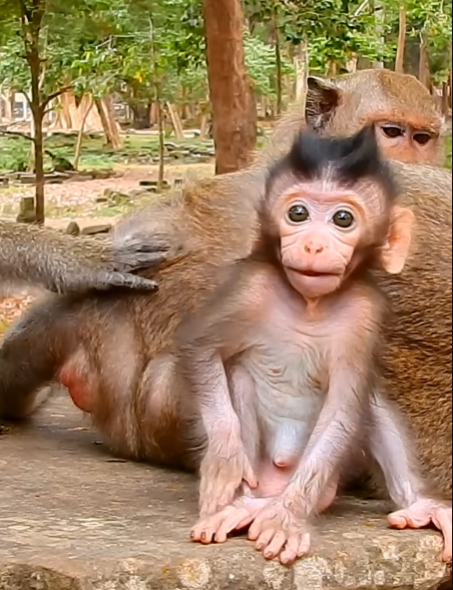
Among the most moving and heart-wrenching sights in the monkey world are the mothers and their babies. Mother monkeys work tirelessly to protect and nurture their young in environments that are often dangerous. Every meal, every leap, every interaction carries risk. A baby monkey may stumble, fall, or be disturbed by others, and the mother must respond instantly to prevent harm.
In some cases, mothers must also compete with other monkeys for resources. Troop hierarchies are complex, and dominant females often have priority access to food. A mother with a young baby must navigate these social dynamics while keeping her infant fed and safe. It is a delicate balance, and the stakes are high. Observing a mother monkey shield her baby from danger, feed it tenderly, or comfort it after a fall is both touching and a stark reminder of the harsh realities of life in the wild.
In extreme cases, environmental pressures push monkeys to desperate measures. In deforested regions, mothers may risk leaving their babies momentarily unattended to find food, or they may have to navigate treacherous human settlements. Their resilience is extraordinary, but it also highlights the immense challenges that these creatures face every day.
Monkeys and Social Bonds
Monkeys are social animals, and their survival often depends on the bonds within their troop. Grooming, playing, and cooperative foraging are essential behaviors that build trust and strengthen relationships. These social networks are not just for companionship—they are critical survival strategies.
For a baby monkey, being part of a well-integrated troop can mean the difference between life and death. Older members teach survival skills, alert others to danger, and help care for infants when the mother is occupied. This communal care system allows monkeys to adapt to environmental pressures and increases the survival chances of the young. Yet, the social world is not without its challenges. Conflicts within the troop, competition for resources, and the presence of outsiders can all disturb the delicate balance.
Watching these interactions is both fascinating and emotionally moving. One can see joy, playfulness, affection, and even grief in these animals, which reminds us that their lives are as complex and emotionally rich as our own. It also evokes empathy, as we recognize the vulnerability and perseverance required to survive in their world.
The Role of Human Intervention
Humans play a paradoxical role in the lives of monkeys. On one hand, we destroy habitats, disrupt social structures, and create hazards. On the other hand, humans sometimes intervene to protect and rehabilitate them. Wildlife sanctuaries, rescue programs, and conservation efforts aim to provide safer environments for monkeys, especially those injured, orphaned, or displaced by human activity.
For example, baby monkeys rescued from urban areas or deforested regions often require intensive care. They need proper nutrition, medical attention, and socialization before being reintroduced into safer environments. The dedication of caretakers is extraordinary, and the success stories of rescued monkeys thriving in sanctuaries are heartwarming. These interventions are a testament to the resilience of monkeys and the potential for humans to positively impact their survival.
Yet, the reality remains that not all monkeys are lucky. Many continue to face daily struggles, and their lives are precarious. Observing them in the wild or in urban settings evokes a mix of awe, concern, and compassion. It forces us to confront the fragility of life and the responsibility we have toward other living beings.
Emotional Impact on Observers
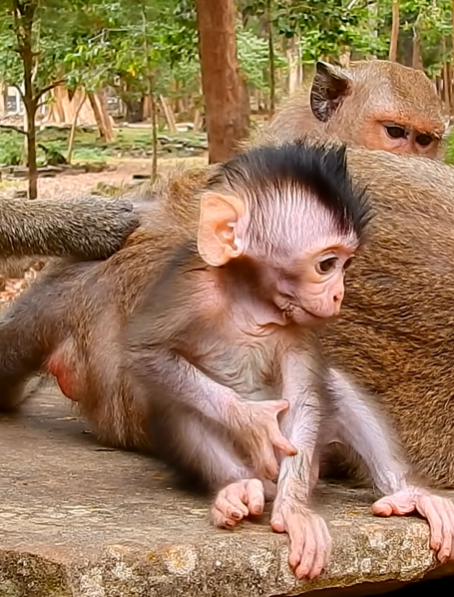
Seeing monkeys struggle, adapt, and survive in harsh conditions touches something deeply human. There is an instinctive empathy that arises when watching a baby cling to its mother during a storm, or when a troop carefully navigates a dangerous cliff. These scenes inspire both admiration and heartache.
For some, the experience is a call to action—prompting involvement in conservation, donations to sanctuaries, or advocacy for wildlife protection. For others, it is a reminder of resilience, teaching lessons about perseverance, cooperation, and adaptation. Regardless of one’s response, the emotional impact is undeniable. Watching monkeys in difficult circumstances encourages reflection on the fragility of life, the importance of community, and the value of care and empathy.
Lessons from the Monkeys’ Struggle
There are profound lessons embedded in the daily survival of monkeys:
- Resilience: Monkeys demonstrate incredible adaptability in the face of danger, scarcity, and change.
- Community Support: Social bonds are essential for survival, providing care, guidance, and protection.
- Empathy and Protection: Maternal instincts remind us of the universal value of nurturing and safeguarding the vulnerable.
- Adaptability: Whether in the wild or in urban environments, monkeys continually learn and adjust to new challenges.
- Awareness of Impact: Observing the struggles of monkeys highlights the consequences of human activity on wildlife.
These lessons are not only valuable for understanding monkeys—they are lessons about life itself. Monkeys endure hardships with creativity, courage, and community support, showing that survival is both a personal and collective effort.
The Heartwarming Side
Despite the hardships, life among monkeys is also filled with beauty, joy, and love. Watching a mother groom her baby, a troop play together in the trees, or young monkeys learn from older members brings smiles and warmth. Their playfulness, curiosity, and affection are reminders that even in the harshest conditions, life can still be joyful and meaningful.
These moments inspire humans to appreciate both resilience and the capacity for joy, even in difficult circumstances. They remind us that empathy, care, and connection are universal needs, shared across species. The love a mother shows her baby monkey is as instinctive and profound as human maternal love, bridging the emotional gap between us and our fellow creatures.
Conclusion: Awe, Compassion, and Responsibility
“Oh my God! Poor monkeys! How do they even exist there!” is a natural reaction when witnessing the struggles of monkeys. Their lives, while filled with remarkable adaptability and intelligence, are also fraught with danger, scarcity, and social challenges. From urban streets to wild forests, these animals face constant threats, yet they persist, displaying resilience, courage, and tenderness.
Observing them evokes a mixture of awe, compassion, and responsibility. We are reminded that their existence is intertwined with our actions—deforestation, urbanization, and tourism can both endanger and help them. Their struggles teach us about resilience, community, empathy, and the fragility of life, inspiring us to act with greater awareness and care.
Ultimately, the story of monkeys surviving in harsh conditions is a story of perseverance, maternal devotion, and adaptability. Their lives are a testament to the power of resilience and the importance of community bonds. And while we may exclaim in disbelief at the harshness of their existence, we also find hope and inspiration in their survival, their playfulness, and their enduring capacity for love. ❤