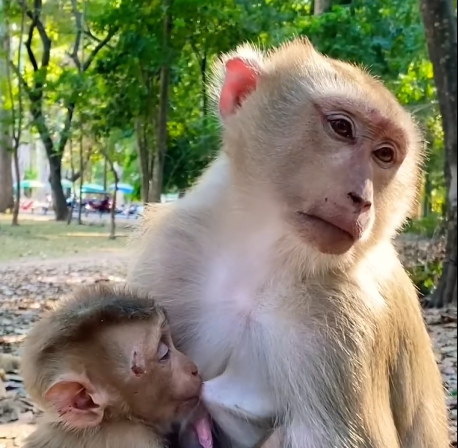
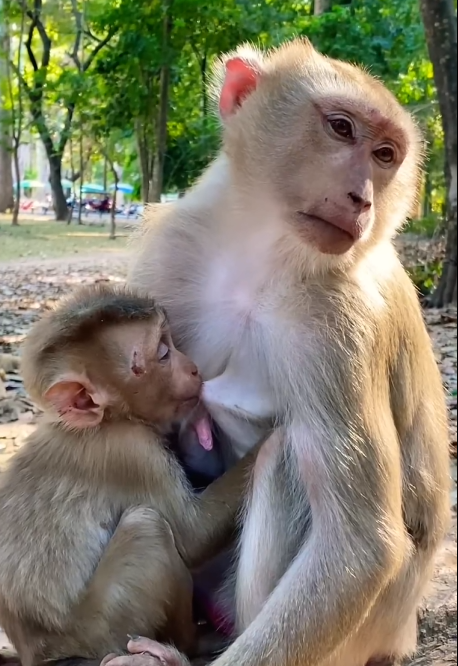
In the heart of a lush, tropical forest, where sunlight filters through a dense canopy and the air hums with the sounds of nature, the lives of monkeys unfold in vivid, captivating ways. Among the many stories of forest life, none is more heartwarming than the bond between a mother monkey and her baby. Observing them is like watching a delicate dance of care, curiosity, and learning—every movement, every squeal, every tender gesture radiates affection, trust, and the beauty of life in the wild.
The baby monkey in our story, affectionately named Bibi by the troop, was born into a medium-sized group of about twenty-five monkeys. From the very beginning, Bibi’s life was intertwined with the steady, protective presence of her mother, Mara. Mara, an experienced and attentive female, had raised several infants before and understood the delicate balance of nurturing, guidance, and discipline. Her eyes were always alert, scanning the branches, the forest floor, and the sky above for potential dangers, while her arms were constantly ready to hold, groom, or lift Bibi when needed.
From the first day, Bibi exhibited the wide-eyed curiosity typical of baby monkeys. Her tiny hands grasped Mara’s fur instinctively, clinging to her chest or back, exploring the soft texture of her mother’s arms, her scent, and even the gentle rhythm of her heartbeat. While she was small, fragile, and completely dependent, Bibi’s energy and curiosity were boundless. She squeaked with excitement at every rustle of leaves, every glimmer of sunlight, and every bird call that echoed through the forest canopy.
Mara’s care was both constant and patient. She groomed Bibi meticulously, removing dirt, insects, and stray leaves while reinforcing the bond between them. Grooming in monkeys is not merely about cleanliness—it is an intimate form of communication, reinforcing trust and social connection. Bibi would often nuzzle against Mara, closing her tiny eyes in comfort, feeling safe and secure as the mother’s fingers worked gently through her fur. For both mother and baby, this simple act became a ritual of bonding, relaxation, and reassurance.
As Bibi grew, her curiosity led her to explore the immediate surroundings while still remaining close to Mara. The baby monkey would reach out to touch leaves, swing gently on low branches, or attempt to grasp the dangling fruits of nearby trees. Each attempt, however clumsy, was met with gentle guidance from Mara. If Bibi overextended herself or risked falling, Mara would swiftly intervene, scooping her up with practiced ease and placing her safely on a stable branch. Through these interactions, Bibi began to learn the essential lessons of climbing, balance, and environmental awareness—all while experiencing the security of maternal protection.
The emotional connection between Mara and Bibi was palpable. When Bibi squealed with excitement or curiosity, Mara would respond with soft vocalizations—a mix of soothing chatter and affectionate coos. These calls served multiple purposes: calming Bibi, reinforcing social learning, and establishing a rhythmic communication system between mother and baby. Observers often describe a natural sense of calm and joy when witnessing such interactions; the gentle back-and-forth between mother and infant evokes feelings of warmth and relaxation, even for humans.
Play was an integral part of Bibi’s growth. Baby monkeys learn through imitation, trial and error, and playful exploration. Bibi would occasionally reach for the leaves Mara held or attempt to mimic the movements of older juveniles. Sometimes she would stumble or overreach, only to be gently corrected or caught by her mother. These playful moments were rich with learning: Bibi developed coordination, spatial awareness, and social skills while strengthening the trust between her and Mara. The forest around them seemed to embrace their play, with birds chirping rhythmically, leaves rustling softly, and the gentle sway of branches adding a natural soundtrack to their activities.
Feeding times were equally enchanting. Mara would pick fruits, leaves, or flowers and carefully present them to Bibi. At first, the baby monkey relied entirely on her mother’s hands, taking small, tentative bites. As days passed, Bibi’s confidence grew; she began to grasp and eat independently, sometimes dropping bits of fruit in her excitement. Mara watched attentively, correcting her when necessary, teaching the fine balance between independence and safety. Through this careful guidance, Bibi not only learned about food but also about patience, timing, and observation—the foundations of survival in the wild.
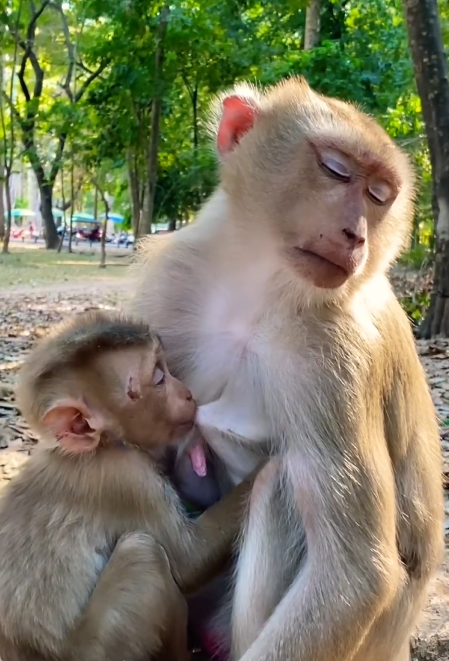
Observing Mara and Bibi together, one cannot help but notice the subtle gestures of love and care. Mara would adjust her posture to shield Bibi from sunlight or wind, wrap her arms around her baby to protect from minor threats, and even gently swat away insects that ventured too close. Bibi, in turn, responded with clinging, playful nudges, and soft squeals that conveyed trust and attachment. This dynamic demonstrates a profound emotional intelligence in monkeys, where maternal care and infant responsiveness create a system of mutual learning, comfort, and protection.
The broader troop also played a role in Bibi’s development. Other young monkeys watched her interactions with Mara, learning the rhythms of care and play. Juveniles occasionally engaged in gentle play with Bibi, testing social boundaries, sharing small fruits, and mimicking grooming behaviors. Adult monkeys maintained order and hierarchy, providing additional layers of learning and social structure. In this interconnected environment, Bibi was not only learning about her mother’s care but also about her place within the troop and the rules of forest society.
One particularly touching moment occurred near a small stream. Bibi’s curiosity led her to reach for floating leaves, trying to grasp them as they drifted downstream. Mara remained close, her watchful eyes never leaving Bibi. When a sudden gust of wind tipped the baby toward the water, Mara reacted instantly, scooping Bibi up and placing her safely on a low branch. The baby squealed in surprise but immediately snuggled against Mara, who nuzzled her gently. This incident highlighted both the fragility and resilience of infant monkeys and the critical role of maternal care in ensuring survival.
Beyond the immediate care, Mara also imparted subtle social lessons to Bibi. Through gentle corrections and careful observation, Bibi learned about boundaries, respect, and cooperation. When she attempted to grab food from older juveniles, Mara would intervene, teaching her the importance of waiting and sharing. These interactions laid the foundation for Bibi’s social intelligence, a skill crucial for navigating the complex dynamics of monkey society.
Grooming continued to be a cornerstone of their bond. Mara would spend hours combing through Bibi’s fur, removing debris, and providing comfort. Bibi, in turn, began to mimic her mother’s actions, gently grooming herself or playfully touching Mara’s fur. This behavior demonstrated the early stages of social learning, empathy, and reciprocity. For human observers, the sight of a baby monkey gently interacting with her mother evokes a deep sense of calm, joy, and emotional fulfillment.
Playfulness remained central to Bibi’s daily life. She learned to swing, jump, and climb with increasing skill, sometimes venturing slightly farther from Mara but always returning to her protective embrace. Mara encouraged this independence while maintaining a watchful eye, balancing freedom and safety. These moments of exploration not only built Bibi’s physical abilities but also strengthened the emotional bond between mother and baby, creating a foundation of trust, security, and love.
The baby monkey’s expressions were endlessly endearing. Wide eyes full of curiosity, tiny hands grasping eagerly, and soft squeals of delight captured the essence of innocence and wonder. Mara’s responses—gentle nudges, soft vocalizations, and protective movements—mirrored a universal language of care found across species. Together, mother and baby created a tableau of beauty, playfulness, and harmony that resonated deeply with all who observed them.
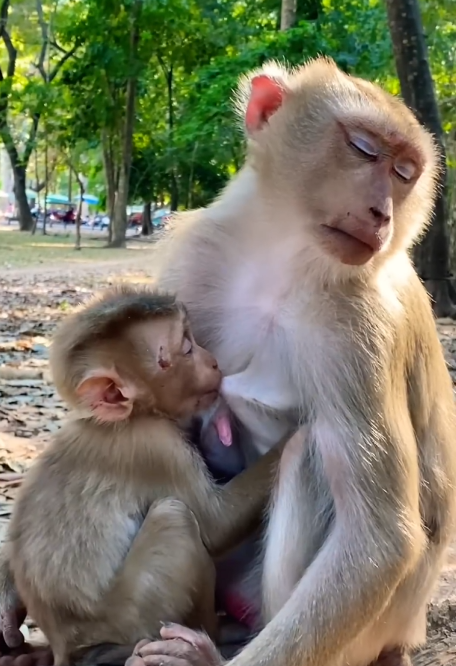
Nature’s scenery enhanced the serenity of these moments. Sunlight filtering through leaves, the soft rustling of branches, birdsong in the distance, and the gentle movement of the forest all combined to create a sensory environment conducive to relaxation. Observing Bibi and Mara amidst this backdrop, it is impossible not to feel a sense of peace, emotional replenishment, and stress relief. The simplicity of the interactions—the nurturing gestures, playful squeals, and careful guidance—becomes a meditative experience for both the animals and any fortunate observer.
Even the challenges of forest life contributed to learning and growth. Mara taught Bibi to navigate uneven terrain, avoid minor hazards, and recognize the calls of the troop. Bibi learned quickly, applying lessons from play and observation to survive and thrive. These experiences, though small, were critical to her development, instilling confidence, awareness, and adaptability.
The bond between mother and baby also emphasized emotional regulation. Bibi would occasionally cry out in frustration or fear, and Mara’s calm, steady presence provided reassurance. Through consistent responses, Bibi began to regulate her emotions, learning to balance curiosity with caution, excitement with patience. This aspect of maternal care highlights the depth of emotional intelligence present in monkeys, where nurturing extends beyond physical safety to psychological development.
In conclusion, the story of Bibi and her mother Mara exemplifies the beauty of maternal care, playful learning, and social bonding in the animal kingdom. From grooming to feeding, from playful swings to gentle guidance, every interaction radiates love, trust, and emotional richness. Observing these moments provides humans with stress relief, joy, and a reminder of the simple, profound pleasures of life.
Beautiful moms and lovely baby monkeys remind us of the universal power of care and connection. Their interactions are not only essential for survival and social learning but also offer a visual and emotional experience that is calming, heartwarming, and restorative. In the forest, every squeal, nuzzle, and playful gesture serves as a lesson in love, patience, and harmony.
Whether watching monkeys, other animals, or human mothers with infants, the message is clear: nurturing, care, and shared moments of tenderness create beauty, joy, and emotional resilience. Bibi and Mara’s story reminds us that in the simplest gestures—clinging hands, soft vocalizations, playful swings—lie the profound experiences of trust, safety, and the heartwarming magic of maternal love. ❤️🐒🙈