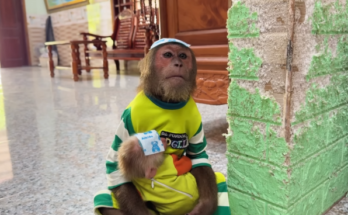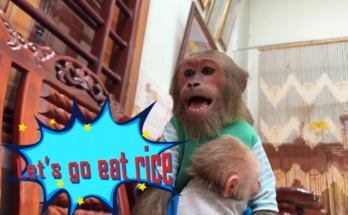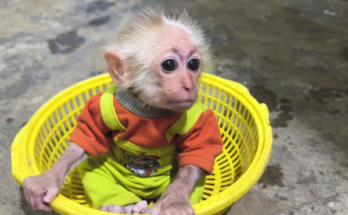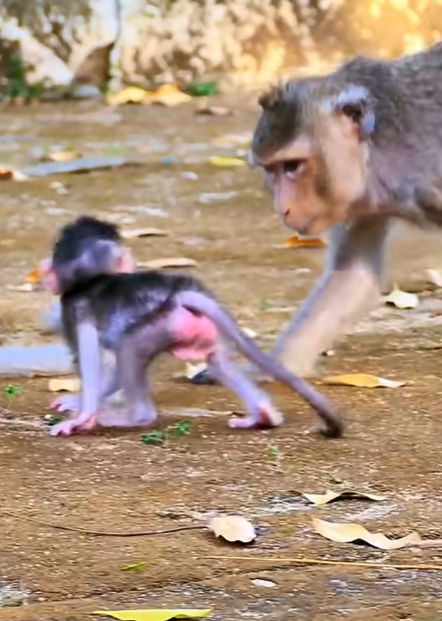
In the vibrant forests, dense jungles, and sprawling mountains of the world, life thrives in astonishing diversity. Among the countless species inhabiting these ecosystems, monkeys hold a special place—not only because of their intelligence and social behaviors but also because of the profound and touching bond between mothers and their babies. Observing a mother monkey caring for her infant is one of nature’s most moving spectacles. The tenderness, dedication, and affection displayed are remarkable, offering a glimpse into the emotional depth of primates and reminding us of the universal power of maternal love.
The Mother-Infant Bond: A Lifelong Connection
From the moment of birth, a baby monkey is entirely dependent on its mother. Unlike some species where young can survive with minimal parental care, monkeys rely heavily on their mothers for nourishment, protection, and social learning. This bond is not merely functional—it is deeply emotional. A baby monkey clings to its mother’s fur, finding warmth, comfort, and security. The mother, in turn, responds with vigilance, tenderness, and patience.
In many species, such as rhesus macaques, capuchins, and baboons, this connection begins immediately after birth. The mother cleans the newborn, keeps it close, and nurses it constantly during the first few weeks. This period of intensive care forms the foundation for a lifetime of learning and social development. Observers often describe these early days as filled with quiet intimacy, punctuated by soft vocalizations and gentle touches.
Nurturing Through Touch and Grooming
Physical contact is at the heart of maternal care in monkeys. Grooming is a behavior that serves both practical and emotional purposes. Mothers groom their infants to keep them clean, remove parasites, and soothe discomfort, while the infants respond with relaxed, trusting postures. This tactile interaction is more than hygiene—it reinforces the emotional bond between mother and baby.
For baby monkeys, touch is a source of reassurance. Clinging to their mother, they feel safe from predators, environmental hazards, and even the social tensions within the troop. Observations in the wild have shown that infants who are frequently groomed and held tend to develop stronger social skills and experience less stress compared to those with limited maternal contact. The act of grooming, therefore, is a deeply touching example of affection and care in the animal kingdom.
Feeding and Nursing: Sustenance and Connection
Feeding is another vital aspect of the mother-infant relationship. In the early months, the mother’s milk provides all the nutrition the baby requires. Nursing is a time of closeness and bonding. The mother’s gentle holding, attentive gaze, and soothing vocalizations all contribute to the baby’s sense of security.
As the baby grows, nursing gradually transitions to solid food. This weaning period is a delicate balance. Mothers must encourage independence while still providing comfort and nourishment. The baby learns to forage, observe, and interact with the environment, but the mother remains a source of guidance and protection. Watching this process unfold is deeply touching: the mother patiently teaches, reassures, and supports, while the baby explores its world with curiosity and trust.
Emotional Intelligence and Maternal Care
Monkeys are highly intelligent, and their maternal behaviors reflect this. Mothers are capable of empathy, recognizing distress in their infants and responding appropriately. For instance, if a baby is frightened by a sudden noise or a rival troop member, the mother will often soothe it, shield it, or carry it to safety. This ability to perceive and respond to the emotional needs of the infant is remarkable and underscores the sophistication of primate social behavior.
Even small gestures—soft vocalizations, gentle nudges, or adjusting the baby’s position for comfort—reveal the depth of maternal affection. Observers frequently note moments when a mother monkey will remain vigilant for hours, ensuring the baby is safe while others forage or rest. These acts are not instinctive alone; they demonstrate a level of emotional investment that is profoundly touching.
Social Learning Through Maternal Guidance
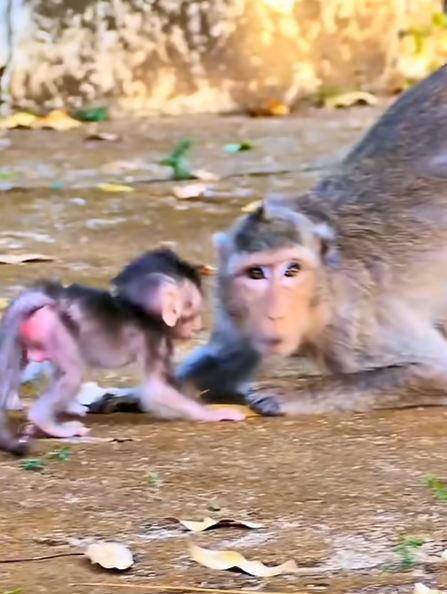
Beyond care and protection, mothers play a crucial role in teaching their babies essential survival skills. The first months of life are filled with lessons: which fruits are edible, how to avoid predators, how to navigate complex arboreal pathways, and how to interact with other troop members.
The mother’s presence is both a safety net and a guide. For example, a young macaque learning to climb safely will often observe and mimic its mother. A baby capuchin trying to crack a nut will watch intently as its mother demonstrates technique. These teaching moments are a blend of patience, encouragement, and gentle correction, reflecting the mother’s affection and investment in her baby’s future.
Play and Affection: Learning Through Joy
Play is another essential aspect of the mother-infant bond. While it may appear merely as fun, play serves multiple purposes: it strengthens muscles, develops coordination, and enhances social skills. Mothers often engage in play with their babies, encouraging exploration, testing limits, and reinforcing safety.
For instance, a mother monkey may dangle a small branch within reach, allowing the infant to practice gripping and climbing. She may chase or gently wrestle, guiding the baby through the rules of social interaction. These playful interactions are filled with laughter-like vocalizations and joyous movement, highlighting the affectionate and nurturing dimension of the relationship.
Protective Instincts: Courage in Maternal Love
Protection is a cornerstone of maternal care. The natural world is fraught with dangers—from predators to environmental hazards to rival troop members. Mothers exhibit vigilance and courage, often placing themselves between the baby and potential threats.
In the wild, there are countless examples of mothers risking their safety for their infants. A mother macaque may face aggressive adults to defend her baby’s right to food or shelter. A female capuchin may chase off snakes or birds of prey while holding her infant close. These acts of bravery are motivated by deep affection and commitment, demonstrating that maternal love in monkeys is not merely nurturing—it is protective and unwavering.
Emotional Touchpoints: Moments That Stir the Heart
There are moments in the life of mother and baby monkeys that stir the hearts of observers. The first time a baby clings tightly to its mother during a storm, seeking warmth and reassurance. The soft grooming sessions that lull the infant to sleep. The gentle encouragement to try new foods or explore new branches. These instances are simple yet profound, revealing the emotional richness of primate life.
Even older infants, as they begin to explore beyond the mother’s immediate reach, will return repeatedly for comfort and reassurance. This ongoing interaction highlights that maternal affection is not temporary—it endures and adapts as the baby grows, providing a foundation of trust and security.
Cross-Species Observations
Interestingly, the deep affection of mother monkeys is not confined to their own species. In sanctuaries and rehabilitation centers, observers have recorded instances where monkeys display gentle interest and care toward orphaned animals or even other primates’ babies. While not a replacement for maternal care, these behaviors suggest that the capacity for nurturing extends beyond instinct to empathy, curiosity, and social learning.
These interactions are heartwarming reminders that the affection monkeys display is both instinctual and emotionally complex. They teach us about resilience, empathy, and the universal value of care and connection.
Challenges in Maternal Care
Despite the deep affection, life for mother monkeys is not without difficulty. Feeding, protecting, and teaching a baby while also caring for oneself and navigating social hierarchies is demanding. Food scarcity, predation, and intra-troop competition all add stress to the maternal role.
Mothers must balance their own survival needs with those of their infants, often prioritizing the baby’s welfare even at personal cost. This balancing act is both physically and emotionally taxing, yet mothers continue to provide care with remarkable dedication. Observing these challenges only deepens our appreciation for the affection and resilience inherent in the mother-infant bond.
Human Reflections and Lessons
Watching the deep affection between mother and baby monkeys evokes profound reflection for humans. It reminds us that love, care, and empathy are not uniquely human traits—they exist across species. The patience, courage, and nurturing instinct of a mother monkey serve as a poignant reminder of the universality of maternal love.
For children and adults alike, observing these interactions can inspire compassion, curiosity, and respect for the natural world. It teaches that nurturing and protection are essential to growth and survival and that the bonds formed in early life can have lasting effects on behavior, social skills, and emotional resilience.
Anecdotes from the Wild
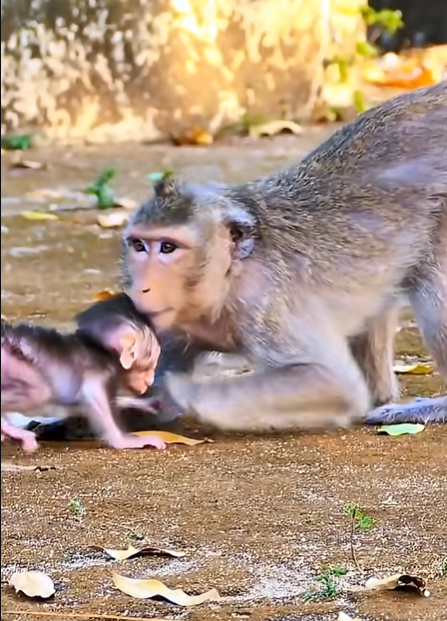
One particularly touching story comes from a troop of Japanese macaques in the forests of Japan. A mother macaque, despite a shortage of food during a harsh winter, carried her infant on her back for hours, sharing the little food she could find and teaching the baby to forage for small roots and leaves. Her unwavering dedication, even in the face of scarcity, exemplified the resilience and depth of maternal affection.
In another instance, a mother capuchin in South America was observed gently guiding her young through a complex canopy of trees, encouraging exploration while keeping a watchful eye for predators. When the baby faltered or fell, she retrieved it with tender care, vocalizing reassurance. The observer described it as a “silent dialogue of love and trust,” a vivid illustration of the emotional depth of these primates.
The Universal Beauty of Maternal Love
Across species, habitats, and circumstances, the deep affection between mother and baby monkeys is a testament to the enduring power of maternal love. It encompasses protection, teaching, play, comfort, and emotional connection. Observing these interactions is a moving reminder that the natural world is filled with moments of tenderness, empathy, and devotion.
For those fortunate enough to witness such moments, it is impossible not to be touched. The soft clinging, the gentle grooming, the playful encouragement—all reveal a level of care and commitment that is both inspiring and humbling. In a world often marked by struggle and survival, these moments of love shine brightly, reminding us of the simple, universal power of connection.
Conclusion
The life of monkeys is filled with challenges, adventures, and social complexity, but at the heart of it lies one of the most touching aspects of the natural world: the deep affection between mother and baby monkeys. From the first moments after birth to the gradual journey toward independence, mothers provide unwavering care, protection, and guidance.
Their love is expressed in countless ways—through touch, grooming, nursing, teaching, play, and vigilant protection. Each act, no matter how small, is a testament to the intelligence, emotional depth, and resilience of these remarkable animals. Observing this bond is both heartwarming and humbling, a vivid reminder that maternal love transcends species and that the natural world is rich with examples of care, empathy, and connection.
In the eyes of a baby monkey, the mother is safety, nourishment, and guidance. In the eyes of an observer, the mother represents one of nature’s most profound lessons: that love, dedication, and affection are universal forces, capable of shaping life, fostering growth, and touching hearts in the most remarkable ways. Indeed, watching mother and baby monkeys together is not just a glimpse into animal behavior—it is a moving testament to the beauty and power of love itself.