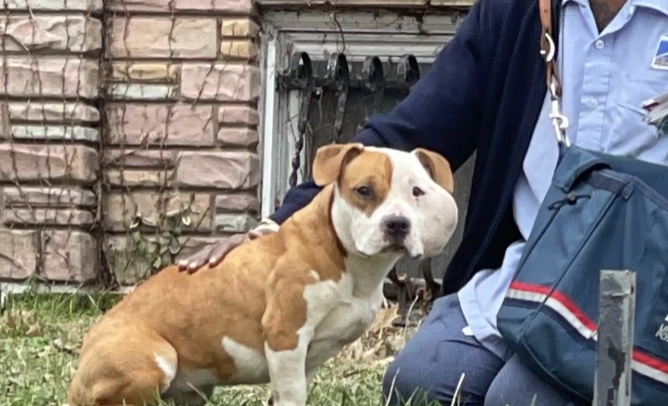
Parcel didn’t get his name because he was small or easy to carry. He got it because, like a forgotten package, he had been left behind—set down somewhere along the way and never claimed. On the streets of St. Louis, he wandered from block to block as if searching for an address that no longer existed, hoping someone might finally recognize that he belonged somewhere.
Life as a stray taught Parcel how to disappear.
He learned which alleys offered shelter from the rain, which abandoned buildings were safest at night, and which neighborhoods were dangerous after dark. His once-light coat was stained gray from dust and exhaust, and scars marked his legs—silent records of fights he never wanted and dangers he couldn’t avoid. Hunger was a constant ache, a hollow feeling that shaped every decision he made.
Parcel was cautious, but not broken. Even on the worst days, he watched people with a quiet curiosity. When families laughed on porches or children dropped crumbs on sidewalks, his tail twitched before he remembered it was safer not to hope. Hope could get you hurt.
Some days were harder than others. Winter in St. Louis is unforgiving, especially to animals without shelter. Cold wind cut through Parcel’s thin fur, and ice burned his paw pads. He limped often, favoring one front leg that had never healed properly after an old injury. Still, he kept moving. Standing still meant freezing. Lying down too long meant danger.
Parcel survived because he refused to give up.
Rescue workers from Stray Rescue of St. Louis saw him for the first time on a gray morning, trotting along a busy road with his head low and ears alert. They had been responding to another call when one volunteer noticed him lingering near a pile of discarded boxes. He froze when their van slowed, eyes wide, body ready to bolt.
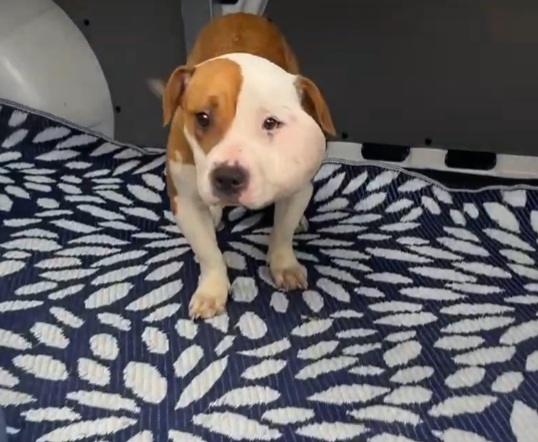
But he didn’t run.
That hesitation mattered.
The volunteers parked at a distance and sat on the curb, letting time do the work fear usually prevents. They spoke softly, tossing bits of food onto the pavement, never reaching out too fast. Parcel paced back and forth, torn between hunger and instinct. Finally, hunger won.
He approached carefully, grabbing food and retreating a few steps at a time. His eyes never left them. When one volunteer gently extended a hand, he flinched—but he didn’t snap. He didn’t growl. He simply backed away, unsure.
“Hey, buddy,” she whispered. “You don’t have to be afraid anymore.”
It took nearly an hour, but eventually Parcel allowed a leash to be slipped over his head. His body trembled as he realized he was caught—not trapped, but rescued, though he didn’t know the difference yet. The ride to the shelter was silent. Parcel curled into himself, unsure if this was the end of his freedom or the beginning of something better.
At Stray Rescue of St. Louis, Parcel was examined from nose to tail. He was underweight, dehydrated, and exhausted. His limp turned out to be the result of an untreated fracture that had healed improperly, leaving him with a permanent but manageable weakness. His teeth were worn from chewing anything he could find to ease hunger. Emotionally, he was guarded—but gentle.
“He’s got a good heart,” one staff member said. “He’s just been through too much.”
The bath was the hardest part. Parcel shook as warm water washed months of dirt from his fur. But when the brushing began—slow, careful, patient—something inside him shifted. He leaned into the touch, just slightly at first, then more. His eyes softened. His breathing slowed.
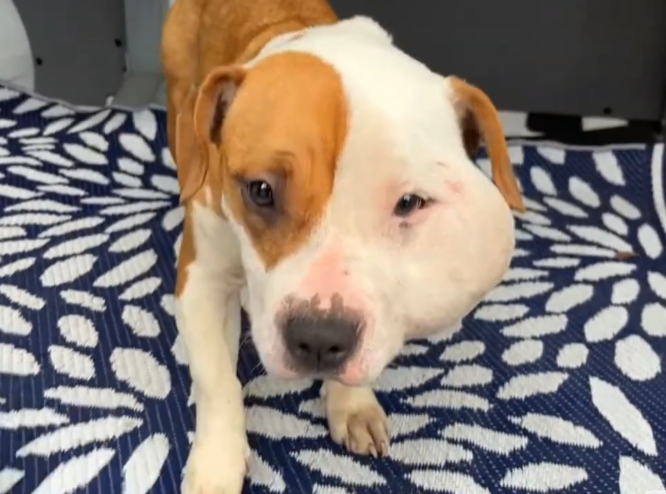
That night, Parcel slept in a clean kennel with blankets and food in his belly. He woke up often, startled by unfamiliar sounds, but each time he realized he was still safe. By morning, his tail wagged when volunteers approached.
The shelter named him Parcel because he felt like something precious that had finally arrived where it was meant to be.
Days turned into weeks. Parcel began to trust the routine: meals at regular times, gentle voices, walks that ended safely back inside. He learned that hands could bring comfort instead of pain. He learned that he didn’t have to compete for food. Slowly, his personality emerged.
Parcel was thoughtful. He liked to observe before acting. He preferred calm companionship over chaos, choosing to sit beside volunteers rather than demand attention. He loved walks, even with his limp, stopping often to sniff the world as if making sure it was real. Loud noises still startled him, but he recovered quickly, glancing up for reassurance instead of fleeing.
Physically, he improved. He gained weight. His coat shone. His limp remained, but it no longer defined him. Emotionally, he began to open up, offering tail wags, soft eye contact, and quiet loyalty.
Then came the adoption inquiries.
Many people admired Parcel but hesitated when they learned about his injury. Some wanted younger dogs. Some wanted dogs with no “issues.” Parcel waited patiently, unaware that he was being passed over, only knowing that each day ended the same way—with him still at the shelter.
The volunteers worried, but they never gave up on him.
Then one afternoon, everything changed.
A couple walked in, moving slowly, reading every kennel card carefully. They weren’t in a rush. They weren’t looking for perfection. They were looking for connection. When they reached Parcel’s kennel, he stood up—not barking, not jumping—just watching.
“He looks… thoughtful,” the woman said.
Parcel wagged his tail once.
They sat on the floor, and Parcel approached cautiously. He sniffed their hands, leaned into the man’s knee, then sat beside them as if he’d always belonged there. The couple exchanged a glance—the kind that needs no words.
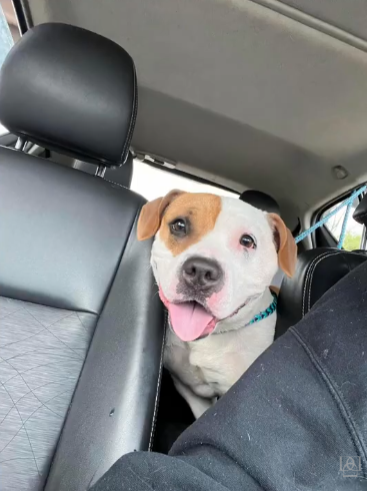
“This one,” the man said quietly. “This is our dog.”
The adoption process took time, but Parcel handled it with calm curiosity. When the paperwork was signed, he walked out of the shelter on a leash, glancing back once—not in fear, but in gratitude.
Home was overwhelming at first. The floors were slippery. The couch was suspicious. The silence felt too quiet. Parcel followed his new family everywhere, afraid that if he looked away, they might disappear like everyone else had.
But they didn’t.
They gave him time. They learned his pace. They adjusted walks for his limp, added soft rugs for his joints, and celebrated every small victory. Parcel learned that bedtime meant safety, that mornings meant breakfast, and that love was not temporary.
He learned how to play again—awkward at first, then joyful. He learned how to rest deeply, without one ear always listening for danger. He learned how to trust fully.
Months passed, and Parcel transformed. Not into a different dog—but into the dog he was always meant to be. Confident. Loyal. Gentle. He greeted visitors politely, walked proudly despite his limp, and slept each night with his head resting against his family’s feet.
Parcel’s adoption was more than a success story—it was a reminder.
A reminder that dogs with scars still deserve homes. That injuries do not erase worth. That patience can heal wounds love alone cannot reach. And that sometimes, the dogs who wait the longest love the hardest.
From forgotten stray to cherished family member, Parcel’s journey is proof that rescue works. That second chances matter. And that no dog is ever truly “damaged”—only waiting to be delivered to the right place.
Parcel was once lost.
Now, he is home.