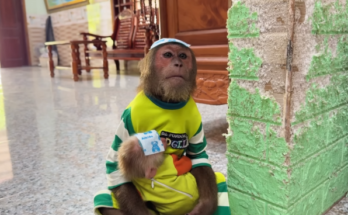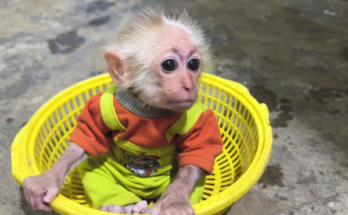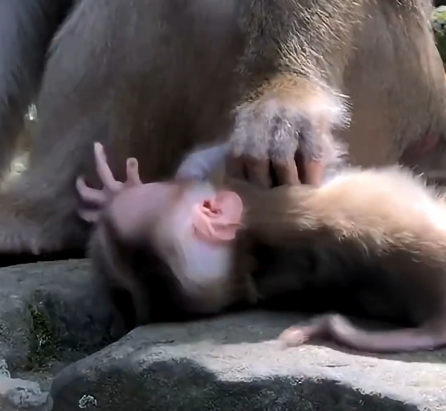
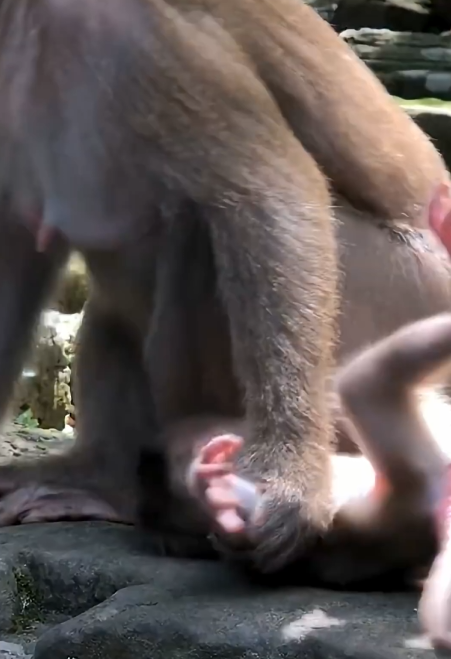
In the wild, the relationship between a mother monkey and her baby is one of the most important and closely observed bonds. Nursing, or breastfeeding, is central to this relationship during the early months of life. It provides the infant with nutrition, immunity, and emotional comfort. However, there comes a time when the mother needs to encourage independence, leading to a complex, sometimes dramatic process: weaning. Observing mother monkeys signaling their babies to stop breastfeeding offers a fascinating glimpse into animal behavior, social dynamics, and the delicate balance between care and independence.
Understanding the Weaning Process
Weaning is the gradual transition from milk to solid foods. In monkeys, the timing of weaning varies by species, environmental conditions, and the mother’s circumstances. For example, in some species of macaques, infants may begin weaning around six months, while in larger primates like baboons or chimpanzees, weaning can take over a year.
Weaning is not simply a physical transition—it is also a social and emotional one. The mother must balance the nutritional needs of her baby with her own energy and reproductive considerations. Nursing requires significant resources, and prolonging it can limit the mother’s ability to recover and prepare for future offspring.
In the wild, mothers often begin signaling their infants to reduce breastfeeding gradually. These signals can be subtle—redirecting attention, creating small delays, or limiting access—or more direct, involving vocalizations, gentle pushes, or even mild displays of frustration. Observing these interactions provides an intimate look at the negotiation between dependency and independence.
Signs That a Mother Wants to Stop Breastfeeding
Monkeys use a variety of behavioral cues to indicate that it is time to wean. Understanding these signals can help researchers, wildlife enthusiasts, and caregivers interpret the dynamics between mother and infant.
1. Redirection
One common method is redirecting the baby’s attention. Mothers may offer a leaf, fruit, or play object to distract the infant from nursing. This encourages the baby to engage in alternative behaviors while gradually reducing reliance on breast milk.
2. Physical Deterrence
Some mothers gently push their baby away when it attempts to nurse or shift its body to make access more difficult. This physical guidance communicates boundaries without causing harm and signals that the nursing phase is ending.
3. Vocalizations
Monkeys often use soft grunts, shrieks, or scolding sounds to indicate dissatisfaction when the baby attempts to nurse excessively. These vocal cues reinforce the mother’s intention to encourage independence.
4. Social Cues
In species that live in social groups, mothers may allow older infants or juveniles to observe and interact with the nursing baby, subtly teaching the infant about social norms and encouraging exploration beyond the mother’s care.
5. Environmental Manipulation
Mothers sometimes move to areas with less comfort for nursing or to locations where the infant must forage or interact with the environment. This encourages the infant to seek food and stimulation elsewhere.
The Baby Monkey’s Perspective
For the infant, weaning can be confusing and emotionally charged. Breastfeeding provides more than nutrition—it offers comfort, warmth, and security. When the mother begins signaling that nursing is no longer possible, the baby may respond with protests, cries, or attempts to cling.
These interactions can appear dramatic or even humorous to observers. Videos of baby monkeys tugging at their mothers, making exaggerated facial expressions, or following them persistently illustrate the tension between the infant’s attachment and the mother’s push for independence.
From a developmental perspective, these behaviors are natural. They reflect the infant’s growing awareness, cognitive development, and emotional attachment. The negotiation between mother and infant is a key aspect of social learning and prepares the baby for independent life within the troop.
The Biological Reasoning Behind Weaning
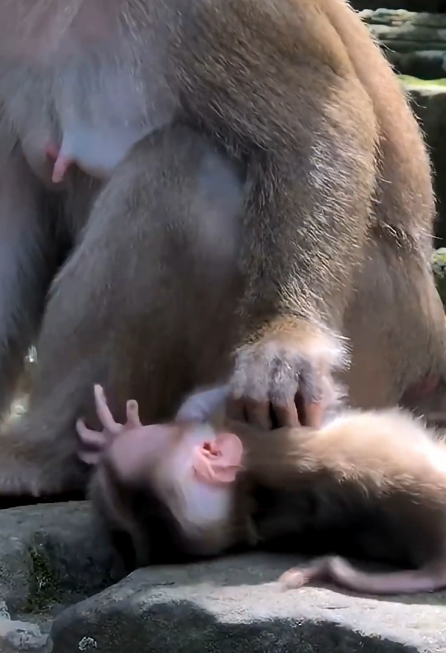
Weaning is crucial for both mother and infant from a biological standpoint.
Energy Allocation
Nursing requires significant energy from the mother. Producing milk consumes calories and nutrients that could otherwise be used for foraging, movement, or maintaining her own health. By weaning the infant, the mother reallocates energy toward her survival and future reproductive cycles.
Encouraging Self-Sufficiency
Weaning forces the infant to explore solid foods, develop foraging skills, and engage more with the social environment. This independence is essential for survival in the wild, where reliance on the mother is not sustainable indefinitely.
Reducing Disease Risk
Prolonged breastfeeding can increase exposure to pathogens for both mother and infant. By transitioning to solid foods, the risk of disease transmission may decrease, supporting long-term health.
Social Integration
In many monkey species, weaning coincides with increasing social engagement. Infants begin interacting with peers, learning social hierarchies, and participating in play that develops physical and cognitive skills necessary for adult life.
Examples from Different Monkey Species
Weaning behaviors vary significantly across monkey species.
Macaques
Macaques often display a gradual weaning process. Mothers redirect infants by offering fruits or grooming other troop members. Infants may resist initially but adapt over weeks, gradually reducing nursing frequency.
Baboons
In baboon troops, mothers use more overt social and physical cues. Older juveniles may observe the baby’s attempts to nurse, and mothers often use vocalizations to discourage persistent infants. Weaning may coincide with increased mobility and exploratory behavior.
Capuchins
Capuchin mothers tend to be playful in their weaning methods. They use redirection, play, and mild scolding to teach infants independence. Infants may experiment with tools or food sources during this period, supported by maternal guidance.
Orangutans and Chimpanzees
In great apes, weaning is a longer process. Infants rely on milk for an extended period, often alongside learning complex foraging techniques. Mothers gradually reduce nursing frequency while encouraging exploration and social learning.
Observing Weaning as a Source of Relaxation and Stress Relief
While weaning can appear dramatic, observing these interactions provides a unique opportunity for relaxation and stress relief. Watching the nuanced, tender, and sometimes humorous negotiation between mother and baby monkeys engages our empathy, attention, and curiosity.
Videos or in-person observations of weaning often highlight:
- Playful Persistence: Baby monkeys may cling, pull, or make exaggerated attempts to nurse, creating moments of humor.
- Gentle Guidance: Mothers’ patient redirection and occasional vocal cues showcase nurturing behavior even in the face of challenges.
- Social Learning: Observing how infants interact with peers and the environment provides insight into the intelligence and adaptability of monkeys.
These observations allow viewers to connect emotionally with the animals, offering a form of natural mindfulness. Focusing on the mother-baby interaction draws attention to the present moment, reducing stress and promoting calm.
Challenges and Observations in Captivity
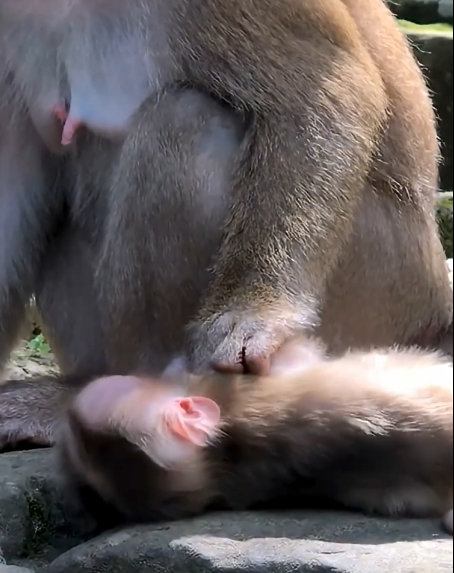
In sanctuaries or wildlife reserves, caretakers often witness mother monkeys signaling weaning in ways similar to the wild. Observing these behaviors is important for animal welfare, helping caregivers ensure that infants are adapting properly to solid foods, social engagement, and independence.
Challenges may include:
- Resistance to Weaning: Some infants may be highly persistent, requiring careful monitoring to prevent over-dependence.
- Nutrition Balance: Caretakers ensure that infants gradually meet nutritional needs through supplemental foods as nursing decreases.
- Social Integration: Encouraging healthy peer interaction during weaning helps prepare infants for life within the troop.
Captive observations provide invaluable insights into natural weaning behavior and can inform conservation, rehabilitation, and enrichment programs.
Lessons for Humans
Watching mother monkeys encourage weaning teaches humans important lessons about care, patience, and development:
- Balance Between Nurturing and Independence: Mothers demonstrate the importance of setting boundaries while providing care.
- Patience in Development: Growth and independence are gradual processes requiring time and support.
- Emotional Negotiation: Healthy development involves negotiation, adaptation, and emotional resilience.
- Social Learning: Observing and interacting with peers during developmental transitions is crucial for learning essential life skills.
These lessons resonate beyond the animal kingdom, providing guidance for parenting, caregiving, and understanding developmental psychology.
Conclusion
The process of a mother monkey signaling her baby to stop breastfeeding is a fascinating blend of biology, social behavior, and emotional communication. Through subtle cues, physical gestures, and occasional vocalizations, mothers guide their infants toward independence while maintaining care and nurturing.
Observing these interactions offers both educational and emotional benefits. Humans can gain insight into natural development, social learning, and the complexity of maternal care while simultaneously experiencing relaxation, stress relief, and emotional engagement.
From macaques to chimpanzees, each species demonstrates unique weaning behaviors, revealing the richness and diversity of monkey life. By understanding and appreciating these moments, we can connect more deeply with the natural world and the universal themes of nurturing, growth, and the delicate balance between care and independence.
In essence, the mother monkey’s attempts to wean her baby provide a window into life’s rhythms—teaching, guiding, and gently encouraging growth. Observing this journey reminds us of the beauty of maternal care, the humor in everyday struggles, and the importance of supporting the next generation toward independence.
Watching mother monkeys navigate the weaning process with patience, wisdom, and occasional humor is not only captivating—it is a lesson in life, love, and the enduring bond between parent and child across species.