Achieving the full splits is a goal many people dream of—whether for yoga, dance, martial arts, gymnastics, or simply the joy of moving freely. The idea of sliding effortlessly into the floor with open hips and long, flexible legs can feel inspiring and intimidating at the same time. The good news is this: you don’t need “perfect genetics” or years of extreme training to unlock deep leg flexibility. With the right approach, consistency, and patience, progress can happen faster than you think.
This guide focuses on safe, effective splits training designed to help you open your hips, lengthen your hamstrings, and build strength where you need it most. While “FAST” progress is possible, remember that flexibility is a conversation with your body—not a battle.
Understanding the Splits
Before training, it’s important to understand what the splits actually require.
There are two main types:
- Front Splits: One leg forward, one leg back. This requires deep flexibility in the hamstrings of the front leg and hip flexors of the back leg.
- Middle (Side) Splits: Legs extend out to the sides. This requires flexibility in the inner thighs (adductors) and hips.
Both types demand not only flexibility, but active strength to support your joints and protect against injury.
How to Warm Up Properly (Essential!)
Never stretch cold muscles.
Begin every splits session with 5–10 minutes of gentle movement:
- Light jogging in place
- Marching knees
- Hip circles
- Leg swings (front-to-back and side-to-side)
Warming up increases blood flow, improves mobility, and dramatically reduces injury risk.
Think of warming up as unlocking the door before trying to walk inside.
Key Principles for Faster Progress
To train splits efficiently and safely, keep these principles in mind:
1. Consistency Beats Intensity
Stretching a little every day works better than forcing long sessions once a week.
2. Relaxed Breathing = Deeper Stretching
Tension blocks flexibility. Slow breathing tells your nervous system it’s safe to release.
3. Strength Supports Flexibility
The stronger your muscles are at end ranges, the safer and deeper you can stretch.
4. Pain Is Not Progress
Discomfort is okay. Sharp pain is not. Respect your limits.
Front Splits Training Routine

1. Low Lunge Hip Flexor Stretch
Start in a low lunge with your back knee on the floor.
- Sink hips forward gently.
- Keep chest upright.
- Squeeze glutes lightly to protect the lower back.
Hold for 30–60 seconds per side.
This stretch is crucial—tight hip flexors often block splits progress more than tight hamstrings.
2. Half Split (Hamstring Focus)
From the low lunge, shift hips back and straighten the front leg.
- Flex your front foot.
- Keep spine long.
- Fold forward slightly.
Hold for 30–60 seconds, breathing deeply.
You should feel this in the hamstrings, not the knee.
3. Deep Lunge with Arm Reach
Return to your lunge.
- Raise arms overhead.
- Side bend slightly toward the front leg side.
This adds a deeper stretch through the hip flexor and side body.
Hold 30 seconds.
4. Front Splits Slides (Supported)
Use yoga blocks, pillows, or your hands for support.
- Slowly slide the front foot forward and back foot backward.
- Stop before pain.
- Keep hips squared.
Hold your deepest comfortable position for 20–40 seconds.
Repeat 2–3 rounds.
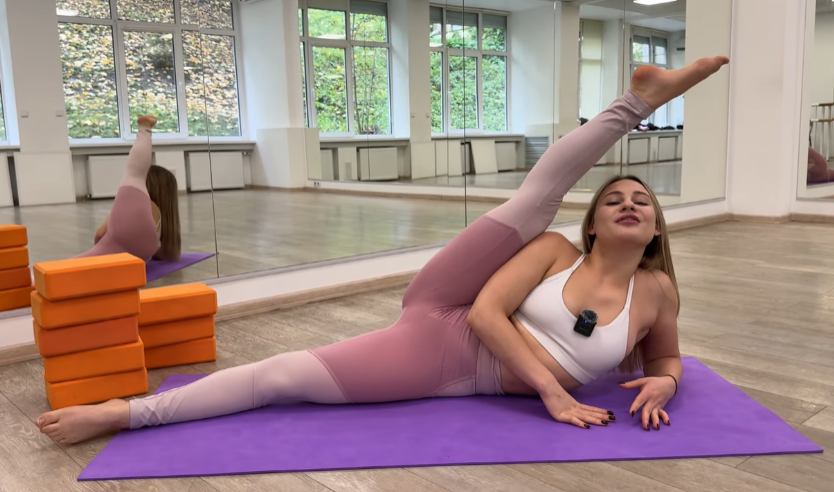
Middle (Side) Splits Training Routine
1. Wide-Leg Forward Fold
Stand with feet wide apart.
- Hinge forward from hips.
- Hands on the floor or blocks.
Hold 45–60 seconds.
This gently opens the inner thighs and prepares the hips.
2. Frog Pose
Kneel on all fours, then widen knees while keeping feet out.
- Lower forearms to the floor if comfortable.
- Keep spine neutral.
Hold 30–90 seconds, breathing deeply.
This is one of the most effective stretches for middle splits.
3. Side-to-Side Cossack Stretch
From a wide stance:
- Bend one knee deeply.
- Keep the other leg straight.
- Shift side to side slowly.
This builds active strength while increasing range of motion.
Do 6–10 slow reps.
4. Middle Splits Hold (Supported)
Slide feet outward slowly.
- Keep toes pointing up or forward.
- Use hands or blocks for balance.
Hold your edge for 20–40 seconds, then gently exit.
Strength Exercises That Speed Up Splits
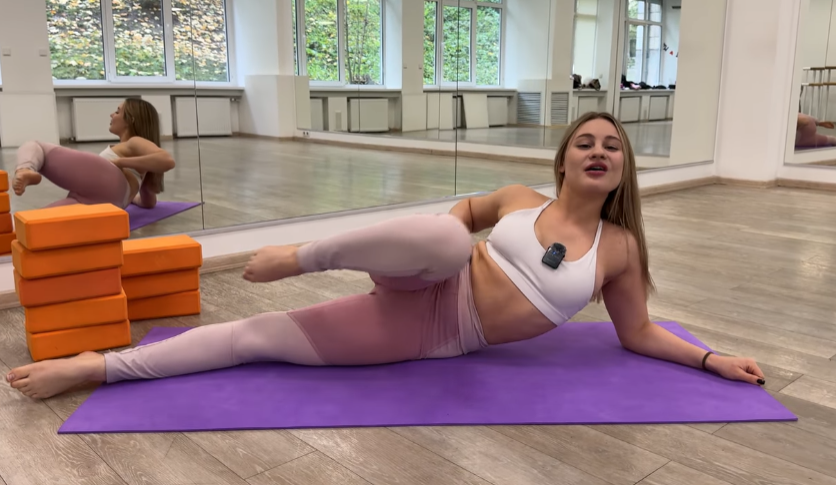
Stretching alone is not enough. Add these strength drills 2–3 times per week:
- Glute Bridges – support hip extension
- Hamstring Slides – strengthen lengthened hamstrings
- Adductor Leg Lifts – protect inner thighs
- Lunges – build stability in deep ranges
Strong muscles relax more easily and protect joints.
How Often Should You Train?
For faster results:
- 5–6 days per week light stretching
- 2–3 days per week strength work
Sessions can be short—20–30 minutes is enough when done consistently.
Common Mistakes to Avoid
- Forcing the stretch
- Holding your breath
- Skipping warm-ups
- Ignoring hip flexors
- Comparing your progress to others
Flexibility is deeply individual. Your timeline is valid.
Recovery Matters
Progress happens when your body recovers.
Support recovery with:
- Gentle walking
- Light yoga
- Warm showers
- Adequate sleep
- Hydration
On rest days, do gentle mobility rather than deep stretching.
Mental Flexibility = Physical Flexibility
Your nervous system plays a major role in how flexible you feel. If your mind is tense, your muscles will resist.
Approach splits training with curiosity, patience, and kindness.
Every session—even if it feels “tight”—is building awareness and progress.
Final Thoughts
Unlocking full splits and deep leg flexibility is not about pushing harder—it’s about training smarter. When you combine proper warm-ups, consistent stretching, supportive strength, and calm breathing, your body responds.
Progress may surprise you.
Some days you’ll feel open. Other days you’ll feel stiff. Both are part of the journey.
Celebrate small wins:
A deeper lunge.
A calmer breath.
A smoother exit from a stretch.
Over time, these moments add up—and one day, you’ll realize the floor feels closer than ever.
Train patiently. Move mindfully.
And enjoy the freedom that comes with a flexible, resilient body.