When the rescue truck first pulled up to the abandoned warehouse, everyone braced themselves.
The call had warned them: three large dogs, possibly aggressive, left behind for weeks. The building stood on the edge of town, windows broken, weeds growing through cracked concrete. It was the kind of place where fear lived easily, and hope struggled to survive.
The rescuers moved slowly, leashes ready, voices calm but firm. Big dogs often meant big problems—fear, trauma, defensive behavior. Experience had taught them to expect the worst.
What they didn’t expect was whining.
Soft, high-pitched whining.
As the metal door creaked open, three enormous shapes shifted in the shadows. One let out a small, uncertain bark that sounded more like a question than a warning. Another scooted backward, nails scraping gently against the floor. The third sat down hard and looked up with wide eyes.
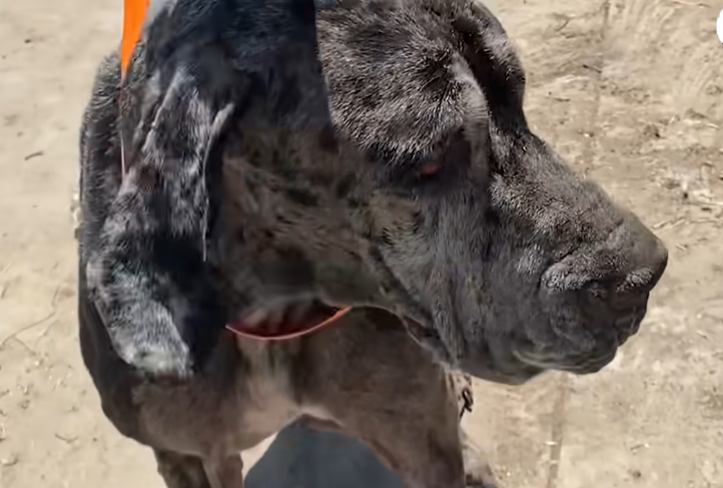
They were massive—thick necks, broad chests, powerful legs—but their body language told a completely different story.
They weren’t dangerous.
They were terrified.
The dogs had been left behind when their owner moved away, tied loosely inside the warehouse with empty bowls and no plan. Somehow they had survived, feeding on scraps and rainwater, waiting for someone who never came back.
The rescuers approached carefully.
“It’s okay,” one of them whispered.
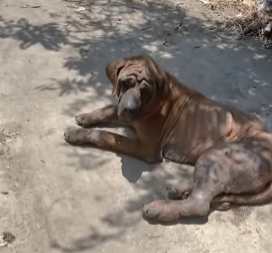
At the sound of her voice, the largest dog—later named Bear—flopped onto his side, belly exposed, tail thudding against the ground. The second dog, Moose, tried to crawl behind Bear, despite being almost the same size. The third, Tank, pressed his face into the rescuer’s knee and whimpered like a puppy.
Everyone froze.
Then someone laughed.
“They’re… babies,” another rescuer said in disbelief.
Huge babies.
At the shelter, the staff prepared for chaos. Big dogs usually needed space, strength, and confidence. Instead, they got something entirely different.
Bear refused to walk into his kennel unless someone held his paw. Moose cried whenever he couldn’t see a human. Tank attempted to sit on laps—any lap—despite weighing nearly eighty pounds.
The first night was especially revealing.
Thunder rolled through the area, loud and sudden. Volunteers rushed to check on the dogs, expecting barking, panic, or attempts to escape.
Instead, they found all three pressed together in the corner of their shared kennel, shaking, eyes wide. When a volunteer knelt down, Tank tried to climb into her arms completely, wrapping his front legs around her shoulders.
“It’s okay,” she murmured, hugging him back.
Tank sighed loudly and melted against her, all muscle and drool and relief.
From that moment on, the shelter staff knew these dogs weren’t just big—they were gentle souls who had never learned how to be brave on their own.
They followed volunteers everywhere.
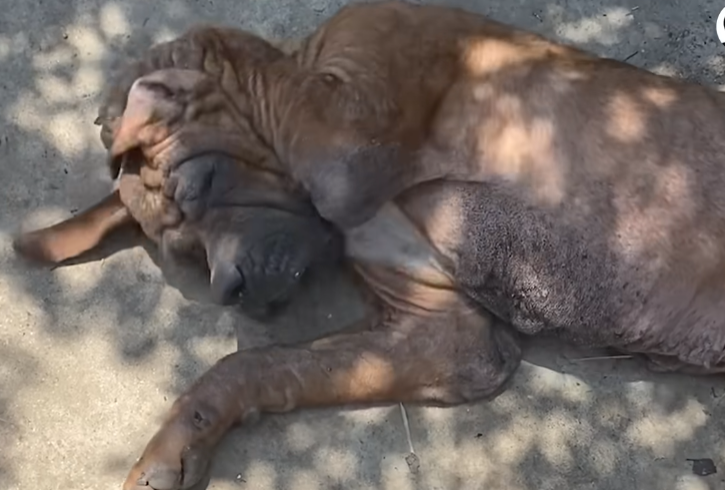
If someone sat on the floor, Bear slowly lowered himself until he was half-lying across their legs. Moose carried toys gently, refusing to chew them, just holding them like comfort objects. Tank discovered mirrors and barked at his reflection, then hid behind the nearest person.
Their size made people cautious at first. Potential adopters would stop, look, and hesitate.
“They’re so big,” someone would say.
And then Bear would roll onto his back and wave his paws in the air.
Or Moose would lean his full weight into a stranger, demanding hugs.
Or Tank would gently place his head on someone’s chest and sigh.
People’s hearts melted instantly.
One volunteer began calling them “the toddlers.”
They needed reassurance constantly. If a volunteer left the room, Moose cried. If a door closed too loudly, Bear jumped and hid his face. Tank hated being alone so much that he would drag blankets around just to build a nest that smelled like humans.
Despite everything they’d been through, there was no anger in them. No aggression. Just confusion—and an overwhelming need for love.
The shelter shared their story online with a simple caption:
“These abandoned big dogs turned out to be the biggest babies we’ve ever met.”
The video showed Bear trying to squeeze into a dog bed meant for a puppy, Moose gently licking a volunteer’s face, and Tank tripping over his own feet while following someone down the hall.
The response was immediate.
Comments poured in from around the world.
“I thought big dogs were scary—now I’m crying.”
“They just want to be loved.”
“Please tell me they find homes.”
Applications came in too, but the shelter was careful. These dogs didn’t need just space—they needed patience, gentleness, and people who understood that strength doesn’t cancel sensitivity.
Weeks passed. The dogs settled into routines. Walks became less frightening. New people became exciting instead of terrifying. Still, their babyish habits never disappeared.
Bear insisted on being tucked in at night. Moose needed bedtime kisses. Tank slept with his head on a pillow like a human, snoring softly.
Then came adoption day—three separate days, three separate goodbyes.
Bear was first.
A quiet older couple with a big yard and even bigger hearts sat with him for nearly an hour. Bear climbed into the woman’s lap as if he’d known her forever.
“I think he chose us,” she whispered.
Bear moved into a home with couches he wasn’t allowed on—but somehow always ended up on anyway. He learned what slow mornings felt like, what routine meant, and how safe it was to be wanted.
Moose went next.
A young man who worked from home met him and immediately understood. Moose followed him from room to room, leaning into his legs, resting his head against his chest whenever he sat down.
“He needs company,” the man said. “So do I.”
They became inseparable.
Tank was the last to leave.
The shelter worried about him most. His fear of being alone was deep. When his kennel mate left, Tank cried for hours, pacing, searching.

Then a family arrived—with kids.
Tank watched from his kennel as the children sat on the floor, laughing quietly. One of them rolled a ball gently toward him. Tank approached cautiously, then picked up the ball and dropped it into the child’s lap.
Game on.
By the end of the visit, Tank was sprawled across all three kids, licking faces, tail wagging wildly.
“He’s a baby,” the youngest child said proudly.
Tank went home that day.
In his new house, Tank learned how loud laughter could be without being scary. He learned that someone would always come back. He learned how it felt to fall asleep surrounded by warmth.
Months later, the shelter received updates.
Bear had a favorite blanket and refused to sleep without it. Moose had learned to carry groceries (carefully) and still cried if his human went to the bathroom without him. Tank wore pajamas and thought he was a lap dog—still.
Looking at the photos, the shelter staff smiled.
These dogs had been abandoned because of their size. Too big. Too much. Too hard.
But what they really were—what they always had been—were oversized hearts wrapped in massive bodies. Dogs who never learned to stop being puppies because no one had taught them they needed to grow up to survive.
They didn’t need to be tough.
They needed to be loved.
And once they were, they showed the world something beautiful:
That strength and softness can live in the same body.
That being big doesn’t mean being brave.
And that sometimes, the biggest dogs are the biggest babies of all—and that’s exactly what makes them perfect.