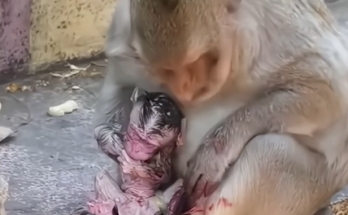
In the intricate world of monkeys, life is far from simple. The dense forests and open savannas where monkeys live are not just landscapes filled with predators from the outside; they are also stages for complex social dynamics that can pose dangers from within. Among these, the life of a mother monkey is particularly challenging. Not only must she protect her young from external threats such as predators or harsh environments, but she must also navigate risks that come from within her own group. These threats—from social hierarchies, rivalries, and even aggression from other monkeys—require constant vigilance and strategy.
A mother monkey’s life revolves around the survival of her infant. The moment her baby is born, her attention shifts almost entirely to this tiny, vulnerable being. The newborn clings to her fur, completely dependent, and her every action is guided by instinct, experience, and an acute awareness of danger. While predators such as snakes, eagles, and large cats are obvious threats, internal group dynamics can be just as dangerous, if not more so.
In many monkey species, social hierarchies are strictly enforced. Dominant males often control access to resources, mates, and even social privileges. When a new male rises to dominance within a troop, one of the risks is infanticide. This behavior, though distressing to human observers, is a survival strategy in some species. A new male may kill infants that are not his own to bring the females back into estrus, ensuring that his genes are passed on. For a mother, this threat is immediate and terrifying. Vigilance is critical; she must monitor the movements of dominant males constantly and position herself and her baby to minimize risk.
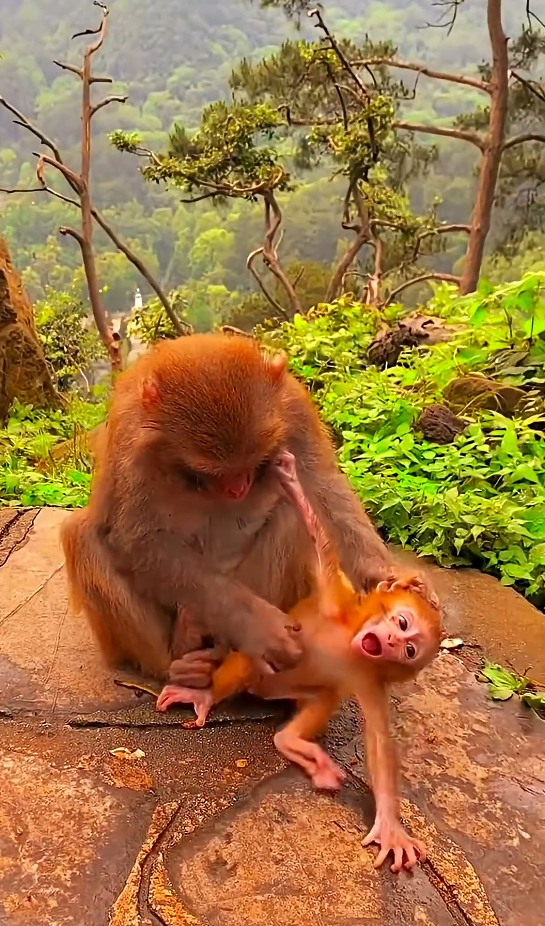
Even within the female members of a group, competition can be fierce. Female monkeys may compete for food, grooming, or social standing, and conflicts sometimes escalate physically. A mother with an infant can become a target, as her vulnerability is more visible. Rival females may attempt to displace her from preferred resting spots or access to food. In some cases, jealousy or aggression may lead to harm or even attempts to separate a mother from her young. For the mother, this means that her focus must extend beyond external predators to the behavior of every troop member. Every interaction is carefully monitored.
The threat is not always overt. Subtle forms of social pressure—displacement, exclusion from grooming sessions, or intimidation—can have serious consequences. A mother who is stressed or unable to access sufficient food because of social aggression may struggle to produce enough milk or maintain her health, which directly impacts the survival of her baby. In this way, the internal social environment is as critical to the infant’s well-being as the external environment.
Mother monkeys develop strategies to cope with these internal threats. Alliances within the group are crucial. A mother may seek protection from related females or socially dominant males who have shown tolerance or support. Grooming becomes more than a bonding activity—it is a political tool that strengthens alliances and ensures safety. By carefully choosing when and with whom to interact, a mother can create a protective network around herself and her infant.
Observation plays a key role in maternal survival. A mother must read subtle cues: shifts in posture, vocalizations, or glances that signal potential danger from a rival or dominant individual. Her attention is rarely fully relaxed; even when resting, her senses remain alert. Mothers often position themselves strategically within the group, keeping their infants close while placing themselves near allies or away from known aggressors. Every movement is deliberate. Every interaction carries weight.
Play and exploration, crucial for infant development, also present challenges in this context. A mother must allow her baby to practice climbing, jumping, and social interaction, but she must do so while minimizing exposure to internal threats. She watches not only for environmental dangers but also for troop members whose presence could result in injury or conflict. Teaching a baby to navigate social dynamics is as important as teaching it to navigate trees.
Stress from internal group threats can manifest physically. Studies have shown that mothers under constant social pressure may have elevated cortisol levels, which can affect lactation, immunity, and overall health. Infants in these situations are also impacted; they may develop heightened anxiety, exhibit clinginess, or struggle with social interactions later in life. The mother’s vigilance, therefore, is both a protective and preventative measure, aimed at ensuring long-term survival and healthy development of the infant.
Examples from the wild illustrate the intensity of these dynamics. In baboon troops, for instance, researchers have observed mothers actively defending their young from attacks by other females or lower-ranking males attempting to assert dominance. Some mothers have been seen intervening in fights, positioning themselves between aggressors and infants, or using vocalizations to warn or deter attackers. Their actions are deliberate, informed by experience, and sometimes involve coordinated defense with allies in the troop.
Even seemingly calm environments carry hidden dangers. Subtle shifts in hierarchy, seasonal changes in resources, or the arrival of unfamiliar individuals can trigger aggression. A mother must continuously reassess her environment and the behavior of those around her. This constant vigilance is exhausting, yet necessary. For a mother monkey, the stakes are always high: a single moment of inattention could have catastrophic consequences for her baby.
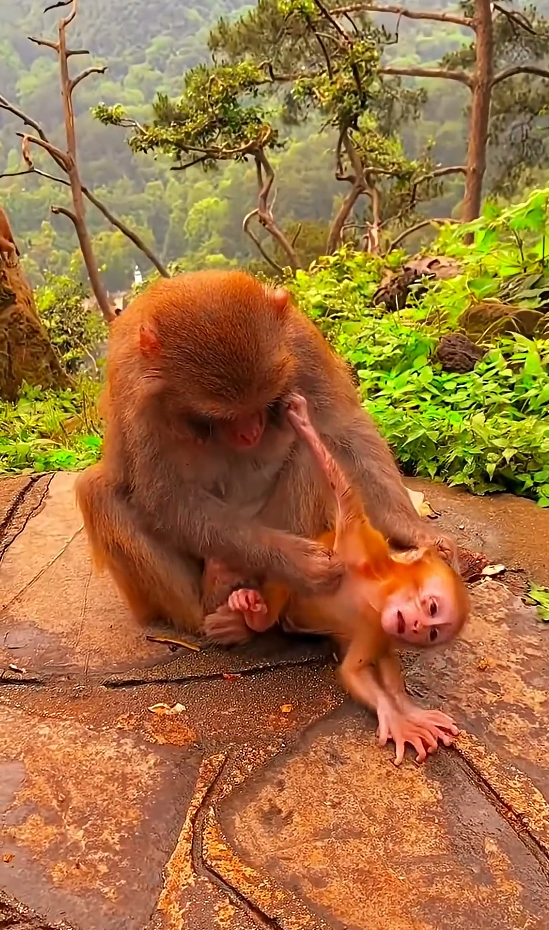
Despite these challenges, maternal care in monkeys is extraordinary. The bond between mother and infant is intense and enduring. Mothers show remarkable resilience and intelligence in managing both external and internal threats. They teach their babies to read social cues, to navigate conflicts, and to form alliances—skills that are essential for survival. By observing and protecting their infants, mothers pass on not only physical safety but also crucial social knowledge that will guide the next generation.
Mother monkeys also demonstrate flexibility. In response to new threats or changes within the troop, they adjust their behavior. If a dominant male becomes more aggressive, a mother may relocate her infant temporarily or seek allies for protection. If a rival female shows hostility, the mother may alter feeding patterns or resting locations. These adaptations are signs of intelligence and survival strategy, showing that maternal care is both instinctual and highly adaptive.
In many ways, the dangers from within the group are as complex as those from outside. Predators are predictable—they attack when they hunt. But internal threats are dynamic, unpredictable, and social. They require constant assessment, memory, and decision-making. A mother monkey must navigate a constantly shifting web of relationships, balancing protection, social standing, and resource access.
Ultimately, the vigilance of mother monkeys underscores the incredible complexity of life in social primates. Mothers face threats from predators, environmental challenges, and internal social pressures, yet they navigate these risks with intelligence, patience, and devotion. Their constant attention, strategic behavior, and protective instincts ensure that their infants have the best chance of survival and social competence.
In conclusion, while many may admire the nurturing bond between mother and infant in monkeys, few recognize the unseen challenges mothers face within their own groups. Threats from other troop members, rivalries, and social hierarchies demand vigilance, strategy, and adaptability. Mother monkeys must constantly balance protection, social alliances, and resource access while ensuring their infants’ growth and safety. Their lives are a testament to resilience, intelligence, and the extraordinary power of maternal care in the animal kingdom.
Mother monkeys teach us that survival is not just about avoiding predators but navigating complex social worlds. Their vigilance, courage, and strategic care reveal the remarkable depth of maternal instinct—an instinct that ensures the next generation thrives, even in the face of danger from within.