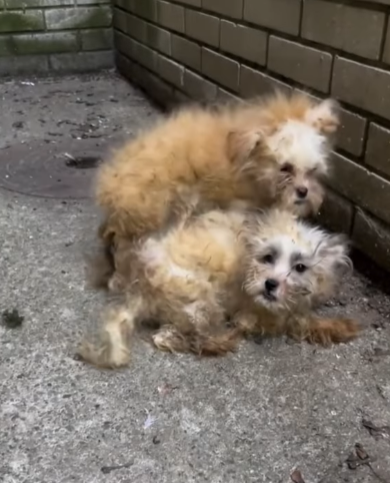
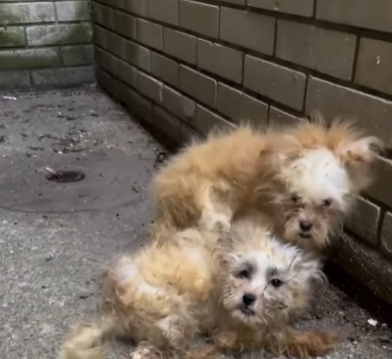
The rain had been falling since dawn, thin at first, then heavier, as if the sky itself had decided to weep without restraint. At the edge of the old market road, where broken stones met weeds and forgotten dreams, two small figures crouched beneath a torn piece of plastic. Their clothes were soaked, their feet bare and trembling against the cold ground. One was older, perhaps eight or nine. The other could not have been more than five. They clung to each other so tightly that it was hard to tell where one ended and the other began.
“Please don’t hurt us…” the older sister whispered, her voice shaking more than her hands. She did not know who she was begging. The words came from instinct, from fear learned too early, from nights that taught her kindness was rare and mercy uncertain.
Her name was Lina. She wrapped her thin arms around her little sister, Mira, whose face was pressed into her chest. Mira’s small fingers gripped Lina’s shirt as if letting go would cause the world to disappear entirely. She had stopped crying hours ago, exhausted by fear, hunger, and confusion. Her tears were gone, but her body still shook with silent sobs.
They had been abandoned two days earlier.
Lina remembered everything too clearly—the argument, the shouting voices, the sound of something breaking, and then the sudden silence. Their mother had knelt in front of them, eyes red, hands trembling. She had kissed their foreheads again and again, whispering apologies that made no sense at the time. Then she stood up, turned away, and never came back.
Lina did not understand why. She only knew that when night fell, no one came for them.
At first, Lina had tried to be brave. She told Mira stories, silly ones about birds that could talk and rivers made of milk. She promised food would come soon, that their mother would return smiling and laughing, carrying warm bread. But hunger grew sharper with each hour, and the cold seeped into their bones. By the second night, even Lina’s courage felt thin and fragile.
Now, as footsteps echoed somewhere nearby, Lina’s heart began to pound violently.
Someone was coming.
She pulled Mira closer, instinctively turning her back to shield her sister. Her mind raced with terrifying possibilities—angry strangers, cruel laughter, rough hands. She had seen enough in her short life to know that being small and alone made you invisible to kindness and easy prey to cruelty.
“Please,” Lina whispered again, barely louder than the rain. “Please don’t hurt us.”
The footsteps stopped.
A shadow fell across them, blocking the pale gray light of the sky. Lina slowly looked up, her body tense, ready to run even though she knew there was nowhere to go. Standing before them was a man, tall and thin, holding a worn umbrella. His clothes were simple, his face lined with years of hardship. But his eyes—his eyes were soft.
He did not speak at first.
Mira stirred, lifting her head slightly. When she saw the stranger, she shrank back, burying her face in Lina’s chest. Lina swallowed hard, forcing herself not to cry. She had to be strong. She was the big sister. She was all Mira had.
“I’m not here to hurt you,” the man said quietly, kneeling so he would not tower over them. His voice was gentle, careful, as if loud words might shatter something delicate.
Lina didn’t answer. Words felt dangerous. Trust felt even more so.
The man slowly placed a small paper bag on the ground, then pushed it toward them with two fingers. “It’s bread,” he said. “And some bananas.”
The smell reached them instantly—warm, real, undeniable. Lina’s stomach twisted painfully, reminding her just how hungry she was. Mira lifted her head again, eyes wide, staring at the bag as if it might vanish if she looked too hard.
“Go on,” the man encouraged softly. “It’s yours.”
Lina hesitated. She had learned that gifts often came with hidden costs. But Mira whimpered weakly, and Lina felt her resolve crack. Slowly, cautiously, she reached for the bag, pulling it close.
Nothing happened.

No shouting. No grabbing hands.
With shaking fingers, Lina opened the bag and broke a piece of bread in half. She handed the larger piece to Mira without hesitation. Mira took it, stared at it for a second, and then began to eat as if afraid someone would take it away.
Lina watched her sister eat before allowing herself a bite. The bread was simple, slightly stale, but to Lina it tasted like safety.
The man remained silent, watching them with a mixture of sadness and relief.
“Where are your parents?” he asked gently after a while.
Lina froze. Her throat tightened. She shook her head, unable to speak. Tears welled up despite her efforts to hold them back.
“They… they left,” she finally whispered.
The man closed his eyes briefly, as if the words weighed heavily on him. When he opened them again, his gaze was steady and kind. “What are your names?”
“I’m Lina,” she said. “This is Mira.”
“They’re beautiful names,” he replied. “My name is Dara.”
Rain continued to fall, but Dara shifted his umbrella so it covered both girls. He noticed their bare feet, their soaked clothes, the way Lina’s body curved protectively around Mira. Something inside him broke quietly.
“Would you like to come somewhere warm?” he asked carefully. “There’s food. And dry clothes. You don’t have to decide now.”
Lina looked at him, searching his face for lies. All she saw was patience.

“What if… what if you hurt us later?” she asked, her voice barely audible.
Dara felt his chest ache. “Then you can run,” he said honestly. “I won’t stop you.”
The simplicity of the answer surprised her.
After a long moment, Lina nodded.
The walk was slow. Mira grew tired quickly, and Dara offered to carry her. Lina hesitated, then nodded again. Mira fell asleep almost instantly in his arms, her body finally relaxing for the first time in days.
Dara’s home was small but clean. He lit a lamp, warmed water, and cooked rice with vegetables. Lina watched everything closely, alert, cautious. But when Mira woke up warm and fed, when dry clothes replaced wet rags, when no one raised their voice or hand, Lina finally allowed herself to breathe.
That night, Lina did not sleep much. She lay beside Mira on a thin mattress, listening to the sounds of the house. But fear slowly gave way to exhaustion, and exhaustion turned into rest.
Days passed.
Dara did not ask for anything. He helped Lina wash her hair, taught Mira songs, and made sure they ate every meal. He spoke gently, never forcing answers, never rushing trust. Slowly, Lina’s shoulders lowered. Mira began to laugh again.
One evening, as the sun dipped low, Lina sat beside Dara outside the house. “Why did you help us?” she asked.
Dara looked at the sky. “Because once,” he said quietly, “someone helped me when I had nothing.”
Lina nodded, understanding more than words could say.
The fear did not vanish overnight. Memories lingered, shadows remained. But in that small house, the sisters learned something new—that mercy existed, that not every stranger brought harm, and that sometimes, when hope seemed lost, kindness arrived softly, like rain that nourished instead of drowning.
And though Lina would always remember the night she begged not to be hurt, she would also remember the day someone listened.