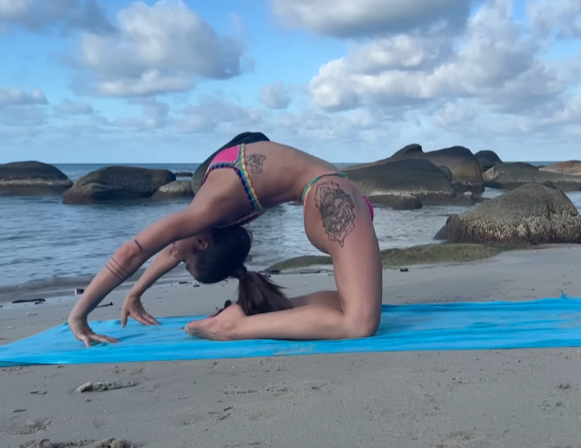
Day 2 of the 30 Day Beach Yoga Challenge invites us to gently shift our awareness from grounding and stability into flow, feeling, and creativity as we focus on the Sacral Chakra, also known as Svadhisthana. Practicing beside the ocean makes this experience even more powerful, because water is the natural element of the sacral chakra. The rhythm of the waves, the softness of the sand, and the endless movement of the sea mirror the essence of this energy center perfectly.
The sacral chakra is located in the lower abdomen, just below the navel. It governs our emotions, sensuality, creativity, pleasure, and ability to connect with others. When this chakra is balanced, we feel emotionally fluid, expressive, passionate, and open to joy. When it is blocked or imbalanced, we may experience emotional numbness, guilt, fear of intimacy, creative stagnation, or difficulty expressing feelings.
On Day 2, the intention is not to push the body, but to move like water—smooth, rhythmic, and responsive. Beach yoga offers the ideal environment for this practice. The sand challenges stability while encouraging softness in the joints, reminding us to let go of rigidity and embrace adaptability.
We begin the session seated comfortably on the sand, facing the ocean. The sound of the waves becomes our background mantra. Hands rest gently on the lower belly as we take slow, deep breaths. With each inhale, we imagine warm orange light—the color of the sacral chakra—filling the pelvis and lower abdomen. With each exhale, we release tension, judgment, and emotional heaviness. This breath awareness immediately creates a connection between mind and body.
Gentle hip-opening movements follow. Slow pelvic tilts, seated circles, and cat-cow variations awaken the sacral area. These movements may feel subtle, but they are deeply effective. The sacral chakra responds best to softness rather than force. As the hips begin to loosen, emotions may surface. This is natural. Day 2 is about allowing feelings to arise without labeling them as good or bad.
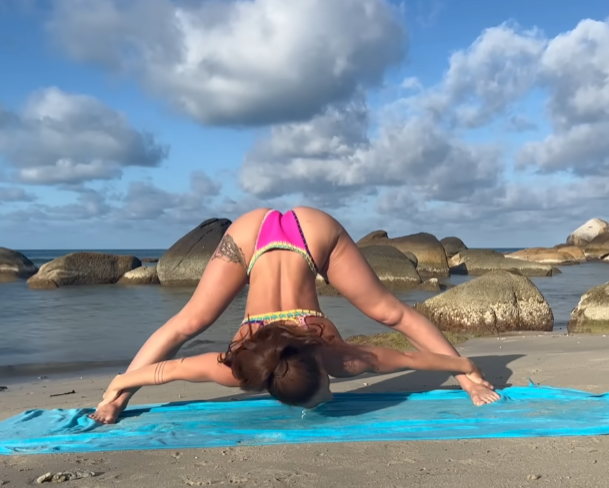
As we transition into standing poses, we maintain a fluid pace. Goddess Pose with gentle pulses, Warrior II with hip sways, and wide-legged forward folds encourage openness and release in the pelvis. Practicing barefoot on the beach enhances sensory awareness—the feeling of sand beneath the feet grounds us while still allowing freedom of movement.
One of the key postures for sacral chakra activation is Bound Angle Pose (Baddha Konasana). Sitting low in the sand, soles of the feet touching, knees gently falling outward, we fold forward slowly. Gravity and breath do the work. This posture encourages emotional release and deep relaxation in the hips, where many people unconsciously store stress and unexpressed feelings.
Flow sequences on Day 2 are intentionally wave-like. Low lunges melt into Half Splits, then transition back into flowing Sun Salutation variations. Each movement is linked to breath, creating a sense of continuity rather than separation. The body learns to trust the rhythm of movement, just as the mind learns to trust emotional flow.
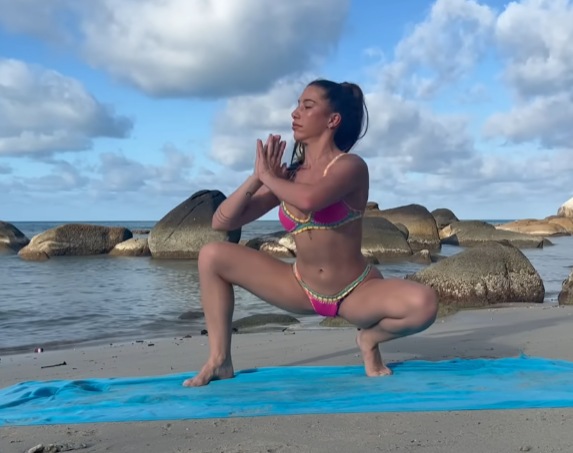
The beach environment plays an important role in this chakra-focused practice. The ocean teaches us a powerful lesson: emotions, like waves, rise and fall. We do not need to control them—we only need to let them move. Watching the water while practicing reinforces this truth on a deep, intuitive level.
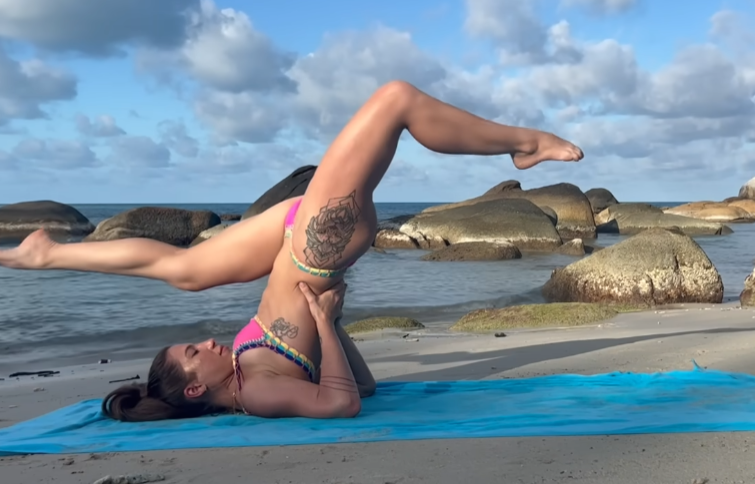
As the session progresses, we move into floor-based poses such as Pigeon Pose, Supine Figure Four, and gentle spinal twists. These postures allow for deeper release. In Pigeon Pose especially, emotions may feel intense. The instruction here is simple: breathe, soften, and stay present. There is no need to push or escape. Inner alignment comes from meeting yourself where you are.
Day 2 also emphasizes self-compassion. The sacral chakra is closely tied to pleasure and enjoyment, yet many people carry unconscious guilt around rest, joy, or self-care. Practicing yoga on the beach—surrounded by beauty, warmth, and natural movement—is a reminder that pleasure is not something to earn; it is something to allow.
As the practice winds down, we move into Supine Restorative Poses, letting the body sink into the sand. One hand rests on the heart, the other on the lower belly. Breath becomes slow and effortless. The sound of the ocean blends with the rhythm of the breath, creating a meditative state where the nervous system fully relaxes.
The final relaxation, Savasana, is an invitation to absorb the practice. Lying on the sand, feeling supported by the earth, we visualize orange light gently pulsing in the lower abdomen. We silently repeat affirmations associated with the sacral chakra, such as:
I allow myself to feel.
I embrace pleasure and creativity.
I honor my emotions.
Day 2 of the 30 Day Beach Yoga Challenge is not about achievement—it is about permission. Permission to feel, to flow, to soften, and to enjoy movement without expectation. By focusing on the sacral chakra, we begin to restore a healthy relationship with our emotions and our body’s natural rhythms.
As you step off the mat and continue your day, the effects of this practice linger subtly. You may notice greater emotional awareness, increased creativity, or a deeper sense of ease in your interactions. This is the power of chakra-focused yoga: its influence extends far beyond the practice itself.
Day 2 reminds us that alignment does not come from control, but from flow. Just like the ocean beside us, we are meant to move, feel, and change—freely, beautifully, and without resistance.