In the dense, vibrant canopy of the forest, life moves fast. For a baby monkey, every day is an adventure filled with discovery, play, and sometimes, stress. Though their world may seem simple compared to human complexities, baby monkeys face challenges that require coping strategies, patience, and adaptability. Observing them can provide remarkable insights into stress management and mindfulness that even humans can learn from.
Stress in baby monkeys often arises from environmental pressures. The jungle is not always a safe place. Predators lurk, food can be scarce, and social dynamics are complex. Young monkeys are constantly learning where danger hides, how to navigate social hierarchies, and how to interact with siblings and peers. Even minor conflicts—like a snatch of fruit being taken or a squabble over space on a branch—can cause measurable stress. Their tiny bodies respond in ways similar to adults: increased heart rate, muscle tension, and heightened alertness.
Mindfulness, in the context of baby monkeys, is an instinctual practice. Mindfulness, simply put, is the act of being fully present in the moment. A baby monkey swinging through the trees is completely attuned to the environment. Their senses—sight, sound, smell, touch—are focused on the immediate experience. They notice the texture of the bark beneath their hands, the sound of leaves rustling above, or the scent of a nearby fruit tree. This heightened awareness keeps them safe and allows them to respond effectively to changing circumstances.
For baby monkeys, play is a critical tool for stress management. Play is not just entertainment—it is a way to learn, explore boundaries, and release pent-up energy. Wrestling with siblings, chasing peers, or leaping between branches builds resilience. Through these interactions, baby monkeys practice negotiation, learn social cues, and develop the confidence to face future stressors. Play also triggers positive neurochemical responses in the brain, reducing stress and promoting emotional balance.
Observation of grooming behaviors in baby monkeys reveals another mindfulness technique. Grooming is both social and soothing. When a mother or peer grooms a baby monkey, the baby experiences physical touch, warmth, and attention—all of which help lower cortisol levels, the stress hormone. Grooming also promotes bonding and trust, providing a secure base from which young monkeys can explore their environment. In a sense, grooming functions like meditation: the monkey becomes aware of its body and the present moment, calming the nervous system and fostering connection.
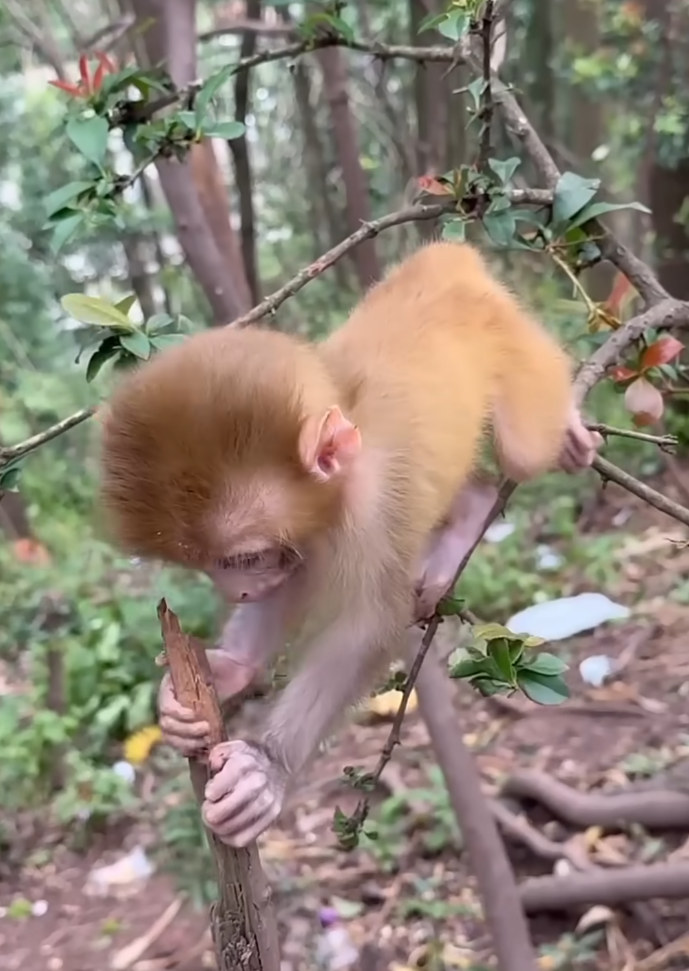
Baby monkeys also practice micro-mindfulness naturally. They pause between movements to assess safety, listen for subtle sounds, and notice subtle changes in their surroundings. These tiny moments of awareness are akin to humans taking a deep breath before responding to a stressful situation. They create a space for thoughtful action rather than reactive behavior. For humans, this natural example reminds us that slowing down, even briefly, can reduce stress and improve decision-making.
Nutrition plays a subtle but vital role in managing stress for baby monkeys. Access to high-quality food, like ripe fruits, leaves, and nuts, helps maintain energy and overall well-being. Hunger can heighten irritability and anxiety, while proper nutrition supports mood regulation. This illustrates a key lesson for humans: basic physical needs, including proper nourishment and hydration, are foundational to effective stress management and emotional resilience.
Sleep is another critical factor. Baby monkeys, like all young mammals, require significant amounts of rest. Adequate sleep supports brain development, emotional regulation, and physical recovery. When sleep is disrupted—perhaps due to environmental noise, discomfort, or social tension—stress responses intensify. Observing this, humans are reminded of the essential role rest plays in maintaining mental clarity and managing stress.
The social structure of monkey groups further influences stress management. Baby monkeys learn from older group members by watching and mimicking their behavior. Calm, confident adults provide models for coping with environmental challenges. In contrast, observing anxious or aggressive adults can increase stress in young monkeys. Social learning is therefore crucial: baby monkeys develop mindfulness and coping strategies by integrating lessons from their peers and caregivers. This mirrors human experience, where support networks, mentorship, and positive role models help mitigate stress and encourage mindful living.
Environmental enrichment in a baby monkey’s habitat can also reduce stress. Trees of varying heights, branches for climbing, and safe spaces for hiding or resting allow the young monkey to engage in diverse activities, promoting both physical and mental stimulation. Monkeys who have opportunities to explore safely develop confidence, adaptability, and resilience—traits essential for long-term stress management. In human terms, creating stimulating and supportive environments can similarly enhance mindfulness, emotional regulation, and overall well-being.
Playful mimicry is a fascinating aspect of mindfulness in baby monkeys. When a young monkey imitates the movements of its mother, sibling, or other group members, it is fully engaged in the present moment. This practice encourages observation, coordination, and emotional attunement. For humans, this is a reminder that playful engagement, imitation, and curiosity can serve as effective mindfulness practices, fostering focus and emotional balance.
When baby monkeys encounter conflict—over food, territory, or attention—they often employ natural coping strategies. They may retreat temporarily to observe, groom themselves, or seek comfort from a trusted caregiver. These moments of reflection allow the monkey to regain composure before re-engaging. Humans can learn from this approach: taking brief pauses during stressful encounters, practicing self-soothing techniques, or seeking social support can help regulate emotions and improve outcomes.
Interestingly, stress in baby monkeys is not always detrimental. Short bursts of stress, when managed properly, build resilience and adaptability. Learning to navigate challenges in a supportive environment strengthens coping mechanisms. This concept, known as “stress inoculation,” is essential in both monkey development and human psychology. Mindfulness practices amplify these benefits by allowing awareness and deliberate response rather than impulsive reaction.

Breathing patterns, though subtle, also play a role in mindfulness and stress regulation for baby monkeys. When a young monkey is startled or anxious, its breathing becomes rapid and shallow. Observing their response, caregivers often see the calming effect of gentle, rhythmic movement—whether through grooming, slow motion play, or rocking in the mother’s arms. Humans can mirror this with conscious breathing techniques, promoting relaxation and mental clarity.
Overall, the life of a baby monkey demonstrates a natural integration of stress management and mindfulness. Awareness of the environment, social connection, play, rest, and gradual exposure to challenges create a holistic system that supports well-being. Humans can learn from these patterns, translating instinctual behaviors into intentional practices. Daily mindfulness exercises, playful engagement, social support, and attentive self-care are all mirrored in the young monkey’s world.
In conclusion, baby monkeys offer a living example of stress management and mindfulness. Their daily routines—through play, social bonding, observation, rest, and environmental interaction—highlight the importance of being present, attending to physical and emotional needs, and learning from supportive role models. While humans face different complexities, the fundamental principles remain remarkably similar. Paying attention, staying connected, resting adequately, and engaging fully with the present moment can reduce stress, foster resilience, and enhance emotional balance.
Observing baby monkeys reminds us that mindfulness does not require perfection or prolonged meditation sessions. Even small, intentional actions—pausing, observing, breathing, playing, or connecting—can transform our experience of stress. In this way, the forest’s smallest residents teach the most profound lessons: that resilience grows through presence, curiosity, and compassionate engagement with oneself and others.
By incorporating these lessons into daily life, humans can cultivate a state of calm, awareness, and balanced energy—just as baby monkeys do naturally. In the playful leaps, attentive gazes, and gentle moments of rest, there is a blueprint for living mindfully, managing stress effectively, and thriving even in the midst of life’s challenges.
Mindfulness and stress management, as modeled by baby monkeys, are not just survival strategies—they are pathways to joy, resilience, and emotional wisdom.