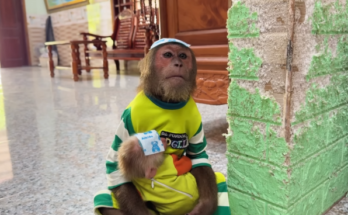
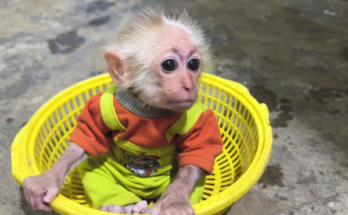
The jungle woke before the sun. Mist floated between the trees like soft breath, and the leaves held last night’s rain in tiny silver cups. Birds called to one another, testing the morning, while insects stitched a quiet rhythm into the air. Deep among the roots of an old fig tree, a baby stirred. Small and fragile, the baby had been born into a world of vines and shadows, where every sound mattered and every movement carried meaning.
The baby was not alone at first. The jungle is a place of families—of mothers who watch and guide, of elders who know the paths, of young ones who learn by following warm backs and steady hands. The baby’s days were filled with the comfort of closeness: the gentle sway of motion, the smell of leaves and earth, the safety of a heartbeat nearby. In the jungle, safety is never perfect, but love is constant.
Then one morning, the sounds changed.
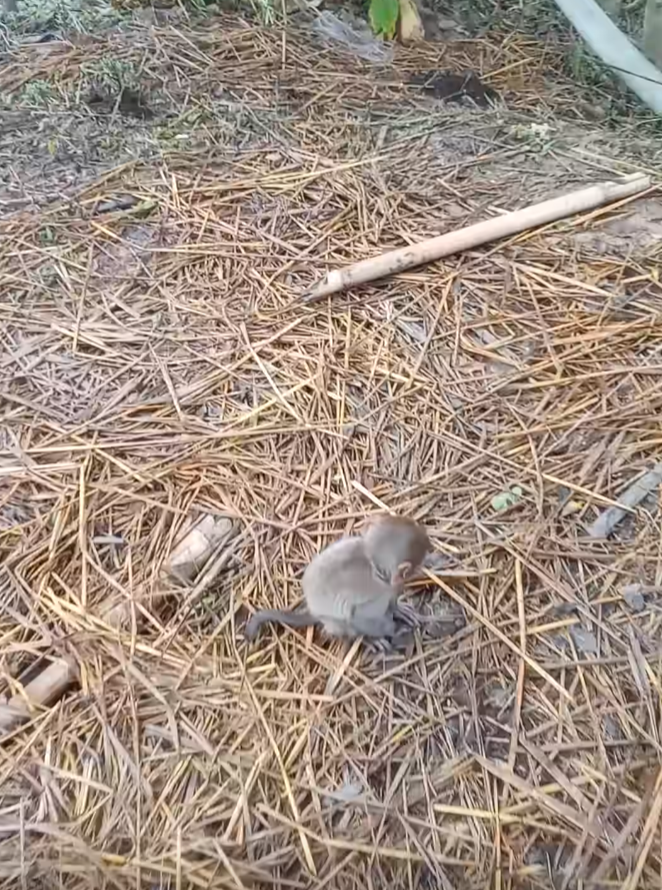
Footsteps did not belong here. They were too heavy, too unsure, breaking branches instead of flowing around them. The birds fell silent. The insects paused. Fear moves faster than thought, and the baby felt it before understanding it. The world suddenly tilted, hands reached in where they should not have been, and the familiar warmth was pulled away.
The baby was cought from the jungle.
The moment was brief, but it left a long shadow. The jungle does not shout when it loses one of its own; it listens. Leaves trembled. A mother’s call echoed and then broke, swallowed by distance. The baby cried—not loudly, not with anger, but with confusion. The jungle, which had always answered, did not answer back.
Carried away from green light into harsh brightness, the baby’s eyes blinked at a world that smelled wrong. The air felt thinner. Sounds came too fast and without meaning. The baby did not know the words “lost” or “taken,” but the body knew the truth: something essential had been torn away.
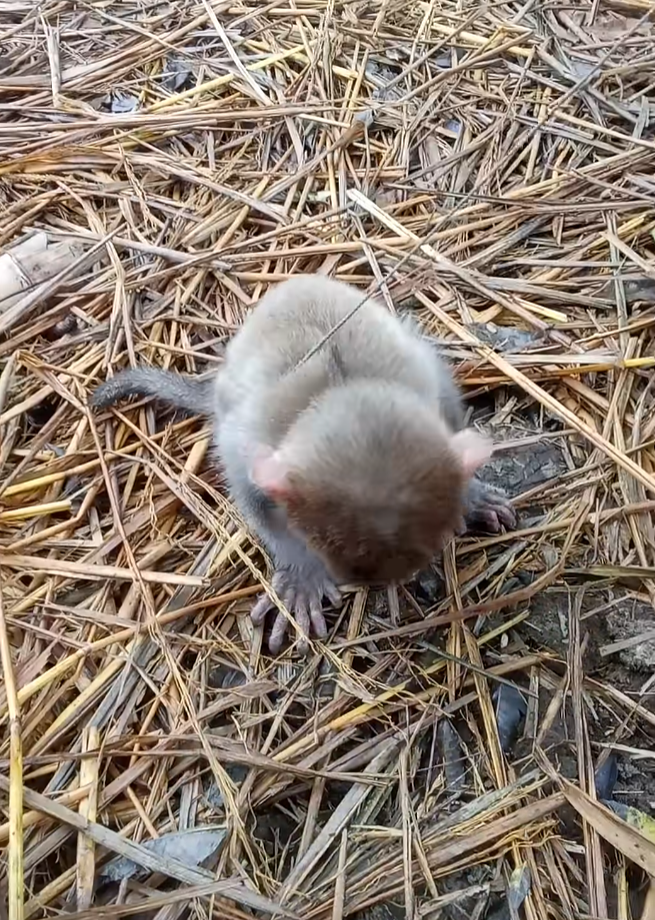
Yet even in this moment, the story did not end in darkness.
Not all hands that enter the jungle come to harm. Far from the place of capture, the baby’s cries reached different ears—ears trained to listen for trouble, hearts that recognized fear. The people who found the baby later that day did not see a prize; they saw a life in danger. They moved carefully, softly, as if the jungle itself were watching.
The baby was wrapped in warmth and quiet. Water was offered slowly. Gentle sounds replaced sharp ones. Fear does not vanish at once, but it can be eased, thread by thread. The baby’s breathing slowed. The world, though still strange, stopped feeling like it was falling apart.
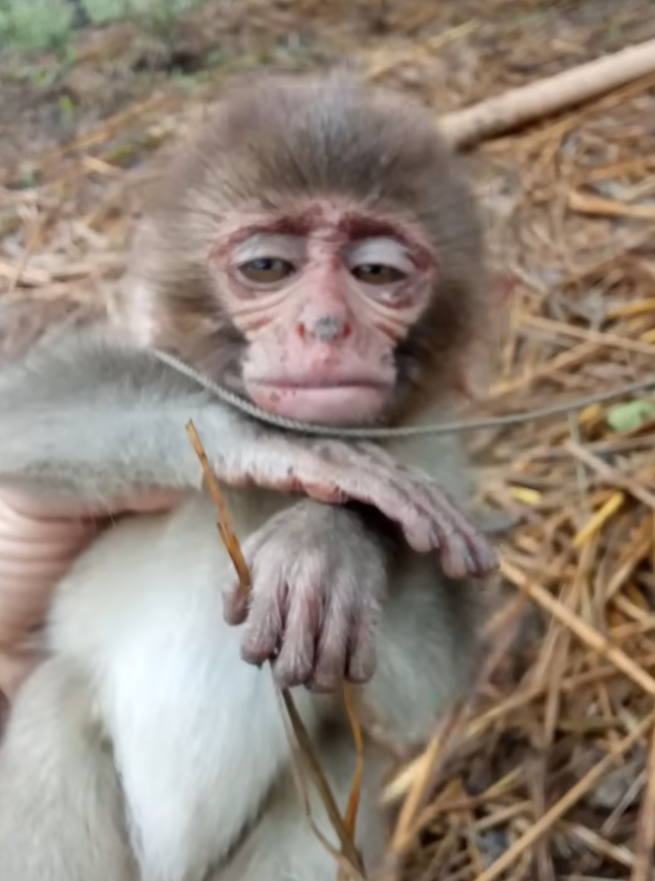
At a small rescue center near the forest’s edge, the baby met others who had similar stories. Some had been separated by storms, others by accidents, and a few, like this baby, by human interference. Each carried a different kind of sadness, but also a shared hope. The caretakers did not rush. They knew healing has its own pace.
Days passed. The baby learned new rhythms: feeding times, quiet naps, the steady presence of caregivers who spoke in calm voices. They did not replace the jungle, and they did not try to erase it. Instead, they honored it. They kept the baby’s world as close to nature as possible, with sunlight filtered through leaves, natural sounds, and space to move and explore safely.
Sometimes, at night, the baby would wake and cry. The caretakers understood these moments. Loss does not disappear just because safety returns. It lingers in memory and instinct. In those moments, someone was always there—to hold, to soothe, to remind the baby that fear would not be the final lesson.
Beyond the rescue center, the jungle continued its endless work. Vines grew. Rivers shifted. Life adapted. And though the place where the baby had been taken from would always carry a quiet ache, the jungle also carried resilience. It had survived fires, floods, and time itself. It could survive this too.
As weeks turned into months, the baby grew stronger. Eyes brightened. Movements became confident. Curiosity returned—the most important sign of all. The caretakers watched for it closely, celebrating each small step: the first playful reach, the first fearless exploration, the first moment of calm independence.
Plans were made carefully. Returning a baby to the jungle is not a simple act of opening a door. It requires patience, preparation, and respect for nature’s rules. The goal was not just survival, but belonging. The baby needed to remember the language of leaves and shadows, to recognize safe paths and warning signs, to feel at home again under open sky.
One morning, the baby was carried back toward the forest. This time, the journey was different. The hands were steady and kind. The path was chosen with care. At the edge of the jungle, the air changed again—richer, deeper, full of stories. The baby paused, sensing something familiar, something old and true.
The jungle greeted its child without ceremony. A rustle here, a call there. Life continued, as it always does, but with a quiet acknowledgment. The baby stepped forward, not as something taken, but as something returned.
The story of a baby cought from the jungle is not only about loss. It is about responsibility. It is about the harm that can be done in a single careless moment—and the healing that can follow when compassion steps in. It reminds us that the jungle is not a place to conquer or steal from, but a living world to respect.
Every life taken from its home leaves a mark. Every life protected leaves hope.
And somewhere beneath the tall trees, where light dances on leaves and the earth remembers every footstep, a baby grows—stronger now, wiser, and once again part of the endless green story.