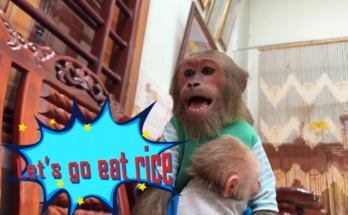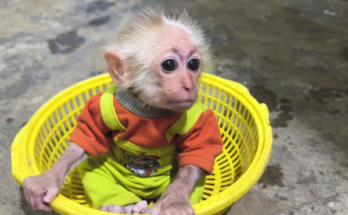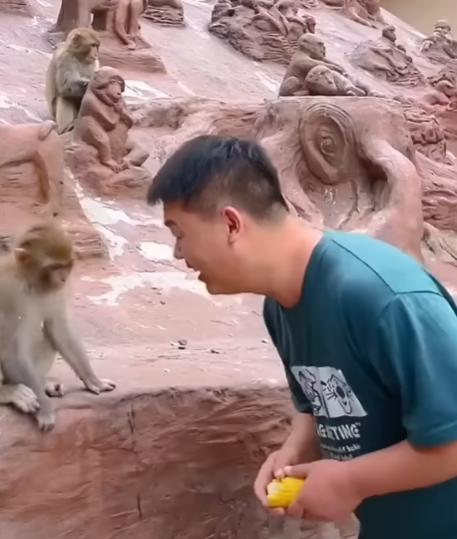
In a small village nestled between rolling hills and sparkling rivers, humans and animals lived side by side in a delicate balance. Chickens scratched in the dirt near children playing, cows grazed calmly as farmers tended their fields, and dogs wandered freely, napping in patches of sunlight. Even the monkeys in the nearby forest watched curiously from the treetops, occasionally tossing a fruit down to the villagers as if to say, “We’re all part of this world together.”
Harmony like this doesn’t happen by accident. It is built on respect, patience, and, most importantly, understanding boundaries. Animals are not toys or props—they are living creatures with instincts, fears, and strengths far different from humans. And yet, humans often forget this, thinking they can mimic wild behavior for fun, only to find themselves in trouble.
Take, for instance, the story of little Tien, a boy who loved to watch the village’s water buffalo. He admired their size and strength, imagining that if he imitated them, he could feel the same power. One day, he climbed onto the back of one of the gentle buffalo, pretending to be a “mini buffalo king.” The buffalo, patient and calm until then, suddenly shifted its weight to scratch its side against a tree. Tien tumbled off and landed in a muddy puddle, soaking wet and mildly bruised.
“See?” laughed the elder farmer, helping him up. “Buffalo are gentle, but they are not playthings. Respect them, or they will remind you the hard way.”
This lesson echoed through the village. Children learned to observe before interacting. They learned that feeding a chicken by hand could be rewarding, but chasing it could result in scratches. They learned that a dog’s wagging tail doesn’t always mean permission to pull or tug—it is a signal, not an invitation to imitate dangerous actions.
Even the monkeys, mischievous and clever, had their rules. One morning, a young tourist tried to climb a tree to “play like the monkeys,” hoping to swing on branches and imitate their acrobatics. Within seconds, the branch he grabbed snapped, sending him into a bush below, scratching his arms and legs. The monkeys watched, chattering loudly, as if mocking him. The villagers shook their heads. “Do not imitate dangerous actions,” they reminded the onlookers, who nodded, embarrassed.
Respecting animals also meant understanding their needs. The village rooster, proud and loud, crowed at sunrise, signaling the start of a new day. Children loved to mimic the crowing, flapping their arms and straining their voices. While funny and harmless in small doses, elders reminded them, “You can play and learn, but do not try to handle a rooster’s beak or wings—it can hurt you.” The children nodded, laughing, but they remembered that some actions were better observed than imitated.
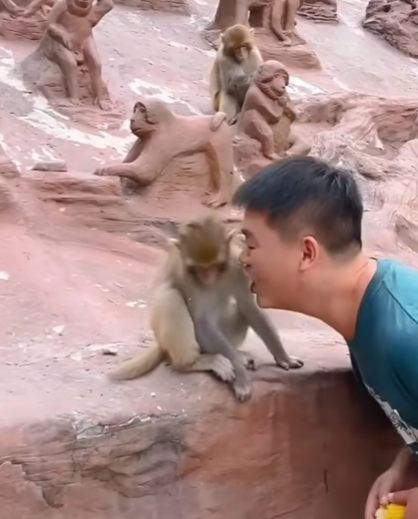
The river was another place where harmony required caution. Ducks floated gracefully, and fish leapt above the water, but young villagers who tried to dive in after them often underestimated the strength of currents and slippery stones. “Nature is beautiful,” said the river keeper, “but do not imitate dangerous actions. Watch, learn, and appreciate safely.”
Dogs were perhaps the closest companions of humans, yet even they demanded respect. The village had one particularly energetic dog named Bao. Bao loved children but also had sharp teeth and sudden bursts of energy. Many newcomers, seeing Bao jump and play, tried to copy his bounding leaps or wrestle with him in the mud. Inevitably, some were nipped, scratched, or knocked over. The villagers would laugh afterward, shaking their heads. “Bao is friendly, but he is still an animal. Do not imitate dangerous actions.”
Even the wild animals taught lessons in caution. Occasionally, a wild boar wandered near the village edge, drawn by fallen fruit. Its eyes glinted with intelligence and curiosity, but its tusks were sharp, and its charge could be deadly. Children who had never seen such a creature up close were tempted to approach it, thinking it “fun” to touch or chase. Village elders would intervene quickly, explaining, “The boar is part of our world, but it is not a toy. Admire from a distance. Do not imitate dangerous actions.”
Harmony depended on boundaries. People could observe animals, feed them safely, and play alongside them under guidance, but certain actions were never safe to copy. This lesson became a part of village life. Parents taught it to their children as soon as they could speak, elders reminded the tourists who passed through, and even the animals seemed to understand it—responding calmly to respect, reacting defensively to foolishness.
One day, a festival brought everyone together. Monkeys, dogs, chickens, and even cows participated in the lively scene. Children danced, elders sang, and animals wandered freely among them. It was a beautiful example of coexistence, but the villagers took care to mark boundaries: ropes around delicate nests, signs near dangerous river currents, and careful supervision of young children. Everyone learned that harmony was not just living together—it was living together safely.
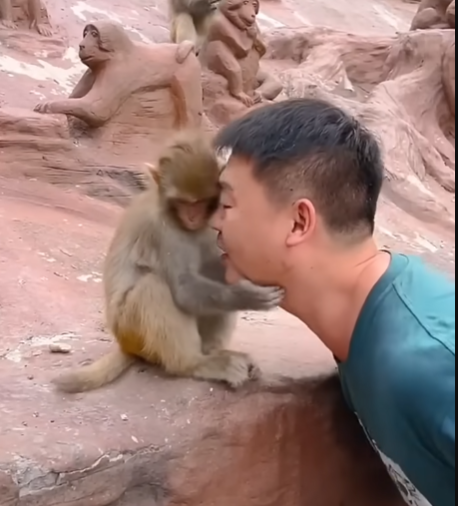
The festival also served as a teaching moment. A playful child tried to mimic the monkeys’ leaps from one platform to another. Villagers gently guided him down, explaining, “The monkeys are light and strong. Humans are not. Do not imitate dangerous actions.” The child giggled, learning that watching could be just as fun as copying.
Even the monkeys seemed to approve. From the treetops, they chattered and swung, performing incredible leaps and tricks. The children clapped and laughed, safe on the ground. They learned to appreciate agility and strength without risking injury.
As evening approached, the villagers gathered around a bonfire, animals resting nearby. Stories were told of past mistakes, of people who had tried to imitate dangerous actions and learned the hard way. Everyone laughed together, sharing the lessons learned. The animals, unbothered by the fire, rested calmly—proof that respect and boundaries created peace.
The village was a living example that humans and animals could coexist beautifully. People learned patience, empathy, and observation. Animals benefited from protection, care, and understanding. Dangerous actions were observed and learned from, but never blindly imitated. This balance created a safe, joyful environment for everyone, from the smallest chick to the cleverest monkey.
And so life continued in harmony. The rooster crowed, the monkeys leaped, the children played, and the elders watched with knowing smiles. Visitors came and marveled at the peace, often forgetting to heed the simple but important lesson: Do not imitate dangerous actions.
It was a rule that saved lives, strengthened bonds, and kept the jungle and village connected in laughter and safety. A child might giggle as he watched a dog leap or a monkey swing, but he knew—he would watch, not copy. The animals, in turn, respected him, allowing playful glances, gentle nudges, and shared moments without fear.
Harmony thrived. Danger was avoided. Curiosity was nurtured. And everyone, human and animal alike, understood one simple truth: coexisting happily meant observing, respecting, and never, ever imitating dangerous actions.
By nightfall, the village was quiet. Animals rested in their designated spaces, humans settled in their homes, and the stars twinkled above, a gentle reminder that the world is vast, beautiful, and alive. Life was a careful dance, a partnership between species, and everyone had a role to play.
And above all, one lesson echoed softly through the trees, through laughter, through whispered warnings: People and animals live in harmony, but do not imitate dangerous actions.
😂