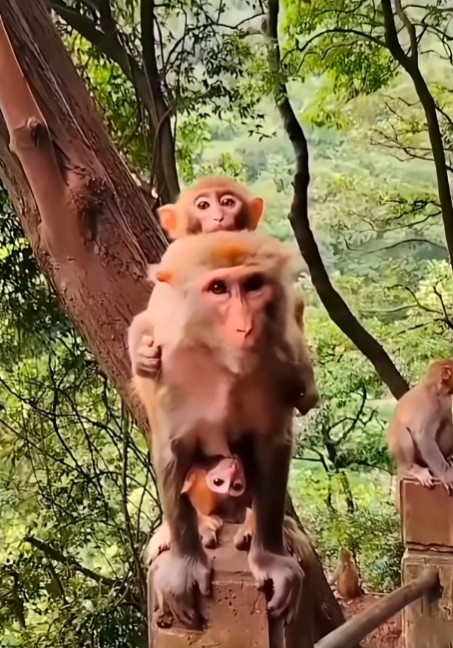
Monkeys have long fascinated humans, not only because of their playful antics but also because of their remarkable intelligence. Their behavior, social structures, problem-solving skills, and adaptability raise compelling questions about how smart these creatures really are. Observing monkeys in the wild or even in controlled environments provides a window into a complex mind capable of learning, communicating, and sometimes even planning. The question, “Is the monkey very intelligent?” invites a closer look at their abilities, social dynamics, and remarkable behaviors that often mirror aspects of human intelligence.
First, intelligence in monkeys is evident in their problem-solving abilities. In the wild, survival demands creativity and adaptability. Monkeys often encounter obstacles that require innovative solutions. For instance, some species have been observed using tools to access food. Capuchin monkeys, in particular, are famous for using stones to crack open nuts, demonstrating not just raw strength but technique and strategy. They select appropriate tools, position them correctly, and adjust their actions based on the resistance of the nut—an impressive display of cause-and-effect reasoning.
In addition to using tools, monkeys exhibit spatial intelligence. Navigating dense forests requires memory, planning, and agility. They remember the locations of fruit trees, water sources, and potential threats. Young monkeys learn these routes from elders, illustrating both memory and social learning. A monkey that successfully finds food while avoiding predators demonstrates a blend of instinct and acquired knowledge, highlighting intelligence that combines environmental awareness with practical decision-making.
Monkeys also display social intelligence. Many species live in complex social hierarchies where relationships, alliances, and communication are critical for survival. They engage in grooming rituals, forming bonds and alliances that have tangible benefits, such as protection or access to resources. Recognizing individuals, understanding social status, and responding appropriately to both allies and rivals require a level of cognitive sophistication that is impressive. A monkey must interpret subtle cues—facial expressions, body language, vocalizations—to navigate its social world effectively. This is a clear indicator of advanced cognitive processing, as social intelligence is often considered a hallmark of overall intelligence in animals.
Communication among monkeys further illustrates their intellect. While they do not have language in the human sense, they use a variety of vocalizations, gestures, and facial expressions to convey information. Alarm calls, for instance, are specific to particular predators, allowing troop members to react appropriately. Some monkeys even combine signals to convey complex messages, showing the ability to use symbols and sequences in communication. This level of sophistication suggests that monkeys not only perceive their environment but can also transmit nuanced information to others, an indicator of high cognitive ability.
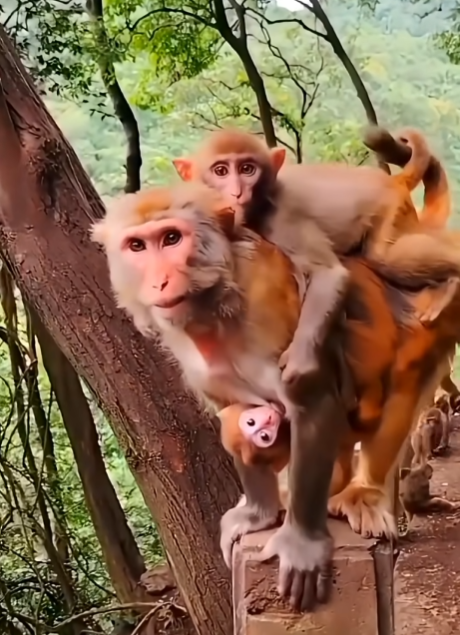
Memory is another area where monkeys shine. They can remember locations, recognize faces, and even recall sequences of actions that lead to rewards. Experiments in controlled settings have shown that some species, such as rhesus macaques and capuchins, can remember the positions of hidden objects or food for extended periods. This ability to retain information and use it in practical scenarios demonstrates working memory, a critical component of intelligence. Some monkeys can also plan ahead, delaying immediate gratification for a greater reward, an advanced cognitive skill often associated with higher intelligence.
Tool use and learning from observation are further evidence of monkey intelligence. Young monkeys learn from watching elders, a form of cultural transmission rarely seen in the animal kingdom. For example, Japanese macaques have been observed washing sweet potatoes in rivers before eating them—a behavior that began with one individual and spread across the troop. This shows the capacity for learning, imitation, and the transmission of knowledge, highlighting that intelligence in monkeys is not just individual but also collective.
Beyond problem-solving and social intelligence, monkeys display emotional intelligence. They experience a range of emotions, including fear, joy, grief, and empathy. Observations have shown that monkeys console one another after conflicts, share food with those in need, and exhibit protective behaviors toward infants or injured troop members. Such responses indicate the ability to understand and react to the emotions of others, a sophisticated form of social cognition. Emotional intelligence enhances their survival, as it fosters cooperation, reduces conflict, and strengthens group cohesion.
Some behaviors even suggest a capacity for abstract thinking. Experiments have demonstrated that certain monkeys can understand numerical concepts, recognize patterns, and make choices based on probability or strategy. For example, monkeys can be trained to select larger quantities of food when presented with visual cues, indicating an understanding of quantity and comparison. While not equivalent to human mathematical reasoning, these abilities reflect a level of abstract thought that goes beyond instinctual behavior.
Play is another indicator of intelligence in monkeys. Young monkeys engage in games that develop motor skills, social understanding, and cognitive flexibility. Play often involves problem-solving, learning the limits of others, and negotiating social hierarchies. Observing a group of monkeys at play is not just entertaining—it’s a glimpse into how they practice complex behaviors in a safe environment, honing the skills they will need as adults.
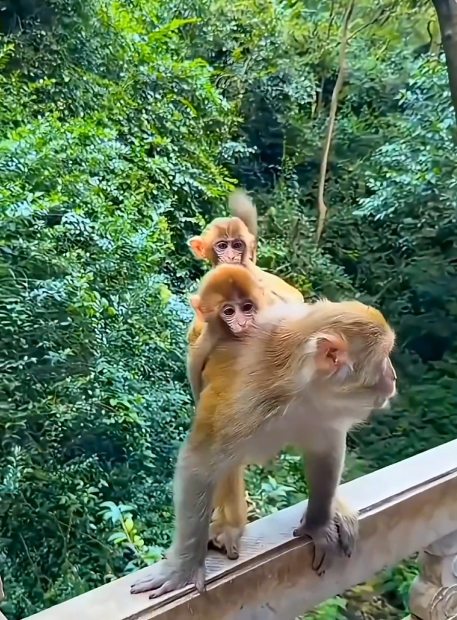
Adaptability is perhaps one of the most striking aspects of monkey intelligence. Monkeys are capable of thriving in diverse environments—from dense tropical forests to urban areas where human activity dominates. Their ability to find food, navigate new terrain, and respond to novel challenges shows remarkable cognitive flexibility. Urban monkeys, for instance, learn to use human objects, avoid dangers like traffic, and even manipulate human behavior to obtain food. This demonstrates both observational learning and problem-solving intelligence in real-world contexts.
Even moral or ethical-like behavior has been observed in monkeys. They demonstrate fairness and reciprocity, often sharing food or resources with those who have shared with them in the past. Conflicts are sometimes resolved with negotiation, submission, or reconciliation behaviors, suggesting an understanding of social rules and consequences. Such behaviors indicate that monkeys are not merely reacting to stimuli but are capable of higher-order reasoning about relationships and outcomes.
In conclusion, monkeys exhibit intelligence in multiple dimensions: problem-solving, social interaction, communication, memory, emotional understanding, and adaptability. They use tools, learn from observation, form complex social structures, and demonstrate emotional and abstract thinking skills. Their ability to survive and thrive in varied environments, combined with their capacity for learning and teaching, reflects a level of intelligence that is sophisticated and multifaceted.
So, is the monkey very intelligent? The evidence strongly suggests yes. While their intelligence may differ from humans in scope and expression, monkeys demonstrate remarkable cognitive, emotional, and social abilities. Observing them in the wild or in controlled studies reveals a creature capable of learning, reasoning, and adapting in ways that are both impressive and often surprisingly human-like. Their cleverness, creativity, and social awareness make them not only fascinating to watch but also a testament to the complexity of intelligence in the animal kingdom.
Whether leaping between branches, cracking nuts with stones, or comforting a distressed troop member, monkeys consistently demonstrate that intelligence comes in many forms. They are problem-solvers, communicators, social strategists, and emotional beings, all rolled into a single, agile, and endlessly curious package. Their intelligence is not just survival—it is life lived with awareness, skill, and connection.