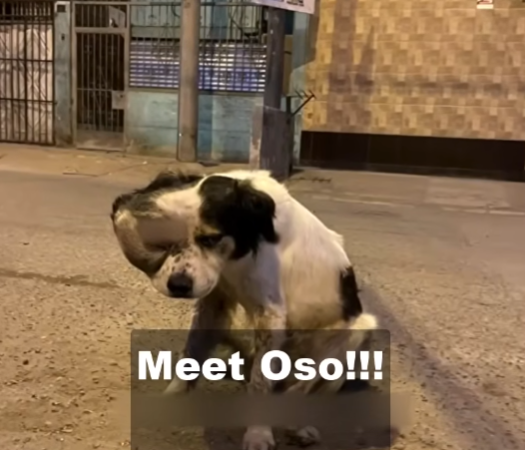
They first noticed him near the edge of the market, where the smells of grilled fish and ripe fruit drifted through the dust. He was impossible to miss—not because he demanded attention, but because his face told a story no one wanted to read. A giant tumor bulged from one side of his jaw, stretching his skin tight and uneven, pulling his eye downward so it never quite met another’s gaze. The growth had warped his features into something people flinched from, something whispered about. Children stared, adults turned away, and vendors shooed him with harsh words and waving hands. Still, he stayed.
He was a dog—thin, sandy-colored, with ribs like a ladder beneath his fur. His tail wagged when someone looked at him, even if that look was filled with disgust. He had learned to beg quietly. He did not bark or snarl. He simply sat a short distance away, head tilted awkwardly because of the weight on his face, eyes hopeful in a way that hurt to see.
Every day, he returned.
The market was note-perfect in its rhythm: morning deliveries, noon crowds, evening cleanup. And every day, like a shadow that refused to disappear, the dog lingered. He waited near the fish stalls, where scraps sometimes fell, or near the rice seller who once tossed him a handful of cold grains. That small kindness had been enough to anchor him to the place. He believed, with the stubborn faith only the abandoned possess, that if he waited long enough, someone would see past the tumor and choose him.
But the tumor came first in everyone’s eyes.
“Poor thing,” some said, quickly followed by, “but it’s too ugly.”
“He must be sick,” others whispered, backing away as if illness could leap through the air.
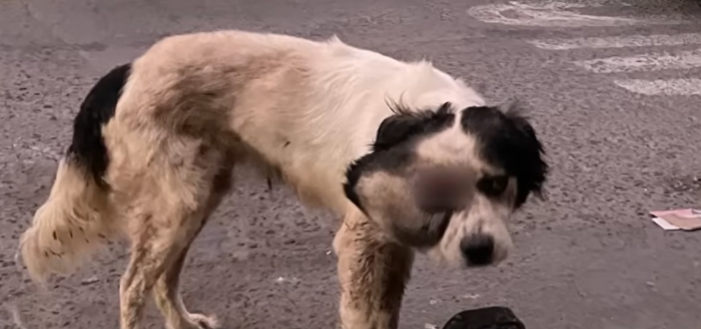
A few were crueler. They threw stones to scare him off, shouting that he frightened customers. The dog would flinch, then return when the shouters were gone, settling into his quiet vigil again. Hunger gnawed at him constantly. When he did find food, he ate slowly, careful not to strain the swollen mass that made chewing painful. Sometimes blood tinged his saliva. Sometimes the pain forced him to lie down and rest his head on the cool ground, breathing through it until the worst passed.
No one knew where he had come from. Perhaps he had once belonged to someone, long before the tumor grew large enough to turn affection into embarrassment. Perhaps he had been abandoned on a roadside, left to wander until the market became his world. What was clear was that he had learned to survive by hoping—and hoping hurt.
Rainy days were the hardest. The tumor soaked through, the skin irritated and raw. The dog would huddle beneath a torn awning or an overturned crate, shivering as people stepped around him. Even then, if someone paused, his tail thumped weakly against the ground. He never stopped believing that this time might be different.
It never was.
Weeks passed. Then months. His body grew weaker, his steps slower. The tumor seemed larger, heavier, dragging his head toward the earth. He begged with his eyes, with his posture, with his persistence. He begged to be fed, to be touched, to be wanted. And still, he was refused.
Until one morning, when a woman carrying a basket of vegetables stopped.
She didn’t stop because she felt brave or kind. She stopped because she tripped. The dog had shifted closer than usual, trying to catch the attention of a vendor. The woman stumbled, nearly falling, and turned in irritation—ready to scold, ready to chase him away.
Then she really looked.
She saw the way his body trembled, not from aggression but from effort. She saw the careful distance he kept, the way he never crossed into anyone’s space without permission. She saw the tail wag, hesitant and hopeful, like a question asked too many times.
She crouched, slowly, so as not to scare him. The dog froze, unsure whether this was another rejection in disguise. Her hand hovered, then lowered. When her fingers brushed his fur, he flinched—then leaned into the touch with a soft, broken sigh.
People watched, murmuring.
“It’s dangerous.”
“It’s disgusting.”
“He’s sick.”
The woman ignored them. She tore a piece of bread from her bag and offered it. The dog accepted it carefully, chewing on the good side of his mouth. Tears slipped down the woman’s face without her realizing. She had expected revulsion. What she felt instead was shame—for every time she had turned away from suffering because it was hard to look at.
She came back the next day. And the next.
Soon, others noticed. A man brought leftover meat. A child brought water in a plastic bowl. The market didn’t change overnight, but something softened. The dog was still ugly by their standards, still burdened by his tumor, but he was no longer invisible.
Eventually, the woman contacted a local rescue. They came with gentle voices and careful hands. The dog didn’t resist when they lifted him into the truck. He looked back at the market, at the place where he had begged for so long, and wagged his tail one last time—as if to say thank you for the scraps of hope that had kept him alive.
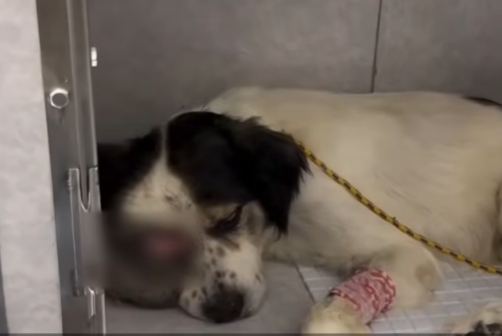
The surgery was long and risky. The tumor was massive, tangled with muscle and skin. But the veterinarian was skilled, and the dog was stubborn. When he woke up, groggy and sore, his face was lighter. Different. Still scarred, still imperfect—but free.
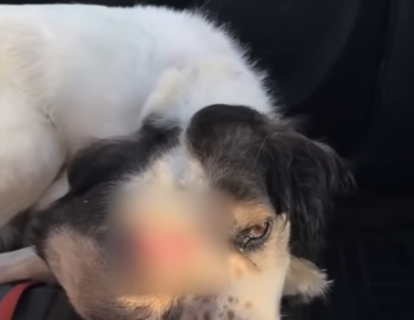
Recovery took time. So did trust. Yet each day, the dog grew stronger. His eyes met people’s gazes now. His tail wagged without hesitation. He learned to play, to sleep without pain, to accept love without fear that it would be taken away.
He was adopted by the woman from the market.
She named him Hope.
Because despite being undesirable, despite begging to no avail for so long, he had never left. He had stayed. He had believed. And in the end, that belief—fragile and battered as it was—had saved his life.
Sometimes, the ugliest faces carry the most beautiful lessons.