I Found a Little Monkey in the Forest, and It Seems Its Mother Abandoned It
The forest was quieter than usual that morning. Sunlight filtered through tall trees, drawing soft patterns on the leaf-covered ground as I walked along a narrow path I had taken many times before. Birds fluttered overhead, and insects hummed in the warm air. Everything felt calm—until I heard a faint sound that didn’t belong to the forest’s usual song.
It was a small, trembling cry.
At first, I thought it might be the wind pushing through branches or a distant bird calling for its mate. But the sound came again, thin and urgent, pulling me deeper between the trees. I followed it carefully, stepping over roots and fallen leaves, my heart beating faster with every step.
That’s when I saw it.
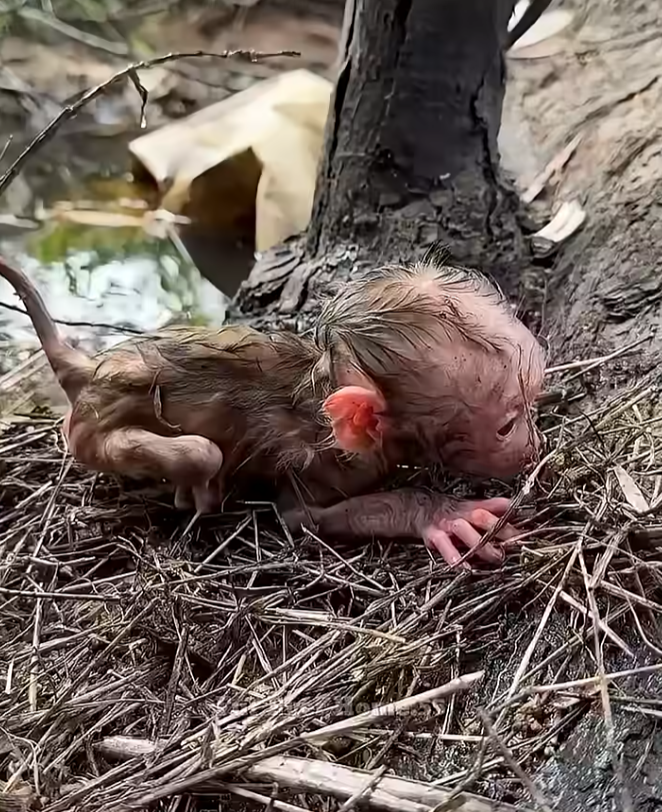
A tiny monkey sat alone near the base of a tree, curled in on itself. Its fur was slightly dirty, and its small hands clutched at the ground as if searching for comfort. The little creature looked up at me with wide, frightened eyes, filled with confusion and fear. I froze, afraid that even the smallest movement might scare it away.
I looked around, expecting at any moment to see the mother monkey appear from the trees, ready to protect her baby. But the forest remained still. No warning calls. No movement in the branches. Just silence.
The baby monkey let out another soft cry.
It was clear now—this little one was alone.
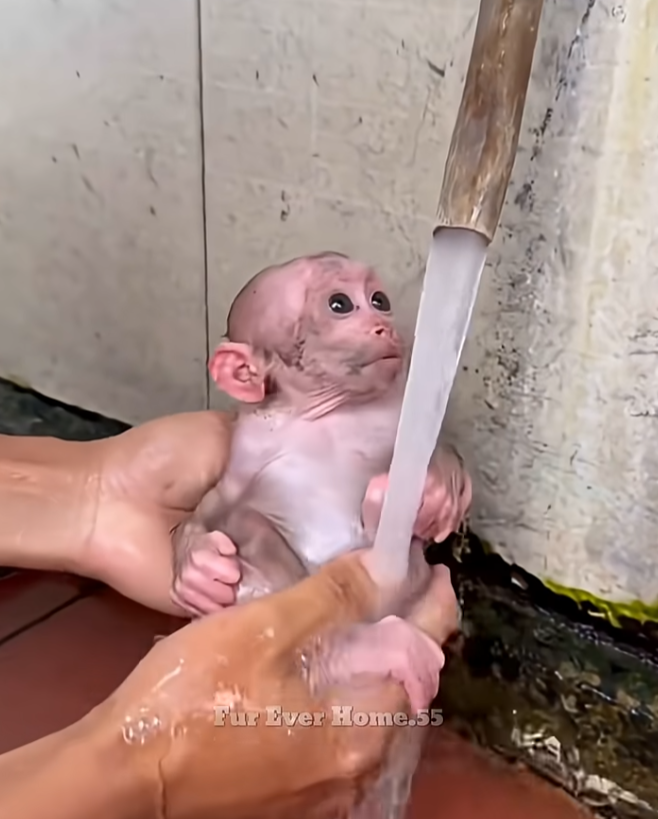
I slowly crouched down, keeping my distance. The baby watched me closely, its tiny chest rising and falling quickly. I remembered that mother monkeys rarely leave their babies for long. They carry them everywhere, protect them fiercely, and respond immediately to their cries. But minutes passed, and nothing changed.
The realization hit me gently but painfully: the mother might not be coming back.
I felt a knot tighten in my chest. The forest, which moments ago felt peaceful, now seemed overwhelming and dangerous for such a small, helpless creature. Without its mother, the baby monkey faced hunger, cold nights, and countless unseen threats.
I didn’t want to interfere with nature unnecessarily, so I waited. I sat quietly nearby, watching and listening. Every rustle made me look up, hoping to see the mother return. But the sun slowly climbed higher, and the baby’s cries grew weaker. It began to sway slightly, exhausted from fear and loneliness.
That was when I knew I couldn’t just walk away.
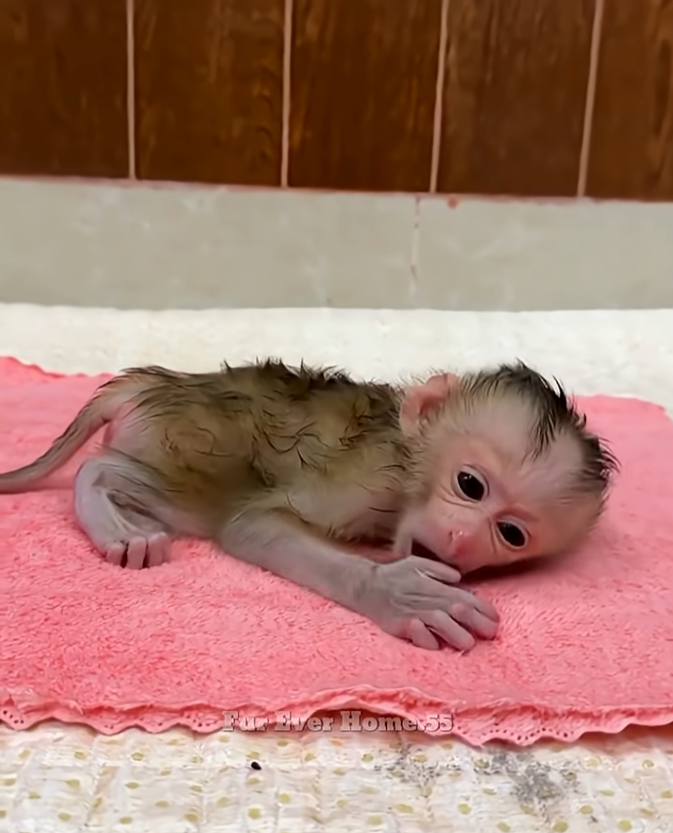
Carefully, I moved a little closer and spoke softly, not using words the monkey could understand, but a gentle tone meant to calm. The baby didn’t run. Instead, it tilted its head, studying me, as if deciding whether I was a threat or a lifeline.
I took off my jacket and placed it on the ground near the baby, creating a small, warm space. The monkey hesitated, then slowly crawled onto it, curling up as if instinctively seeking comfort. That small act broke my heart and strengthened my resolve at the same time.
This baby didn’t choose to be alone.
I stayed with the monkey for a long time, making sure no other monkeys returned. Still, the forest remained quiet. The decision became clear: leaving the baby here would almost certainly mean it wouldn’t survive.
With careful hands and a racing heart, I gently lifted the baby monkey. It trembled at first, then clung lightly to my sleeve, its grip weak but trusting. That moment changed everything. I felt the weight of responsibility settle on me, heavier than the small body in my arms.
As I carried the monkey out of the forest, I thought about its mother. Maybe she had been injured. Maybe she had been frightened away. Or maybe something else had happened that no one would ever know. Nature doesn’t always offer explanations—only consequences.
The baby monkey rested quietly against me, its cries replaced by soft breaths. I promised it, silently, that it wouldn’t be alone anymore.
Later, as I made arrangements to get proper help, I watched the baby more closely. Despite everything it had been through, it showed tiny signs of curiosity—reaching for light, reacting to sounds, blinking slowly as if trying to understand this new world without its mother.
It reminded me how fragile life can be, especially in the wild.
Finding that little monkey changed the way I looked at the forest. It was no longer just a place of beauty, but also a place where survival can be uncertain and unfair. It taught me that sometimes, stepping in isn’t about changing nature—it’s about compassion when nature leaves no other choice.
The baby monkey’s journey was just beginning, and I didn’t know where it would end. But one thing was certain: on that quiet morning in the forest, when I followed a faint cry among the trees, two lives became connected forever.
And neither of us would ever forget it.