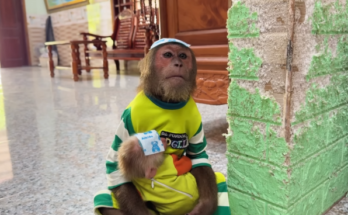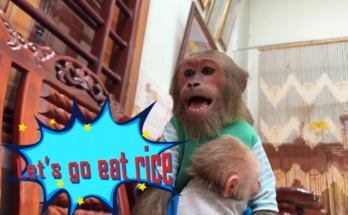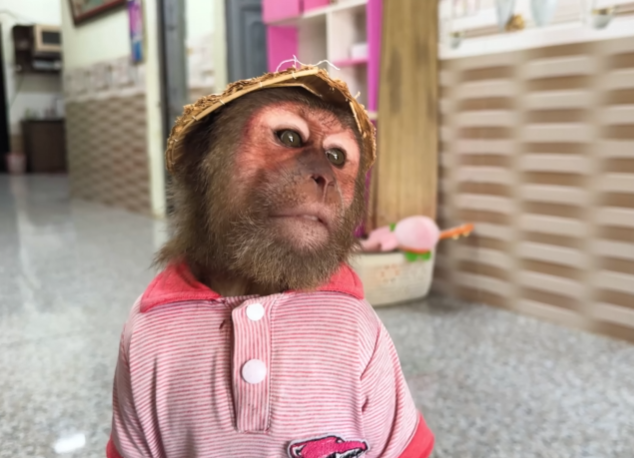
Morning mist still clung to the rice fields when Farmer CUTIS stepped out of his wooden house, straw hat tilted low and a gentle smile on his face. The roosters were loud, the buffalo were restless, and the sun was just beginning to paint the sky gold. For CUTIS, this was an ordinary morning—until he heard a tiny, trembling cry coming from the edge of the banana grove.
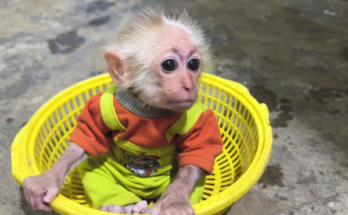
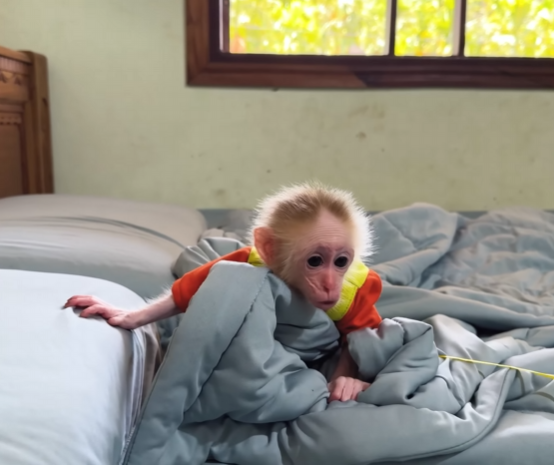
He followed the sound carefully, pushing aside wide green leaves. There, curled beneath a fallen branch, was a baby monkey. Its fur was thin and dusty, its eyes wide with fear, its little hands clutching nothing but air. CUTIS knelt down slowly, speaking in a soft voice as if the baby could understand every word.
“Easy, little one. You’re safe now.”
The baby monkey whimpered but did not run. Perhaps it sensed something special in this farmer’s calm presence. CUTIS noticed scratches on the baby’s leg and realized it had likely fallen from a tree during the night. The forest could be cruel to a helpless infant. Without hesitation, CUTIS lifted the baby gently and wrapped it in his scarf.
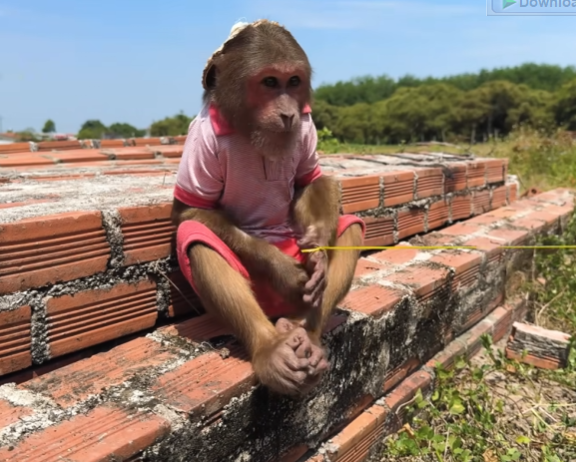
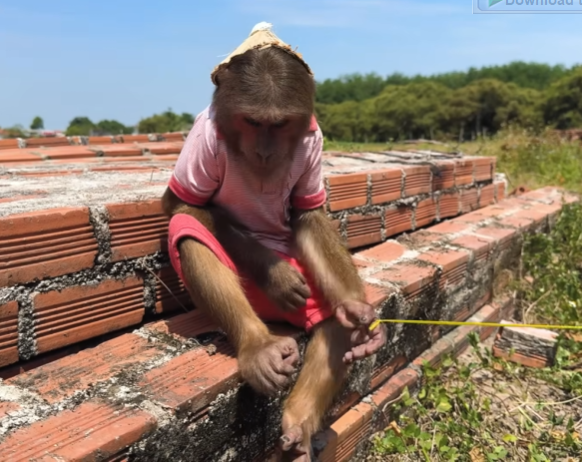
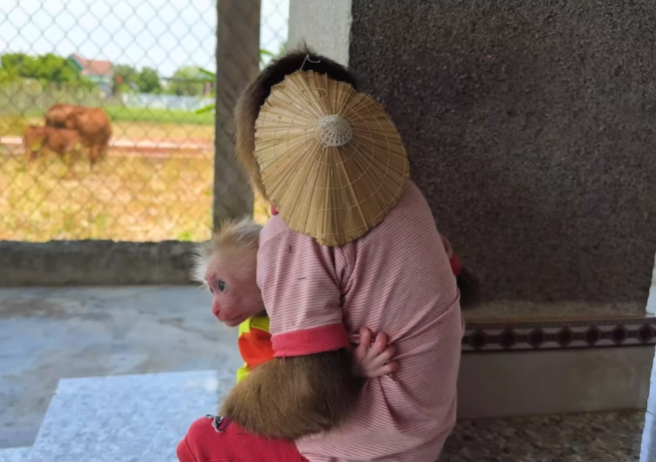
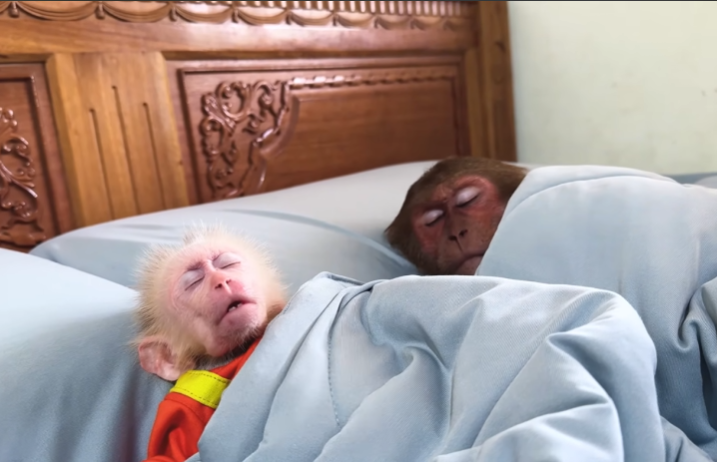
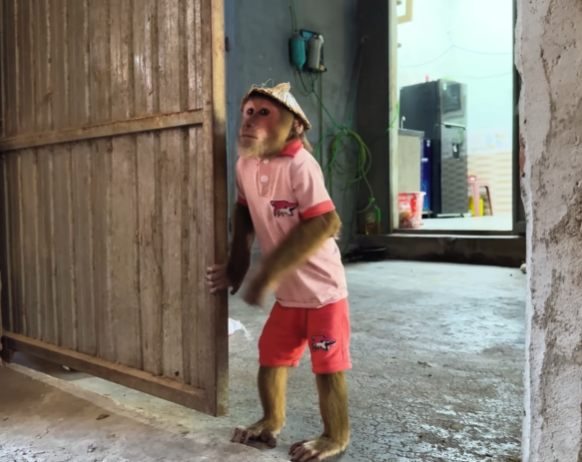
Instead of taking the monkey straight home like most people would, CUTIS did something unexpected. He walked toward the river.
Villagers who saw him whispered in confusion. “Why is he going to the river with a baby monkey?” they wondered. But CUTIS had a plan—one shaped by years of observing animals, not controlling them.
At the riverbank, CUTIS washed the baby monkey carefully, removing dirt and treating its scratches with herbal leaves he carried in his pocket. He had learned these remedies from his grandmother long ago. The baby shivered at first, then relaxed, leaning into CUTIS’s warm hands.
“This little heart needs more than food,” CUTIS murmured. “It needs trust.”
Back at the farm, CUTIS didn’t cage the baby monkey. Instead, he built something extraordinary: a small “forest corner” beside his house. Using bamboo, rope, and old cloth, he created climbing poles, soft nests, and shaded resting spots—just like the monkey’s natural home.
Most surprising of all, CUTIS placed the baby monkey near his goats.
Everyone thought this was a mistake.
But CUTIS had noticed something special: one gentle goat had recently lost her kid. She was quiet, watchful, and full of unused care. CUTIS carefully introduced the baby monkey, staying close, ready to intervene.
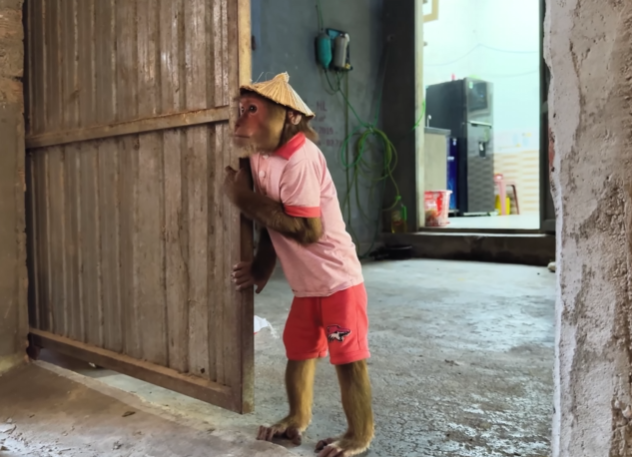
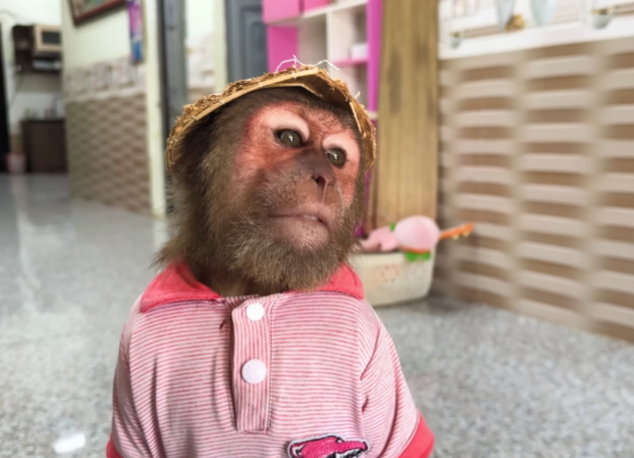

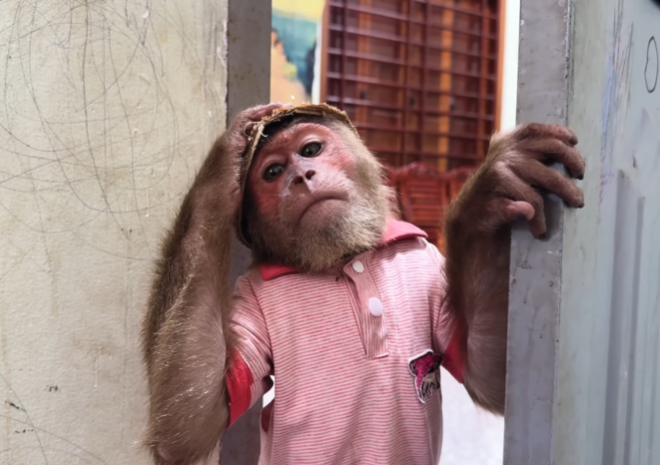
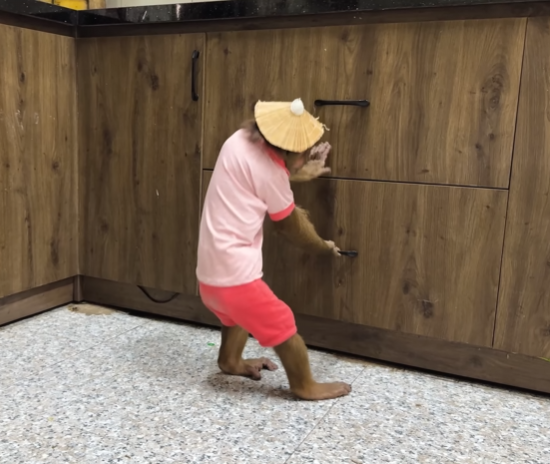
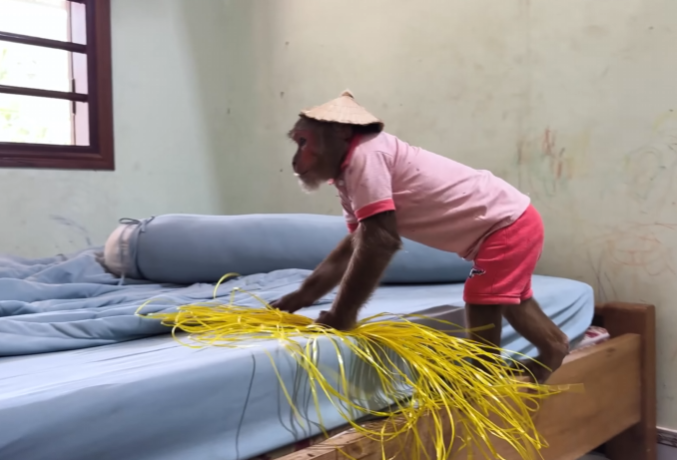
The goat sniffed the tiny creature, then did something no one expected—she lay down beside it.
The baby monkey crawled closer, resting against the goat’s warm side. From that moment, something magical happened. The goat became a guardian, providing warmth and comfort. CUTIS smiled. This was the special way he cared—not by forcing nature, but by guiding it.
Feeding time was another surprise.
CUTIS didn’t bottle-feed the monkey like most rescuers. Instead, he mashed bananas, sweet potatoes, and a little rice water, feeding the baby with his fingers. He made soft clicking sounds, mimicking monkey calls. The baby responded with tiny chirps, gripping CUTIS’s finger with surprising strength.
Days passed. The baby monkey grew stronger, more curious. It climbed CUTIS’s shoulders while he worked, tugged playfully at his hat, and followed him through the fields like a shadow.
But CUTIS never forgot the most important goal: this baby did not belong to him.
So every afternoon, CUTIS did something truly smart.
He walked to the edge of the forest with the baby monkey and sat quietly. He didn’t call out. He didn’t wave. He simply waited. Sometimes monkeys watched from the trees, curious but cautious. CUTIS never chased them away. He let the baby hear their voices, smell the forest, remember where it came from.
One evening, a female monkey appeared closer than before. Her eyes were sharp, her posture tense. The baby monkey froze, then cried out loudly—a sound full of longing.
CUTIS didn’t move.
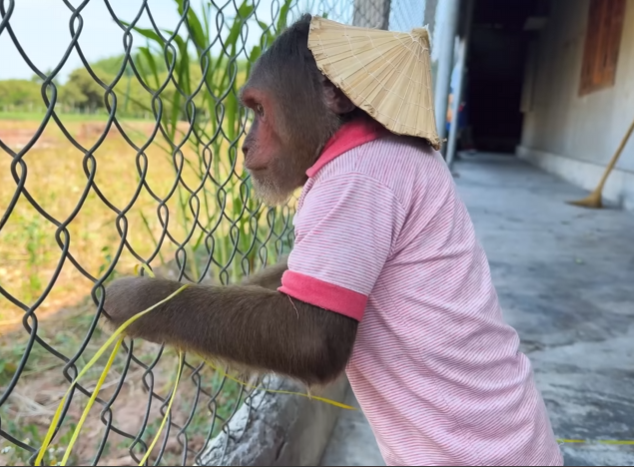
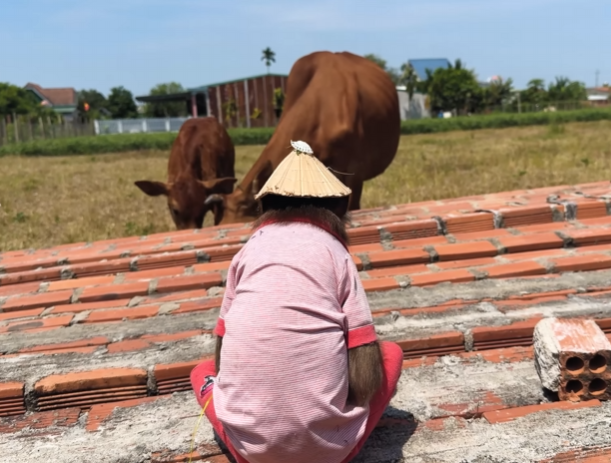
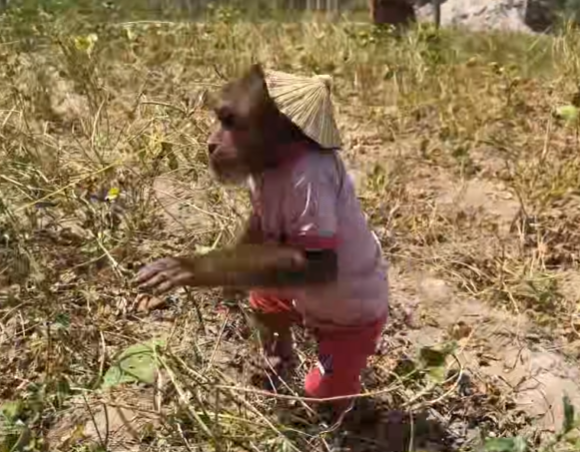
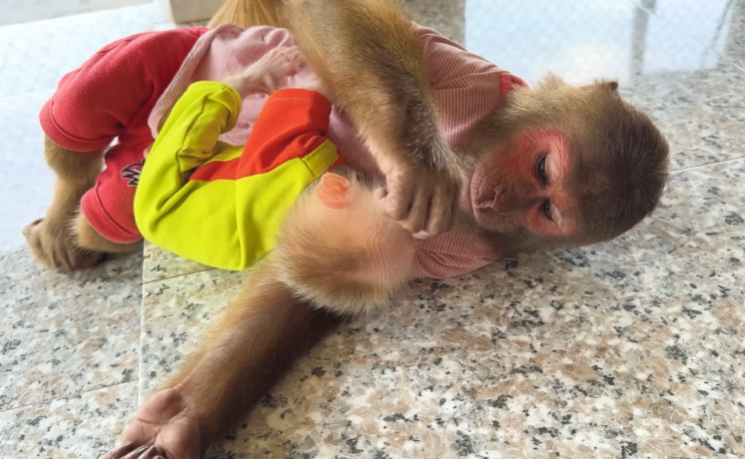
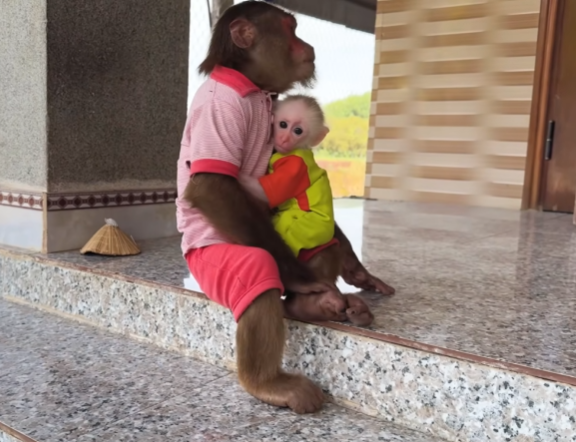
The mother monkey stepped forward, then stopped, studying the farmer. CUTIS slowly placed the baby on the ground and stepped back, lowering his gaze in respect.
For a long moment, time stood still.
Then the mother monkey rushed forward, scooping the baby into her arms. The baby clung to her tightly, crying and laughing at the same time. The forest erupted with movement as other monkeys appeared, watching the reunion.
CUTIS felt his chest tighten—not with sadness, but pride.
He had succeeded.
But the story didn’t end there.
The mother monkey didn’t run away immediately. She turned back once, looking directly at CUTIS. In that brief gaze, there was no fear—only recognition.
From that day on, something remarkable happened. The monkeys stopped stealing crops from CUTIS’s farm. They passed through peacefully, sometimes leaving fruit behind. The baby monkey—now growing fast—often returned to sit on the fence, watching CUTIS work, chattering happily.
Villagers began to talk.
“CUTIS isn’t just a farmer,” they said. “He understands hearts.”
Children came to learn from him. He taught them that kindness wasn’t loud or proud—it was patient, thoughtful, and smart. He showed them that the most surprising way to care wasn’t to keep, but to prepare for letting go.
At sunset, CUTIS would sit on his porch, sipping tea, listening to monkey calls echo through the trees. He smiled, knowing that somewhere in the forest, a baby monkey slept safely in its mother’s arms.
And that, to CUTIS, was the greatest harvest of all. 🌿🐒💚