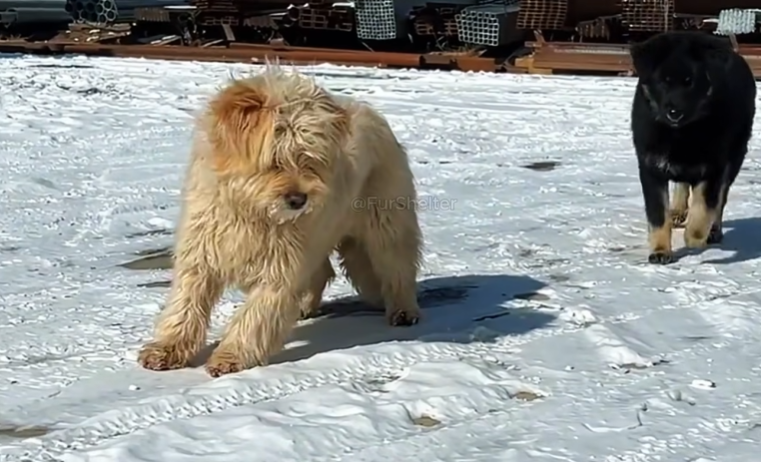
At first, I thought the dog was guarding trash.
He stood rigid in the narrow space behind an abandoned grocery store, his body angled protectively toward a pile of broken cardboard boxes and old wooden pallets. His fur was dusty brown, patchy in places, ribs faintly visible beneath the skin. When I took a step closer, he didn’t run. He didn’t bark either. He simply shifted his stance, legs stiff, eyes locked onto mine with a warning that was quiet but absolute.
Don’t come closer.
Stray dogs were common in this area, but something about him felt different. Most strays either fled or begged. This one stood his ground—not out of aggression, but duty.
“Easy, boy,” I said softly, lowering myself to appear smaller. “I’m not here to hurt you.”
His ears twitched, but his eyes never left me.
That was when I noticed the way he kept glancing behind him.
Not nervously—intentionally.
Whatever was behind him mattered more than his own fear.
I stopped moving and waited. After a long moment, he relaxed just enough to sit, though his body still blocked my view. I gently tossed a piece of bread toward him. He sniffed it, nudged it once… then did something that made my chest tighten.
He picked it up and carried it behind the pallets.
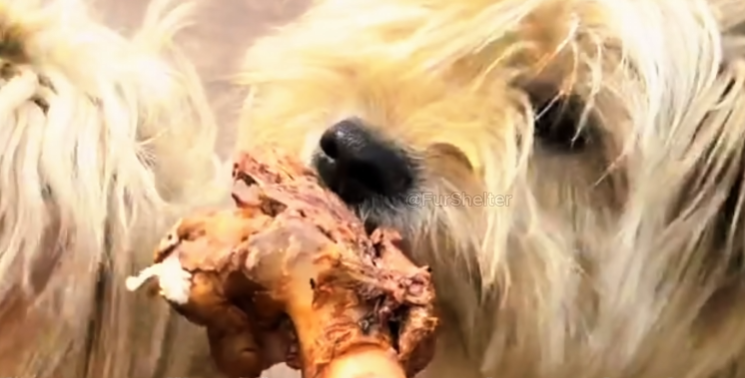
Not for himself.
I heard soft sounds then—tiny, fragile noises barely louder than the wind. A whimper. A squeak. My heart began to pound.
“There’s someone back there, isn’t there?” I whispered.
The dog reappeared, stepping in front of me again, eyes pleading now instead of warning. His tail wagged once, uncertainly, like he was asking a question he didn’t know how to voice.
I slowly moved to the side, careful not to rush him. He hesitated, then stepped aside just enough for me to see.
What I found hidden behind him changed everything.
Tucked between torn cardboard and an old blanket were four puppies—newborns, eyes still sealed shut, their tiny bodies pressed together for warmth. And beside them lay their mother.
She was barely breathing.
Her body was frighteningly thin, fur matted and dull, sides rising and falling with shallow effort. One of the puppies was trying to nurse, pushing weakly against her still form. The dog—the one guarding them—rushed back to her side, nudging her face gently with his nose.
He wasn’t just a stray.
He was a father.
I felt my throat close. “Oh my God…” I breathed.
The dog looked at me then—really looked at me—with eyes full of desperation. Not fear. Not anger.
Hope.
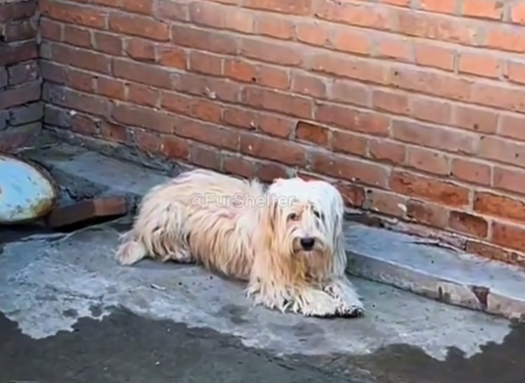
He stepped toward me, then back toward the puppies, pacing anxiously. He was asking for help.
I didn’t think. I acted.
I called an emergency rescue line with shaking hands, describing the location, the puppies, the mother barely alive. While waiting, I took off my jacket and carefully placed it over the mother to shield her from the cold. The father dog watched every movement, tense but trusting now.
“She’s okay,” I whispered, though I wasn’t sure it was true. “Help is coming.”
Minutes felt like hours.
The puppies squeaked softly, blind and unaware of how close they were to being orphaned. The father dog licked each one carefully, then returned to the mother, pressing his body against hers as if trying to give her strength.
When the rescue team arrived, they moved quickly but gently. The father dog refused to step away at first, standing over the family until one of the rescuers knelt and spoke softly to him.
“We’ll save them,” she said. “I promise.”
Something in her voice must have reached him. Slowly, reluctantly, he backed away just enough for them to lift the mother onto a stretcher and secure the puppies in a warm crate.
As they loaded the van, the father dog tried to jump in.
“He’s coming too,” I said firmly. “He stays with them.”
No one argued.
At the veterinary clinic, the truth was grim. The mother was severely malnourished, her body drained from pregnancy and weeks of starvation. She had given everything she had to her puppies—and it had almost killed her.
Almost.
Thanks to fluids, medication, and warmth, she stabilized through the night. The puppies were fed carefully, monitored constantly. And the father dog—who they later named Shadow—refused to leave the door of the recovery room.
He didn’t eat until the mother did.
He didn’t sleep until the puppies were settled.
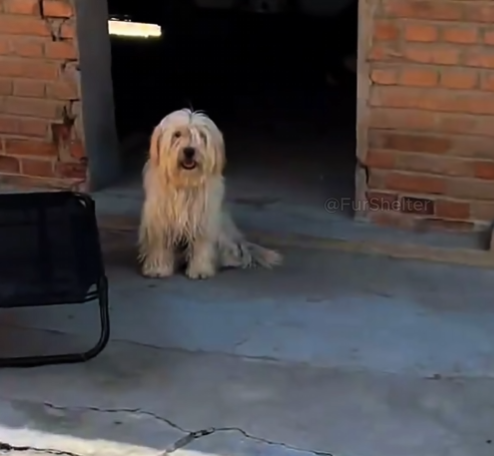
Over the next days, I visited constantly. Shadow began to relax, wagging his tail when he saw me, resting his head on my knee as if we were old friends. But he never stopped watching over his family.
The mother survived.
Weeks passed. The puppies opened their eyes. The mother regained strength. Shadow learned what toys were. What gentle hands felt like. What it meant not to be invisible.
When the puppies were old enough, they were adopted one by one into loving homes. The mother went too—into a quiet household where she could rest and heal.
That left Shadow.
The dog who had guarded his family behind broken pallets. The dog who had trusted a stranger when it mattered most.
I didn’t hesitate.
The day I brought him home, he walked through the door slowly, sniffing every corner, cautious but curious. That night, he curled up beside my bed and slept deeply for the first time, free of responsibility, free of fear.
Sometimes, when we walk past that old grocery store, Shadow slows down. He looks toward the alley, ears relaxed now, tail wagging gently. He doesn’t need to guard anything anymore.
But I do.
Because behind one stray dog, I didn’t just find puppies.
I found loyalty.
I found courage.
I found a reminder that love can survive even in the most forgotten places.
And it changed everything—about how I see animals, about how I see responsibility, and about how sometimes, the most important things in life are hidden behind those who refuse to give up on the ones they love.