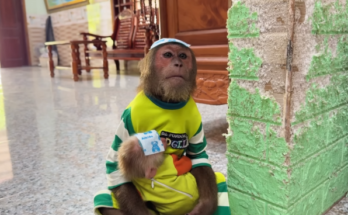
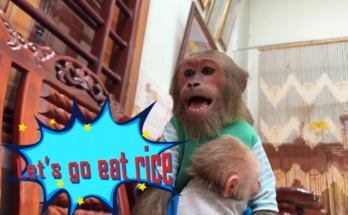
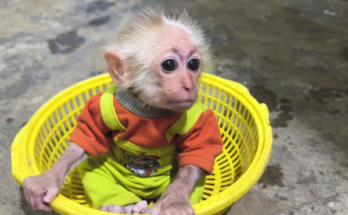
Deep in the quiet green edge of a tropical forest, life moved to an ancient rhythm. Birds called at dawn, leaves whispered in the afternoon breeze, and families of monkeys leapt from branch to branch, following paths their ancestors had traveled for centuries. It was here, on a narrow dirt road that cut between village and forest, that one kind man noticed something that would change his life—and save another.
The man’s name was Dara. He was a gentle soul, known in his village for helping injured animals and returning lost pets to their owners. Each morning, he walked the same path to check his small garden and collect fallen fruit from the trees near the forest. That morning, however, a sharp, panicked cry stopped him in his tracks. It wasn’t the playful chatter of young monkeys or the warning bark of adults. It was smaller, thinner, and filled with fear.
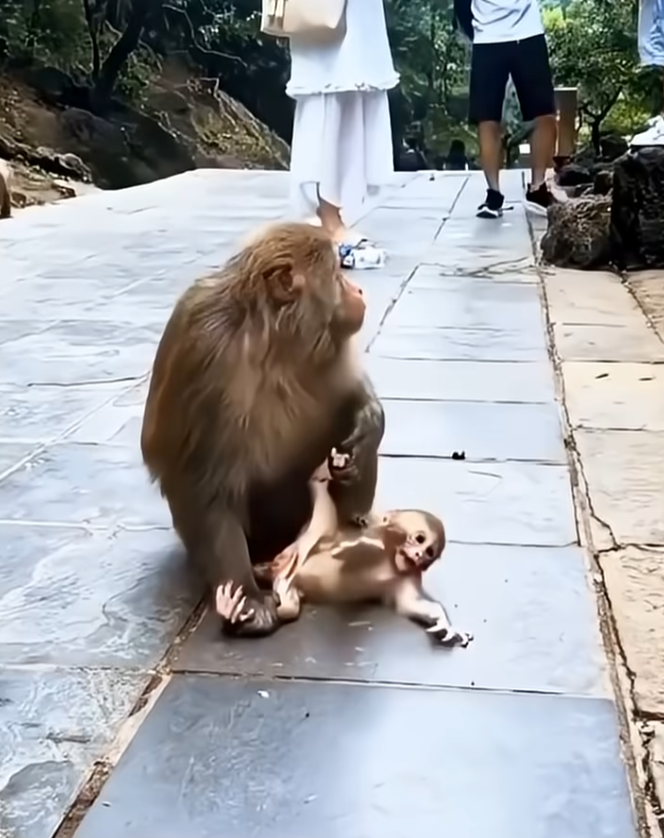
Dara followed the sound carefully, moving slowly so he wouldn’t scare anyone. Through the leaves, he saw a mother monkey perched low on a branch. In her arms was a tiny baby—far too small to cling properly, its hands trembling as it tried to hold on. The mother looked stressed and restless. She shifted sharply, pushing the baby away again and again. Each time the baby tried to return, it cried louder.
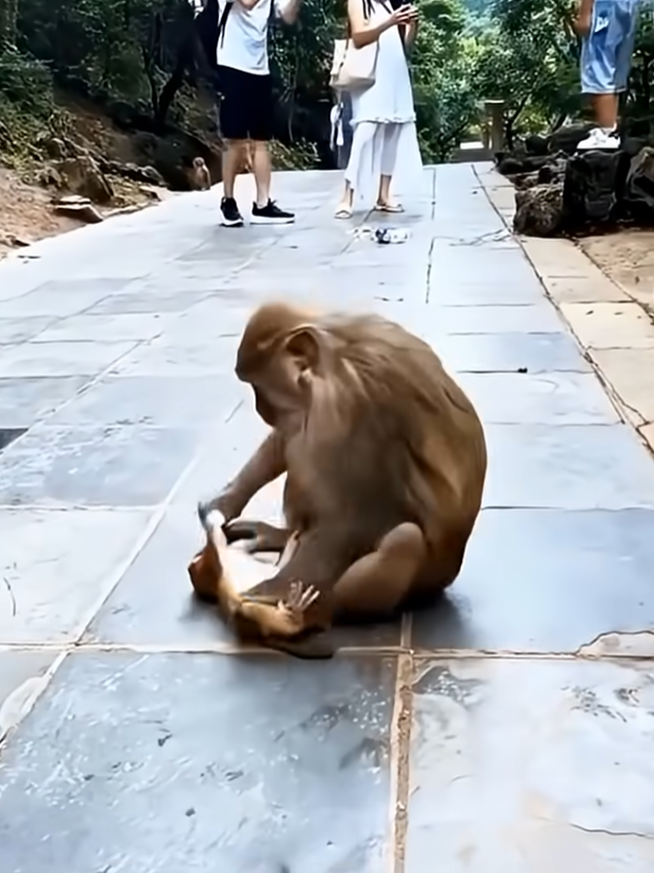
Dara knew that nature could be harsh. Sometimes animal mothers rejected their young due to fear, illness, or lack of food. He stayed still, watching from a distance, hoping the mother would calm down. But the situation grew worse. The baby slipped from the branch and landed softly in the grass below, crying weakly.
The mother did not follow.
Dara’s heart sank. He waited a little longer, giving her time, but she moved higher into the trees and disappeared with the group. The baby was alone.
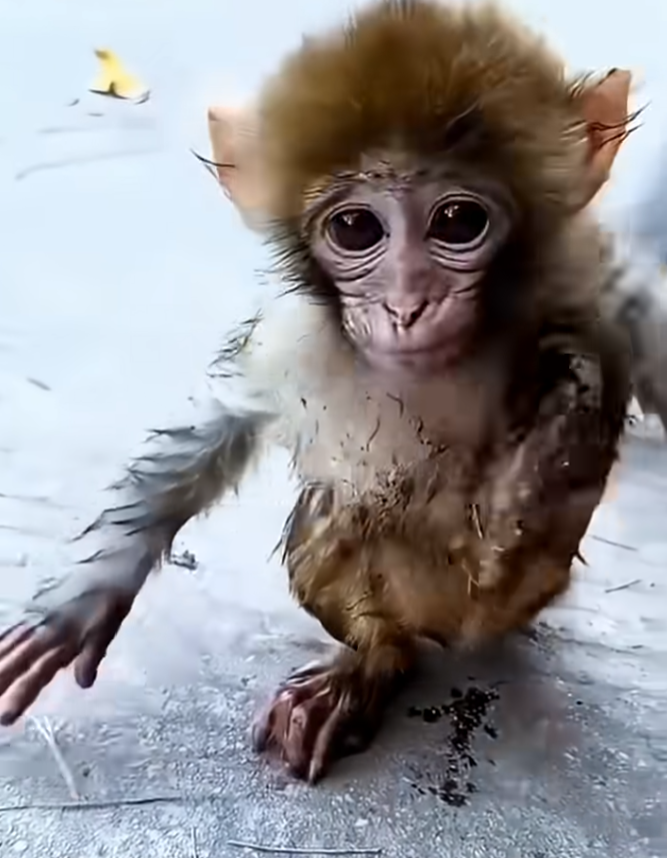
Slowly and carefully, Dara approached. The tiny monkey lay curled on the ground, shivering and exhausted. Its eyes were wide, searching for comfort that wasn’t coming. Dara knelt and spoke softly, not reaching out right away. He knew sudden movements could frighten a wild animal. When the baby tried to crawl toward him, he gently wrapped it in his scarf, lifting it with the care of someone holding something precious.
The baby monkey clung to him immediately, gripping his finger with surprising strength. Its breathing slowed. For the first time, it felt safe.
Dara took the baby to his home, a small wooden house near the forest edge. He prepared a warm place with soft cloth and gave the baby water using a clean dropper. He didn’t know yet what the next step would be, but he knew one thing: he could not abandon this tiny life.
Over the next few days, Dara learned quickly. He contacted a local wildlife rescue group and followed their advice carefully. He fed the baby appropriate food, kept it warm, and made sure it rested. The monkey was weak but resilient. Each day, it grew a little stronger, a little more curious. It began to explore Dara’s hands, tugging gently at his shirt, chirping softly when he returned to the room.
Dara named the baby “Mali,” which meant “flower” in his language—a symbol of new beginnings.
As weeks passed, Mali’s personality bloomed. She loved sunlight and would squeak happily when Dara opened the window. She learned to grip branches Dara placed in her space, practicing balance and strength. Though still cautious, she trusted him completely, curling against his chest when tired.
But Dara never forgot that Mali was a wild animal. His goal was not to keep her forever, but to help her heal and return to a safe life among her own kind. With the guidance of the rescue team, he began preparing Mali for that future. He limited human contact, encouraged natural behaviors, and slowly introduced forest sounds and safe outdoor spaces.
One afternoon, something unexpected happened.
While Dara and a rescue worker were taking Mali to a protected forest enclosure, a familiar group of monkeys appeared nearby. Among them was a female who paused, staring intently. She climbed lower, her eyes fixed on the small monkey in Dara’s arms.
Mali noticed her too.
The baby monkey let out a soft call—one she had not used in weeks. The female answered.
The air seemed to hold its breath.
The rescue worker explained that sometimes, under the right conditions, mothers recognized their babies by sound and scent, even after separation. Carefully, they placed Mali in a safe space and stepped back. The female approached slowly, cautiously, her earlier stress replaced by hesitation and curiosity.
After a long moment, she reached out.
Mali moved toward her without fear.
The reunion was quiet and gentle. No sudden movements, no rejection this time. The mother held Mali close, grooming her softly as if to make up for lost time. The group remained nearby, watchful but calm.
Dara felt tears in his eyes. He had hoped for a safe release, but this—this was more than he had dreamed.
The rescue team monitored the pair for several days. The mother stayed with Mali, protecting her, feeding her, and guiding her through the trees. The bond, once broken, was mending.
When the time came to leave, Dara stood quietly at the forest edge. Mali peeked out from her mother’s arms, her bright eyes catching the sunlight. For a moment, it felt like she recognized him. She gave a small chirp, then turned back to the forest.
Dara smiled.
Kindness had changed the course of a life. Not by force, not by ownership, but by patience, respect, and love.
And somewhere in the forest, a baby monkey lived on—safe, wild, and free—because one man listened when the world cried softly for help.