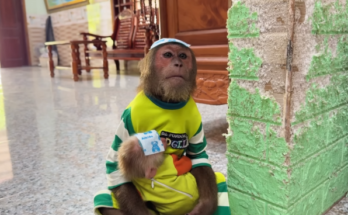
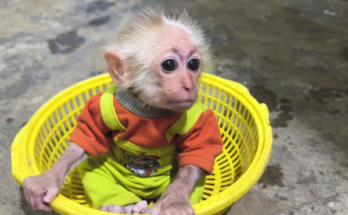
The morning sun shone brightly over the jungle, turning the treetops golden and warming the cool air left behind by the night. High above the forest floor stood the Old Banyan Tree, the tallest and strongest tree in the area. Its branches stretched wide like giant arms, offering shade, fruit, and endless opportunities for fun. For generations, monkeys had climbed, rested, and played there. To the young monkeys, the Old Banyan Tree was not just a tree—it was a playground.
Among the troop were three young monkeys: Kiro, Nami, and little Taro. They were inseparable, always laughing, chasing one another, and testing their limits. On this particular morning, excitement filled the air.
“Let’s climb higher today!” Kiro shouted, his eyes shining with mischief.
“Yes! Higher than ever before!” Nami agreed, already leaping onto a thick branch.
Taro hesitated. He was the youngest and smallest. “My mother said not to go too high,” he said softly.
“Oh come on,” Kiro laughed. “Nothing ever happens. We’ve done this a hundred times.”
Ignoring Taro’s worry—and the distant warning calls of their mothers—the three monkeys began climbing higher and higher into the Banyan Tree. The branches grew thinner, swaying slightly with each jump. The wind whispered through the leaves, as if trying to warn them.
From below, the adult monkeys watched with growing concern. An old monkey named Ruma shook her head. “That part of the tree is weak,” she murmured. “They should not be up there.”
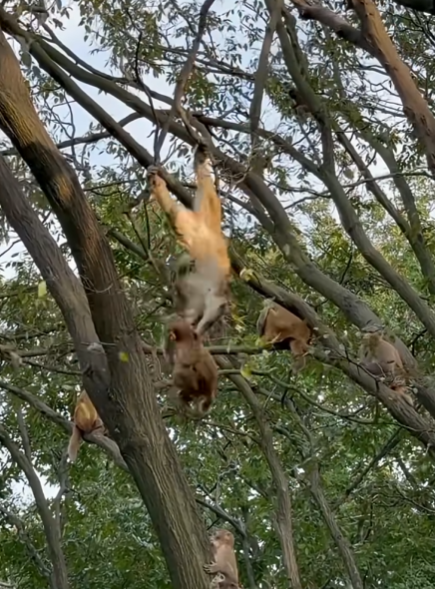
But the young monkeys only laughed. They raced along the branches, leaping from one to another, squealing with joy. Kiro hung upside down by his tail, Nami jumped wildly, and Taro followed carefully behind, his heart pounding.
Suddenly, there was a sharp cracking sound.
CRACK!
The laughter stopped.
The branch beneath Nami’s feet snapped without warning. She screamed as she fell, grabbing desperately at the air. Kiro tried to reach her, but the sudden movement caused another branch to break. Taro lost his balance and slipped.
In seconds, chaos exploded.
Nami crashed into lower branches, scraping her arms and legs before hitting the ground hard. Kiro slammed against the trunk, knocking the breath from his lungs. Taro fell into thick bushes below, crying in pain and fear.
The jungle went silent—then erupted with panicked calls.
“MOTHER!”
“HELP!”
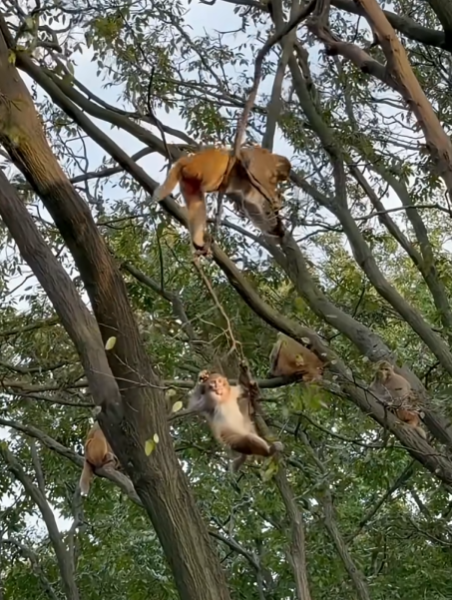
The adult monkeys rushed forward. Mothers screamed their children’s names as they climbed down quickly. When they reached the injured young ones, their hearts sank.
Nami lay on the ground, trembling, her leg bent at a painful angle. She cried uncontrollably. Kiro struggled to breathe, clutching his chest, his face pale with shock. Taro was bleeding from scratches, shaking and sobbing, unable to stand.
The price of their reckless play had come too quickly—and too harshly.
The mothers gathered around, fear and anger mixing in their eyes. “We warned you!” one mother cried. “Why didn’t you listen?”
Kiro lowered his head, tears streaming down his face. “We… we just wanted to have fun,” he whispered.
Ruma, the old monkey, stepped forward slowly. Her voice was calm but heavy with sadness. “The tree is strong,” she said, “but even strong things have limits. When you ignore warnings, you risk more than fun—you risk your life.”
The injured monkeys were carefully carried to a safe resting area. Leaves and herbs were used to treat wounds. Nami’s leg was badly hurt; she would not be able to climb for a long time. Kiro’s ribs were bruised, making every breath painful. Taro’s injuries were lighter, but the fear in his eyes was deep.
That night, the jungle felt different. There was no laughter, no playful chasing through the branches. Only silence, broken by the occasional sob of pain or regret.
Taro lay beside his mother, unable to sleep. The images replayed in his mind—the cracking branch, the screams, the fall. “I was scared,” he whispered. “I should have listened.”
His mother wrapped her arms around him. “Fear is not weakness,” she said gently. “It is a warning meant to protect you.”
Nearby, Kiro stared at the moon, his chest aching with every breath. “I thought being brave meant climbing higher,” he said quietly to Nami. “Now I know it also means knowing when to stop.”
Nami nodded, tears rolling down her face. “I just wanted to show I wasn’t afraid,” she said. “Now I’m afraid I’ll never climb again.”
Days passed. The young monkeys remained grounded while others played above. They watched from below as life continued in the trees—but differently now. The Banyan Tree was still there, tall and proud, but no one climbed to the dangerous upper branches anymore.
The injured monkeys healed slowly. Nami learned patience as she rested her injured leg. Kiro learned humility, accepting help from others. Taro learned confidence in listening to his instincts.
One morning, Ruma gathered the young monkeys. “Play is important,” she said. “Joy keeps the heart alive. But wisdom keeps the body safe. Fun without care leads to sorrow.”
The young monkeys bowed their heads. The lesson had been learned not through words—but through pain.
Weeks later, when Nami finally climbed again, she stayed on strong branches. Kiro tested each step carefully. Taro stayed close to his mother. They still played, laughed, and enjoyed the tree—but with respect.
The Old Banyan Tree stood quietly, its broken branch a reminder carved into memory.
The jungle would never forget that day—the day when play turned into danger, and laughter turned into cries. The monkeys had paid a heavy price for ignoring warnings, but they gained something far more valuable in return: wisdom.
And from that day forward, whenever young monkeys began to climb too high, elders would gently say:
“Remember the tree… and remember the fall.”
😱