High in the misty mountains where clouds drift low and ancient forests breathe quietly, a rare and beautiful moment unfolds. In a sheltered clearing, beneath towering bamboo and moss-covered trees, a mountain gorilla mother welcomes her newborn into the world. These gorillas live in small family groups, far from busy cities, and moments like this are seldom seen by human eyes. Every birth is precious, but for mountain gorillas—one of the world’s most endangered great apes—each new life feels like a small miracle.
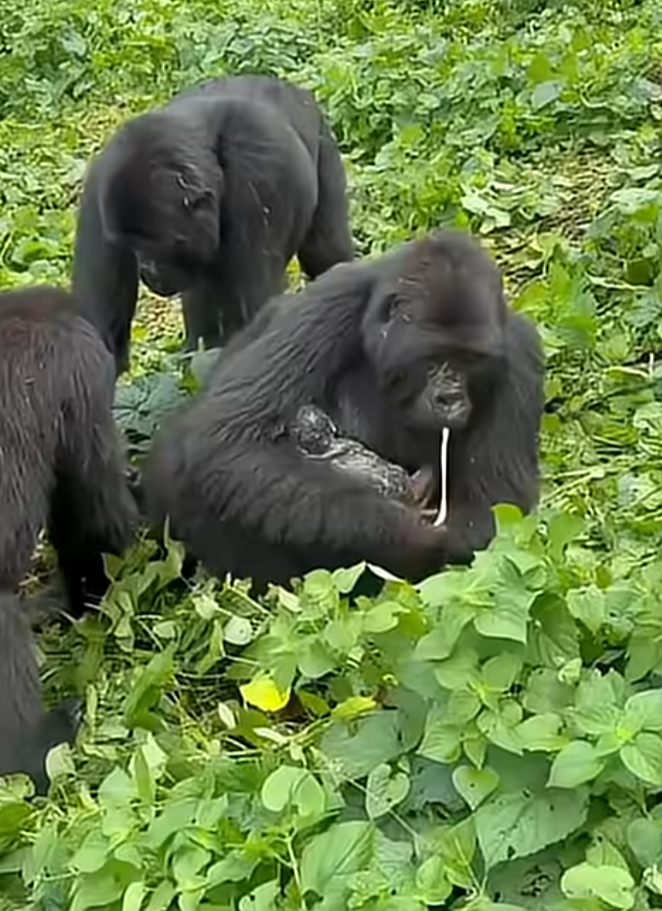
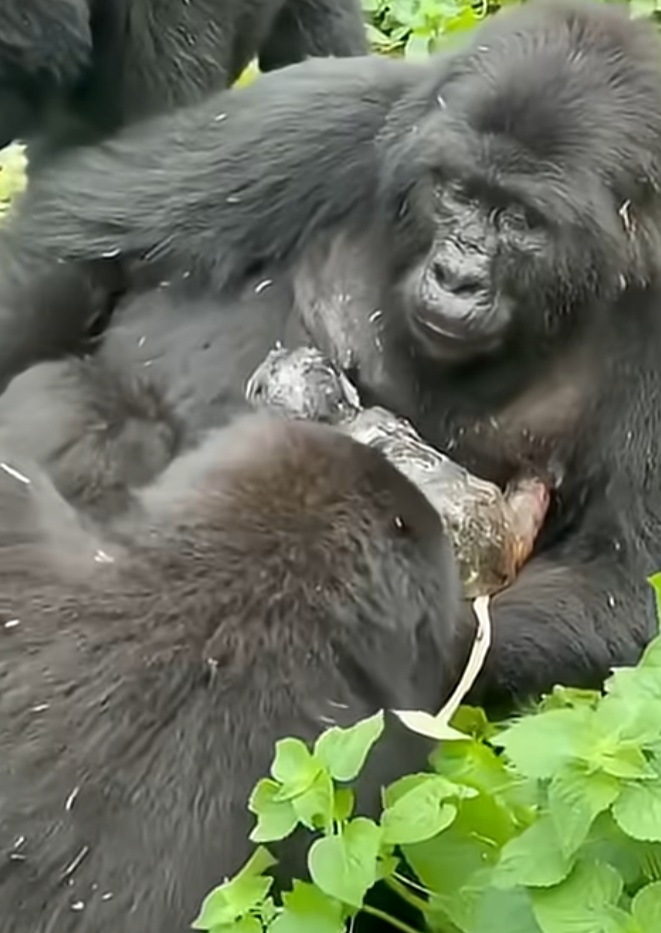
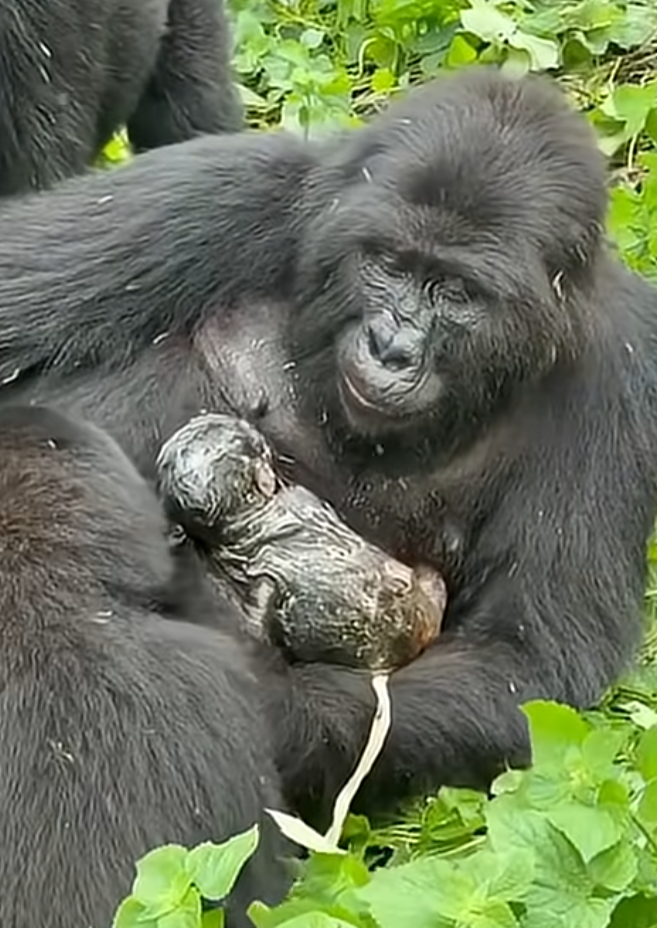
The newborn arrives tiny and fragile, its dark skin wrinkled and soft, its eyes still adjusting to the light. The mother, calm and focused, cradles her baby close to her chest. Her movements are gentle and careful, guided by instinct that has been passed down through countless generations. She hums softly, a low, comforting sound that reassures the infant and keeps the group at ease. Nearby, other members of the gorilla family watch quietly, respectful and alert, forming a natural circle of protection.
One of the first tasks the mother performs is tending to the umbilical cord. This is a normal and important part of birth for many mammals, including gorillas. With calm precision, she removes the cord in a natural, nonviolent way, ensuring her baby can begin life independently. There is no rush, no panic—only patience and care. This moment shows how deeply connected gorilla mothers are to their babies and how capable they are at caring for them from the very first breath.
Mountain gorillas are known for their strong family bonds. The mother’s role is especially vital during the early days of a baby’s life. Newborn gorillas cling tightly to their mothers, riding on their chests at first and later on their backs as they grow stronger. The baby depends entirely on its mother for warmth, nourishment, and safety. In return, the mother gives constant attention, grooming the baby and keeping it close even while feeding or resting.
The newborn’s arrival brings a subtle change to the group’s energy. The dominant silverback, the large male leader with silver hair on his back, keeps a watchful eye on the surroundings. His presence ensures safety from potential threats. While he does not interfere with the mother’s care, his calm strength provides a sense of security. Other females show curiosity, sometimes approaching to take a gentle look, but they respect the mother’s space.
Life in the mountains is not easy. The weather can be cold and wet, and food is not always plentiful. This is why every healthy birth matters so much. Mountain gorillas reproduce slowly, and mothers usually give birth only once every few years. That makes each newborn incredibly important for the survival of the species. Conservationists around the world celebrate these births as signs of hope.
For thousands of years, mountain gorillas have lived in harmony with their forest homes. They play a key role in the ecosystem by spreading seeds and shaping plant growth. When a baby gorilla is born, it is not just a new life for the family—it is a gift to the entire forest. The health of gorilla populations reflects the health of their environment.
The mother continues to hold her baby close, licking its tiny fingers and brushing away bits of leaves. The baby makes small sounds, exploring the world through touch and sound before sight fully develops. These early moments are quiet and intimate. There is no drama, only the powerful simplicity of life beginning.
Human protection has helped make moments like this possible. Thanks to dedicated conservation efforts, anti-poaching patrols, and responsible eco-tourism, mountain gorilla numbers have slowly increased in recent years. Rangers risk their lives to protect these animals, and local communities play an important role in conservation. Seeing a newborn gorilla reminds everyone why this work matters.
As the day passes, the mother finds a comfortable spot to rest. She curls around her baby, shielding it from the cool mountain air. The forest hums softly with insects and birds, and the gorilla family settles into a peaceful rhythm. The newborn sleeps, safe and warm, unaware of how rare and special it is.
This wild and wonderful moment—of a mother welcoming her baby and carefully tending to it—captures the heart of nature’s quiet strength. It reminds us that love, care, and patience are not uniquely human traits. They are shared across species, written into the fabric of life itself.
In the misty mountains, a new chapter has begun. The newborn mountain gorilla represents hope for the future, resilience in the face of challenges, and the enduring power of motherhood. As long as these forests stand and these families are protected, moments like this will continue to inspire awe and respect for the natural world.