The sun was high in the sky, pouring golden light over the bustling little village nestled on the edge of the jungle. The morning market had quieted down, leaving behind colorful stalls of fruits, vegetables, and handmade crafts, while the scent of spices and freshly baked bread lingered in the air. It was the kind of day where nothing extraordinary seemed likely to happen—until a small troop of monkeys decided to pay a visit.
They came cautiously at first, their movements agile and deliberate. Their eyes, sharp and gleaming, scanned the surroundings, noting every potential threat, every human presence, and every opportunity for mischief. There were ten of them in the troop, ranging from playful infants clinging to their mothers to older, wiser males with a commanding presence. Their leader, a brown-coated monkey with a streak of white across his forehead, gestured to the others, and they moved in unison, like dancers in a carefully choreographed performance.
The villagers, noticing the troop, froze for a moment. Some laughed, recalling the many times monkeys had appeared in the area, causing gentle chaos and playful disturbances. Others reached for their cameras or phones, eager to capture the moment—because in this age of social media, anything with monkeys could become a viral video.
One young boy, no more than ten, had a small packet of peanuts he had bought from the market. Sitting under the shade of a mango tree, he had been enjoying a quiet snack when he saw the troop approach. His eyes widened, and he held the packet tightly. The troop stopped at the edge of the tree line, scanning the boy, sniffing the air, and gauging whether he could be trusted—or tricked.
The leader monkey hopped forward first, graceful and confident. He approached the boy with cautious curiosity, sitting a few feet away and staring at the packet in his hands. The boy extended a single peanut, trembling slightly, and the monkey reached out with delicate, careful fingers, taking it gingerly. He sniffed it first, testing its scent, and then popped it into his mouth. A crunch, a satisfied chew, and his eyes sparkled.
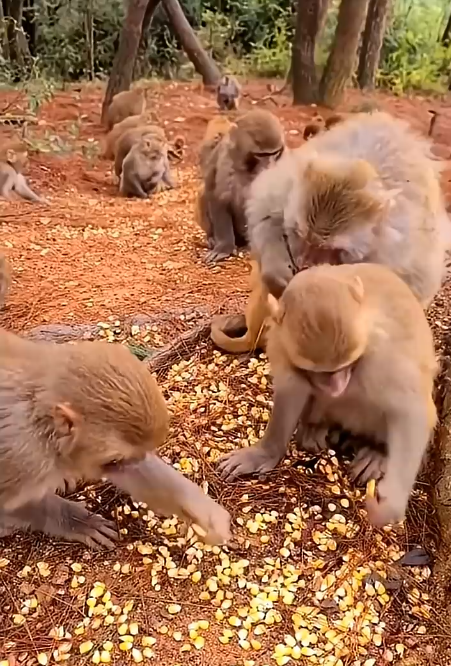
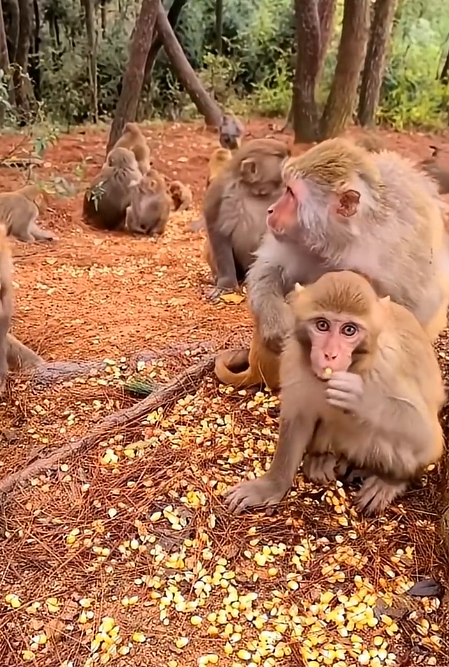
One by one, the other monkeys approached. Mothers carrying babies in their arms carefully extended a paw to accept peanuts, while infants clung to their parents, watching the strange human gift with wide, fascinated eyes. A small chaos began to form, but it was a controlled chaos: monkeys grabbing peanuts, cracking shells, and tossing the nuts to each other in playful gestures.
The boy laughed, delighting in the scene. “Look at them! They’re actually eating them!” he shouted to the villagers watching nearby. Someone pulled out a phone, recording the moment, and the first few seconds of the video captured the troop’s antics perfectly. It was already destined to go viral.
The monkeys’ enjoyment was evident. Some cracked the shells with expert precision, tossing the nuts into the air and catching them with practiced ease. Infants giggled—or made noises that resembled laughter—as they tried to imitate the older monkeys, often dropping peanuts but quickly retrieving them. Mothers shared peanuts with their babies, sometimes rolling them along the ground to teach them how to crack them open. It was a scene of pure joy, a glimpse into the playful intelligence of these animals.
And then, as if sensing a need for a little more excitement, the leader decided to escalate the fun. He leapt onto a low roof nearby, looking down at the humans and the remaining peanuts. With a mischievous glint in his eye, he snatched an entire handful of peanuts and held them triumphantly. The villagers gasped, some laughing, some startled. The boy shook his head, half-amused, half-impressed. The monkey scampered down, tossing a peanut here, a shell there, engaging the troop in what could only be described as a peanut attack—a playful “monkey attack” of joy.
The other monkeys followed suit. Some grabbed small baskets left behind by vendors, tipping over contents to find more treats. Others climbed trees, dropping peanuts from above to see if anyone would catch them. Infants tumbled and rolled in the grass, squealing with delight, learning from their elders. The village square had turned into a playground for the troop, a peanut paradise, and the energy was infectious.
People watching could not help but smile. The troop had captured their hearts, their attention, and soon their cameras. Every toss, every crunch, every gleeful squeak became content ready for social media. Children shouted, clapped, and joined in the fun, tossing peanuts toward the troop carefully, making sure not to frighten the animals. Adults laughed, taking photos and videos, commenting on the monkeys’ surprising dexterity and intelligence.
Amidst the fun, a small incident occurred: a particularly bold infant monkey grabbed a peanut directly from the boy’s hand, startling him. But the boy giggled instead of crying or pulling back. The monkey scampered up a low branch, holding its prize and munching carefully. The mother monkey nearby watched, approving the infant’s initiative, a subtle lesson in independence and confidence.
Soon, a rhythm developed. Humans tossed peanuts gently, monkeys caught them with flair, cracked the shells with skill, and shared with one another. There was a sense of connection between the two species in those moments—a silent, joyful communication that required no words. The monkeys’ playful attack was not aggressive; it was an invitation to share in their happiness. The forest and village had merged, if only for a brief time, in this spontaneous peanut celebration.
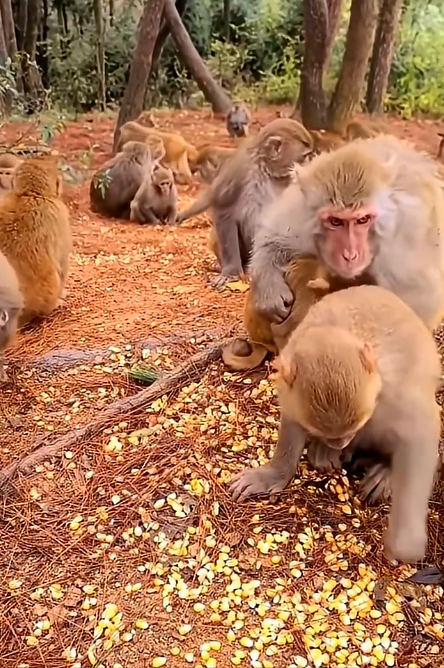
The video captured every moment: the crunch of shells, the baby monkeys tumbling, the playful gestures, the attentive mothers, and the clever leader distributing peanuts with calculated grace. It was no wonder that once uploaded online, the clip began to circulate rapidly. People everywhere marveled at the scene, hearts melting at the sight of the tiny infants clinging to their parents, laughter echoing in the jungle air, and the sheer joy radiating from every movement.
As the sun began to dip toward the horizon, casting long shadows across the village, the troop gathered the remaining peanuts and retreated toward the safety of the forest. The humans waved, some throwing an extra peanut as a farewell gift. The monkeys paused briefly, munching contentedly, exchanging glances that seemed almost like gratitude. Then, with agility and grace, they disappeared into the trees, leaving behind smiles, laughter, and a viral memory that would be shared across the globe.
The boy sat under the tree, exhausted but happy. “I can’t believe they actually enjoyed it so much,” he said to his friends. “And they weren’t even scary—they were fun!”
Indeed, the troop had shown a side of their nature rarely captured: playful, social, and intelligent. The video titled “Monkeys Enjoying Peanuts #ViralVideo #MonkeyAttack 🥰” would go on to melt hearts worldwide, reminding people of the magic of connection, the joy of simple pleasures, and the unexpected moments of delight that animals can bring into human lives.
As night fell and the jungle quieted, the troop rested in the treetops, bellies full of peanuts, infants curled against their mothers, and leaders watching over them. The day had been filled with food, laughter, and a little adventure—a small yet perfect chapter in the lives of the monkeys.
And somewhere in the hearts of the villagers, and soon in the hearts of millions online, the lesson lingered: joy is contagious, play is universal, and sometimes, the simplest gifts—a handful of peanuts, a shared moment—can create memories that last forever.
The monkeys, sleeping peacefully among the branches, dreamed of peanuts, laughter, and the playful attacks that had made their day unforgettable. And the humans, sharing their videos and stories, felt the warmth and happiness of a world where even a tiny, playful troop of monkeys could remind them how wonderful life could be.