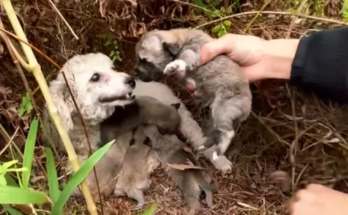
In a quiet village near the edge of a green forest, mornings usually began with birdsong and the gentle rustle of leaves. On one such morning, a woman named Lina set out on her daily walk along a narrow dirt path. Lina was known in the village for her calm heart and gentle ways. She grew vegetables behind her house, shared fruit with neighbors, and never hurried past an animal in need. That day, as the sun lifted above the trees, Lina heard a sound that made her stop—a small, trembling cry.
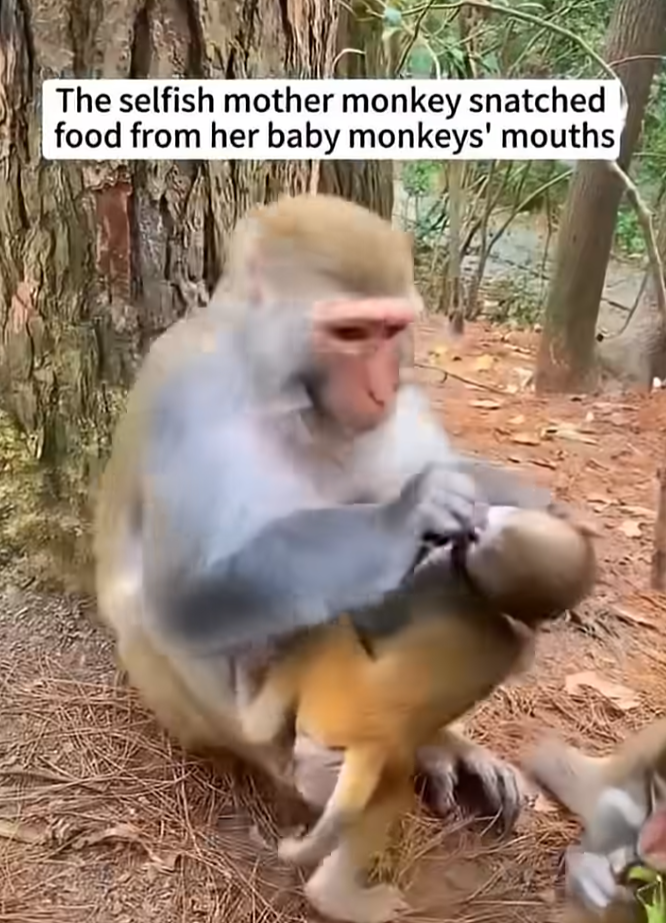
Following the sound, she reached a clearing where a troop of monkeys often gathered. From a distance, she saw something troubling. A tiny baby monkey clung to a low branch, its body stiff with fear. Nearby, its mother paced and snapped, swatting the air and pushing the baby away whenever it tried to crawl closer. The baby squeaked and stumbled, clearly confused and scared. Lina knew that animals, like people, could struggle sometimes. Mothers could be stressed, hungry, or overwhelmed. Still, the sight of the helpless baby being pushed aside made her heart ache.
Lina stayed quiet at first. She didn’t want to frighten the monkeys or make the situation worse. She watched as the baby tried again to approach its mother, only to be chased away. The troop soon moved on, leaping into the trees, and the baby was left alone on the ground, shaking and calling out. Lina felt a decision settle in her chest. She couldn’t leave the little one there.
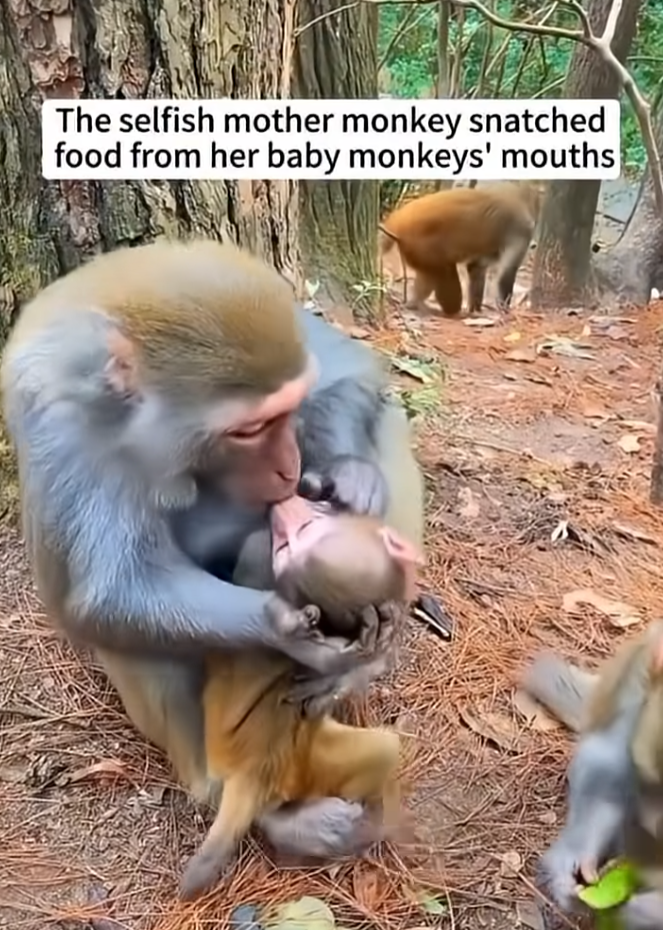
Slowly, gently, she stepped forward and knelt. She spoke softly, the way she always did to animals. The baby monkey looked up with wide, wet eyes. It didn’t run. It seemed too tired to be afraid. Lina offered her hands, palms open, and waited. After a moment that felt like a held breath, the baby crawled closer and curled against her arm. Lina wrapped her scarf loosely around the tiny body to keep it warm and carried it home.
At her house, Lina prepared a safe, quiet space. She used a basket lined with clean cloths and placed it near the window where sunlight filtered in. She fetched water and a little fruit, mashing it carefully so it would be easy to eat. The baby monkey ate slowly, pausing often, but each bite brought a little more strength. Lina watched closely, relieved to see the baby settle into sleep, its breathing soft and even.
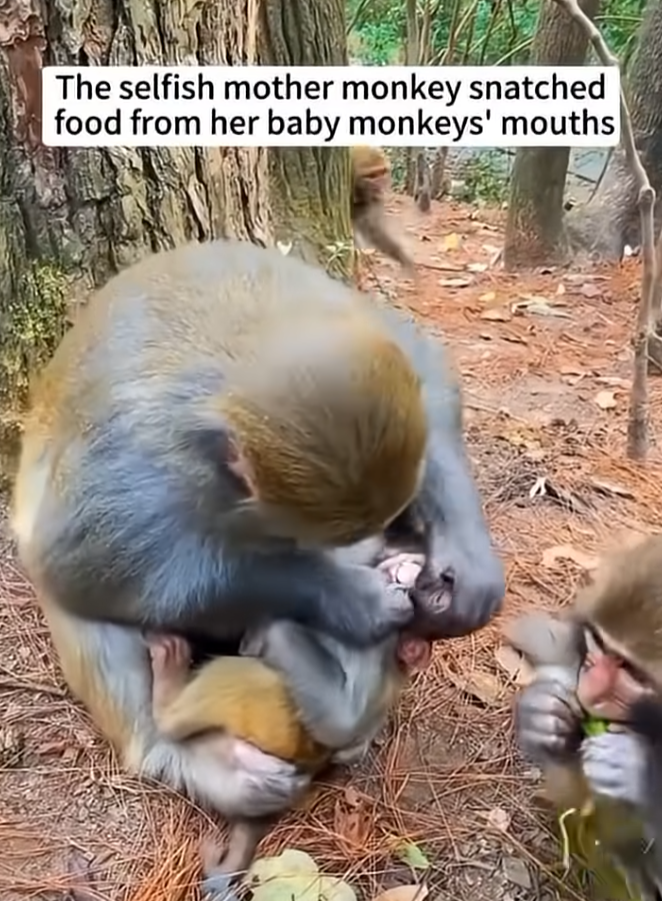
Over the next few days, Lina learned the baby’s habits. She named the little monkey Niko, a simple name that felt kind. Niko liked to hold Lina’s finger while sleeping and perked up at the sound of wind chimes on the porch. Lina contacted a local wildlife caretaker for advice, determined to do what was best. The caretaker explained that sometimes monkey mothers reject or push away a baby due to stress, illness, or changes in the troop. The goal, he said, should always be to help the baby grow strong and, if possible, reunite it safely with its kind.
Lina took that guidance seriously. She made sure Niko spent time outdoors, climbing safe branches she set up in the yard. She limited cuddling, even though it was hard, because she wanted Niko to learn monkey ways. She played recordings of forest sounds and placed leaves and twigs in the basket. Slowly, Niko’s eyes grew brighter, and his movements became confident. He learned to balance, to grip, and to explore with curiosity instead of fear.
One afternoon, while Lina was working in the garden, she noticed a familiar shape in the trees. The troop had returned. Lina’s heart raced, but she stayed calm. She brought Niko outside and sat at a distance, letting the forest do the talking. The mother appeared, watching from a branch. She didn’t come closer at first. Niko froze, then made a small call—soft, hopeful.
Minutes passed. The mother edged nearer, her posture cautious. Lina stayed still, hands resting on her knees, eyes down. She had learned that patience could be a bridge. Finally, the mother dropped to a lower branch and reached out. Niko hesitated, then climbed forward. There was no snapping this time. No swatting. The mother sniffed the baby and pulled him close.
Lina felt tears rise, but she didn’t move. She knew this moment belonged to them. The mother settled, grooming Niko gently. Other monkeys gathered, curious but calm. The troop lingered, then shifted higher into the trees. The mother paused once, looking back toward Lina. It wasn’t a human look, but Lina felt a quiet understanding pass between them—a shared relief.
As the days turned into weeks, Lina saw Niko from time to time, swinging with confidence, staying close to his mother. The bullying was gone, replaced by watchful care. Lina learned later from the caretaker that the mother had been under pressure before—competition for food, disturbances in the forest. With space and time, her instincts had steadied.
The village heard the story and began to see the forest differently. People slowed their steps. Children learned to watch without interfering. Neighbors helped protect fruit trees so the monkeys had food away from the road. Lina never claimed to be a hero. She simply said she listened when a small voice needed help.
In the end, the rescue wasn’t just about saving a baby monkey. It was about patience, respect, and knowing when to step in—and when to step back. Lina’s kindness didn’t replace a mother; it made room for one to return. And in the quiet mornings that followed, when the birds sang and leaves whispered, the forest felt a little more whole.