
Sometimes, the human heart harbors a complexity that is both dark and undeniable. It’s not always about love, forgiveness, or kindness. Sometimes, it’s about witnessing justice, or at least the illusion of it. Sometimes, it’s about watching someone who caused harm stumble, falter, and struggle — even if only for a moment — and feeling a quiet satisfaction that the universe finally bends in your favor.
I’ll admit it: I wanted that moment. I wanted it not out of cruelty, but out of the deep-seated need for closure, for balance. I wanted to see him fall because he had risen too easily for too long, because his arrogance and thoughtlessness had left a trail of chaos in its wake. I wanted the moment to exist, even if only for a fleeting heartbeat, because the mere idea of him struggling — just once — made my own struggles feel less invisible.
It’s strange how human emotions can intertwine desire and resentment. One moment, you’re replaying memories of laughter and camaraderie, the next, you’re remembering the sting of betrayal. And in that sting grows a curious sort of longing. The longing is not for revenge, exactly — it’s for recognition, for acknowledgment that what he had built, often on the misfortune of others, could crumble. There’s a certain poetry in watching someone who seemed untouchable grapple with consequences, even minor ones. It’s a moment of truth, raw and unfiltered.
I found myself imagining the scenarios over and over. Would it be a failure at work, a personal disappointment, or a simple, clumsy stumble that revealed his vulnerability? It didn’t matter. I wanted him to feel the friction of reality, the weight of a world that he so often ignored. I wanted him to remember what it felt like to be powerless, to have to fight, to sweat, to claw for something he could not grasp with ease.
There’s a delicate line here between satisfaction and malice. I knew that. I told myself this wasn’t about hurting him, only about witnessing a moment that mirrored life’s natural order: those who soar recklessly will eventually meet resistance. It was poetic justice in its simplest form, and sometimes, the human heart craves poetry more than logic.
Watching people struggle is not inherently wrong. Empathy teaches us to offer help when someone falls, yet there is a peculiar human urge to observe the inevitable falter, to understand that strength and luck are never infinite. Even the most charismatic, confident people face moments where control slips from their hands. Their falls are humbling, and in witnessing them, we are reminded of our own fragility. I wanted that for him, in part, because it reminded me of myself.
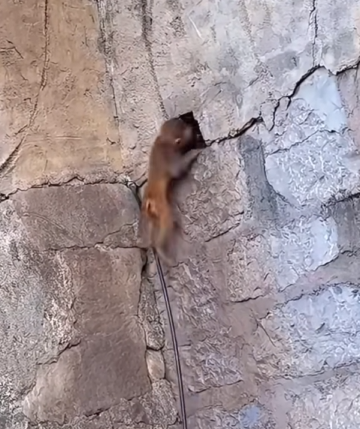
When I finally saw the signs, subtle at first, a shift in his usual dominance, I felt a mixture of apprehension and anticipation. There was no cheering, no celebration — just the quiet satisfaction of knowing that life had a way of equalizing the scales. It’s not about cruelty; it’s about truth. For too long, he had moved without friction, as if the world owed him compliance. But friction exists for everyone eventually.
I remember the first moment vividly. A simple task, something that should have been routine, slipped through his grasp. He hesitated, stumbled, and for the first time in a long time, the confidence in his stride faltered. It wasn’t dramatic, not at all, but it was enough. Enough to see the crack in his facade, enough to recognize that even the tallest towers have weak foundations. And in that recognition, I felt a subtle sense of relief. Not triumph, but relief — a sense that balance, however brief, had returned.
It’s fascinating how moments like these make us reflect on our own journeys. Seeing him struggle made me think about my own falls, my own fights. It reminded me that struggle is universal, that no one is invincible, and that resilience often comes from the hardest lessons. Watching someone grapple with their limitations, even someone who may have caused harm, can spark introspection. Why do we crave this? Why does the falter of another stir something so strong inside us? Perhaps because it humanizes them. It reminds us that perfection is an illusion and that vulnerability is inescapable.
And yet, there’s danger in this desire. Wanting someone to stumble must never consume us entirely, or it becomes bitterness, a corrosive force. There is a thin line between witnessing struggle and wishing perpetual misfortune. I had to remind myself constantly that the goal was a single, fleeting moment of clarity — for him and for myself — not a lifelong wish for hardship.
After the moment passed, after the falter had happened and he had picked himself back up, I realized something important: it wasn’t really about him at all. It was about me. It was about reclaiming a sense of power over my own narrative, about acknowledging that I had endured, that I had witnessed, and that I could find peace even as others floundered. It was about feeling that life had a rhythm, and that no one — not even those who seem untouchable — escapes its cadence.

There is a strange liberation in letting go afterward. Once the moment has existed, once you have seen what you needed to see, there is no need to dwell in resentment. You can release the longing, the anticipation, and the quiet satisfaction. The beauty of this is that it doesn’t require malice or aggression — just observation, patience, and emotional honesty. You don’t need to orchestrate events. Life has a way of creating moments of balance all on its own.
I also learned that moments like these cultivate empathy. When someone falls and struggles, it forces them to confront themselves. They may stumble in humility, frustration, or confusion, but these moments shape character. Witnessing struggle, while deeply personal, can remind us that everyone has battles, visible or unseen. And in that recognition, we begin to see the world more fully, with compassion and clarity.
Finally, I understood why I had craved this. Because life is not fair in a conventional sense. Some people move through it unchallenged for long periods. Some causes, some intentions, and some mistakes seem to float above consequence. But moments of struggle remind us that equilibrium exists. Even those who seem untouchable experience friction, and the human heart, with all its complexity, feels relief, understanding, and quiet awe at the delicate balance of life.
So yes, I wanted that moment. I wanted to see him falter and struggle. But in the end, it wasn’t about gloating or revenge. It was about truth. It was about acknowledgment. It was about life, in its unrelenting honesty, showing that no one — no matter how high they climb — is immune to challenge. And once that moment exists, there is no reason to deny it, because it carries with it lessons far beyond the simple satisfaction of a stumble.
Because after all, life itself is fleeting, fragile, and unpredictable. And in those rare moments when the scales tip, when the mighty stumble and the world shifts ever so slightly, we witness a truth more powerful than resentment: that struggle, humility, and perseverance are universal, and that sometimes, the most satisfying moments are the ones that remind us of our shared humanity.