When the moving truck pulled away from the small countryside house, no one noticed the thin brown dog watching from behind the broken fence.
Her name had once been Daisy.
For three years, she had lived in that yard. She knew the sound of her owner’s footsteps, the smell of the kitchen when dinner was cooking, the laughter of children playing on weekends. She waited every afternoon at the gate, tail wagging, believing that loyalty was forever.
But that day, the house emptied. Doors slammed. Tires rolled across gravel. And no one called her name.
At first, Daisy didn’t understand.
She waited by the gate until sunset. Then until midnight. The next morning, she was still there—ears perked, eyes hopeful.
They would come back.
They had to.
Days passed.
Hunger crept in first, sharp and confusing. Daisy searched the yard for scraps, licking old bowls that were long dry. She pushed her nose through the broken fence and wandered cautiously into the road, sniffing for familiar scents.
But the house remained silent.
By the end of the first week, Daisy understood something her heart didn’t want to accept: she had been left behind.
The countryside wasn’t kind to a small, domesticated dog. There were no regular meals, no warm bed, no gentle hands. Only empty fields, long nights, and the unpredictable sounds of the wild.
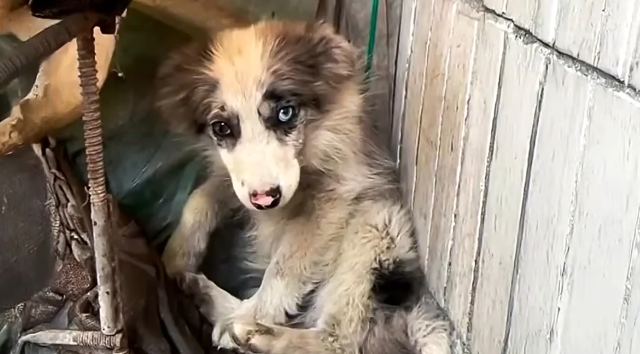
The first month was the hardest.
She survived on rainwater collected in dents in the road and whatever scraps she could find near a distant marketplace. She learned quickly which shop owners would shoo her away and which might toss a piece of stale bread. She learned to hide from bigger stray dogs that guarded territory fiercely.
Her once-shiny coat became matted. Her ribs began to show. But Daisy didn’t give up.
Every evening, she returned to the abandoned house.
Even if it was empty.
Even if no one was coming back.
Because it was home.
By the third month, the seasons began to change. Nights grew colder. The wind cut through her thin frame as she curled beneath the old wooden porch. Sometimes she whimpered softly in her sleep, dreaming of the warmth she once knew.
Villagers had seen her, of course.
“She’s still alive?” one farmer remarked.
“Six months alone? Impossible,” another said.
But Daisy was still there.
And then something unexpected happened.
Instead of growing fearful or aggressive like many strays forced to fend for themselves, Daisy began doing something no one anticipated.
She started protecting the village.
It began with barking.
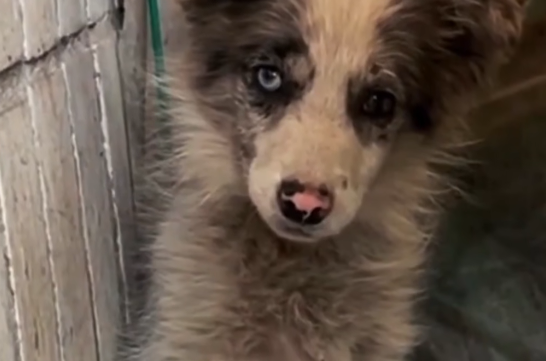
One night, when two strangers attempted to steal tools from a farmer’s shed, Daisy erupted into loud, relentless barking. She positioned herself between the shed and the intruders, growling fiercely despite her small size. The noise woke the farmer, who rushed outside and scared the thieves away.
The next morning, the farmer found Daisy sitting quietly near the fence.
“You?” he murmured in disbelief.
From that night on, something changed.
Daisy began patrolling the area near her abandoned home and neighboring houses. She barked at unfamiliar cars late at night. She chased away wild animals that wandered too close to chicken coops. She even guided a lost toddler back toward the main road one afternoon, staying beside him until adults came running.
Six months after being abandoned, the skinny brown dog no one thought would survive had become the village’s silent guardian.
People started noticing.
“She could have run away,” an elderly woman said softly. “But she stayed.”
Some villagers began leaving food near the old porch. At first, Daisy was cautious. Survival had taught her not to trust easily. But hunger eventually overcame hesitation. She ate quietly, then retreated to her corner.
Weeks passed. Her body slowly regained strength. Her eyes, once dull with confusion, began to shine again.
But what truly shocked everyone happened one stormy evening.
Thunder roared across the sky. Rain poured in sheets. Lightning cracked over the fields. Most families stayed indoors, doors locked tight.
Around midnight, Daisy began barking frantically.
Not her usual warning bark.
This was urgent.
Desperate.
She ran back and forth between the abandoned house and the road leading to the village’s edge. She barked until her voice turned hoarse. Finally, a young man named Arun stepped outside with a flashlight.
“What is it?” he called over the rain.
Daisy ran a few steps, then looked back. Ran again. Looked back.

She wanted him to follow.
Trusting his instinct, Arun followed the small dog down the muddy road toward a drainage ditch near the fields.
That’s when he heard it.
A faint cry.
A puppy.
A cardboard box had been tossed into the ditch, slowly filling with rainwater. Inside were three tiny puppies, shivering and barely alive.
Daisy jumped down first.
Without hesitation.
She nudged the box, trying to keep it from tipping. She barked sharply at Arun, as if commanding him to move faster.
Arun waded into the water and lifted the box to safety. The puppies were weak but breathing.
Back in the village, word spread quickly.
“The abandoned dog saved them,” someone whispered.
“She could have ignored them,” another said.
But Daisy hadn’t.
She had been abandoned.
She knew what it felt like.
And instead of turning bitter, she chose compassion.
That night changed everything.
The village gathered the next day under clear skies. Children surrounded Daisy carefully, offering gentle pats. Adults brought bowls of proper food. Someone even brought a blanket.
Arun stepped forward and knelt in front of her.
“You protected us,” he said softly. “Now let us protect you.”
For the first time in six long months, Daisy didn’t retreat.
She wagged her tail.
It was small at first. Tentative.
Then stronger.
Within days, Arun officially took her in. He repaired the old fence and built a comfortable doghouse near his own home. The rescued puppies were cared for and eventually adopted into loving families.
Daisy, once forgotten, became a symbol of loyalty and resilience in the village.
Visitors would hear the story in disbelief.
“Six months alone?”
“And she saved others?”
Yes.
She had survived storms, hunger, loneliness.
And what she did shocked everyone—not because she fought or ran or grew wild.
But because she remained kind.
Even after being abandoned.
Even after suffering.
Daisy proved something powerful: that love, once planted deeply, doesn’t disappear easily.
Sometimes, it waits quietly.
Sometimes, it protects others.
And sometimes, it saves lives.
The small brown dog who once sat alone behind a broken fence was no longer abandoned.
She was home.
And this time, no one would ever leave her behind again.