The call came just after sunrise, when the sky was still painted in soft shades of gray and pink. I was halfway through my coffee when my phone buzzed with a message from a local volunteer: “Old dog found behind the warehouse. Looks abandoned. Can you help?”
I grabbed my keys without finishing the coffee.
Behind the warehouse, the air smelled of damp cardboard and rust. A row of broken pallets leaned against a cracked wall, and scattered trash rustled in the morning breeze. At first, I didn’t see him.
Then I heard a faint shuffle.
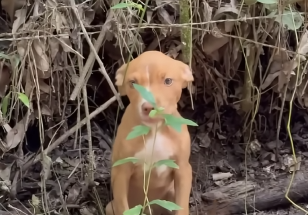
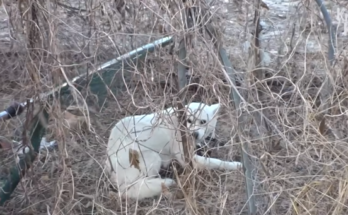
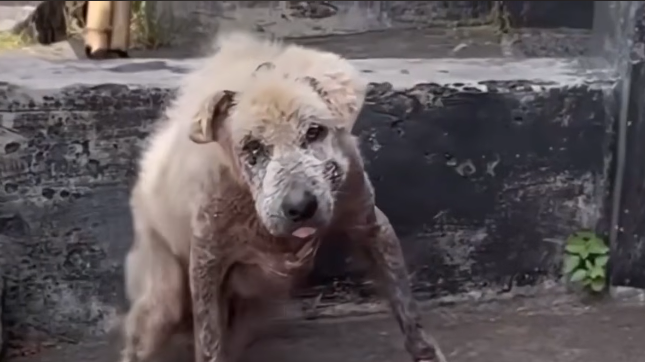
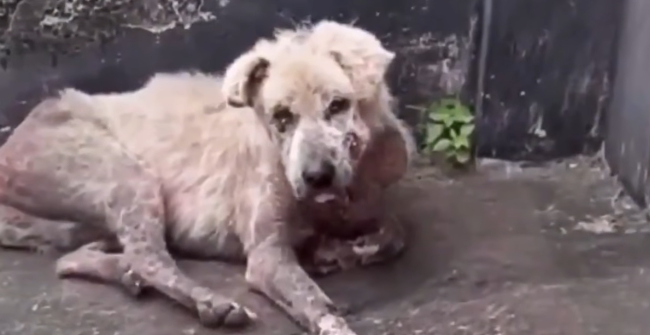
He lay curled in a shallow depression near the wall, as if he had tried to make himself invisible. His fur, once probably thick and golden, was now matted and patchy, streaked with gray. His ribs showed through his skin, and one ear drooped awkwardly, possibly from an old injury.
When I approached, he lifted his head slowly.
His eyes stopped me cold.
They weren’t fearful, not exactly. They were tired—so deeply tired that it felt like looking into a lifetime of waiting.
“Hey there,” I whispered, crouching down.
He didn’t growl or move away. Instead, he watched quietly, as if deciding whether I was worth the effort of hope.
I extended my hand, letting him sniff. After a moment, he leaned forward and touched his nose to my fingers. It was a small gesture, but it felt like a fragile agreement.
“We’re going to get you out of here,” I said.
It took patience to coax him into the car. He moved stiffly, every step deliberate, like his joints protested the motion. Once inside, he settled onto the blanket and let out a long sigh that seemed to release months, maybe years, of tension.
At the veterinary clinic, the staff gathered around with gentle voices and careful hands. The examination revealed what we feared: severe malnutrition, arthritis, dental disease, and scars that suggested a life far from kind.
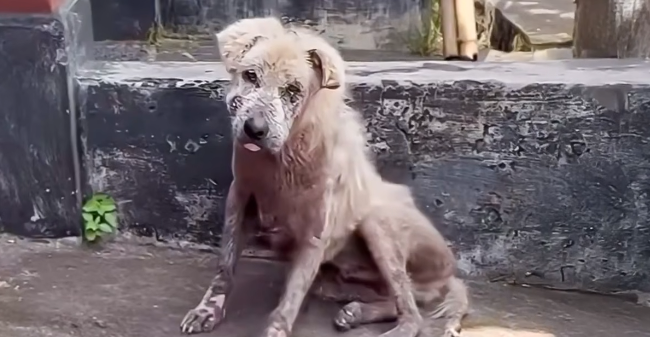
“Older dog,” the vet said softly. “Maybe twelve or thirteen. He’s been through a lot.”
They cleaned him up, treated infections, and gave him medication to ease his pain. When they finished, he looked like a different dog—not younger, but somehow lighter.
I decided to foster him.
At home, I prepared a quiet corner with soft bedding. He walked slowly through the doorway, sniffing as if committing each scent to memory. Then he circled the bed twice and lay down.
For the first few days, he mostly slept. Occasionally, he would lift his head when I entered the room, watching me with those same thoughtful eyes. When I sat nearby, he would rest his chin on his paws, as if simply being close was enough.
I named him Walter.
One evening, as I read on the couch, Walter surprised me by hobbling over and resting his head against my knee. I froze, not wanting to break the moment.
“Hi, buddy,” I said softly, stroking his fur.
His tail thumped once against the floor.
Over the next weeks, Walter slowly began to show glimpses of personality. He liked short walks in the park, stopping often to sniff the grass. He developed a fondness for warm sunlight streaming through the window. And he followed me from room to room, never intruding, just quietly present.
But there was something else—an alertness that would appear at unexpected times. Sometimes he would stand near the door, ears slightly raised, as if listening for something distant.
One night, about a month after his rescue, I woke to a strange sound.
A low, urgent whine.
I sat up, disoriented. Walter stood at the bedroom door, looking back at me. His posture was tense, his eyes wide.
“What is it?” I asked, swinging my feet onto the floor.
He turned and walked down the hallway, glancing back to make sure I followed.
In the kitchen, he stopped near the back door, whining again.
I listened.
At first, I heard nothing. Then, faintly, a scratching sound.
I opened the door.
Outside, under the porch light, was a small shape—another dog, thin and trembling, its fur dirty and tangled. It looked up, startled.
Walter stepped forward slowly, tail low but wagging gently.
The stray hesitated, then took a cautious step closer.
I realized, with a jolt of amazement, that Walter must have heard the dog outside and alerted me.
But what happened next was even more astonishing.
Walter turned to me, then back to the stray, letting out a soft bark—as if inviting it in.
I crouched down. “It’s okay,” I murmured.
The stray edged forward, drawn by Walter’s calm presence. After a few moments, it crossed the threshold.
Inside, Walter lay down beside it, offering quiet reassurance. The little dog relaxed, curling up near him.
I couldn’t help but smile. “You brought me a friend, didn’t you?”
The next day, I took the stray to the vet. She was young, underweight but otherwise healthy. After checking for a microchip and finding none, I began the process of finding her a home.
Meanwhile, Walter seemed unusually content. He watched over the newcomer with a gentle patience, as if he understood her fear.
A week later, the young dog was adopted by a loving family.
But Walter wasn’t finished surprising me.
Over the following months, a pattern emerged.
Whenever I fostered another dog, Walter would greet them calmly, offering silent companionship. Nervous puppies would settle near him. Anxious rescues seemed to find comfort in his steady presence.
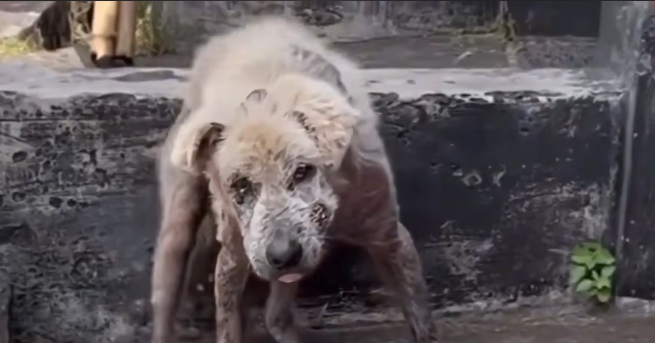
It was as if he carried an unspoken understanding of their pain.
One afternoon, a particularly frightened dog arrived—a large shepherd mix rescued from a neglect case. She paced constantly, refusing food and avoiding eye contact.
Walter approached slowly, lying down a few feet away. He didn’t push or invade her space. He simply existed near her.
Hours later, she lay down too.
Within days, she began to trust.
I realized then what Walter’s “shocking act” truly was: despite a lifetime of abandonment and hardship, he had chosen compassion. He used his experience not to withdraw, but to help others feel safe.
Still, there was one moment that remains etched in my memory.
Late one night, during a thunderstorm, the power went out. The house fell into darkness, rain pounding against the windows. A newly fostered dog—a small terrier—panicked, barking and trembling.
I lit a candle and tried to soothe him, but he was inconsolable.
Walter rose from his bed and walked over. He gently pressed his body against the terrier, resting his head across the smaller dog’s back.
Gradually, the barking stopped.
The terrier leaned into Walter, breathing slowing.
I watched in awe.
“Good boy,” I whispered.
Years of neglect had not hardened him; they had deepened his capacity for empathy.
As time passed, Walter’s health remained fragile but stable. He enjoyed simple routines—morning walks, afternoon naps, quiet evenings by my side.
Sometimes I would sit with him in the yard, watching the sunset.
“You’ve helped so many,” I would tell him. He would blink slowly, as if acknowledging the sentiment.
One crisp autumn morning, Walter seemed unusually tired. He ate breakfast but moved slowly, resting more than usual.
That evening, he lay beside me on the couch, head on my lap. I stroked his fur, feeling the gentle rise and fall of his breathing.
“You’re a good soul,” I murmured.
He looked up at me, eyes soft.
A few days later, with the vet’s guidance, we said goodbye peacefully. I held him close, thanking him for everything he had given.
In the weeks that followed, I noticed something remarkable.
Dogs who had spent time with Walter seemed calmer, more confident. It was as if his quiet strength had left an imprint.
I placed his photo near the door—a reminder of the old dog who arrived broken and left a legacy of kindness.
Whenever new rescues come through, I sometimes imagine Walter watching, tail wagging gently, approving of each small act of care.
People often ask what made him so special.
I tell them this: Walter showed that even after enduring neglect, loss, and loneliness, the heart can choose generosity. He taught me that healing doesn’t just mean being saved—it can mean becoming a source of comfort for others.
An abandoned old dog committed a shocking act after being rescued.
He chose love, again and again, in a world that had not always shown him the same.
And in doing so, he changed not only the lives of the animals he comforted, but also mine—forever.