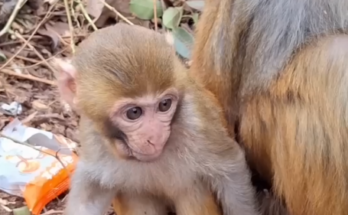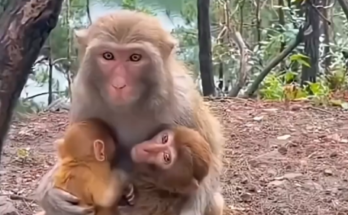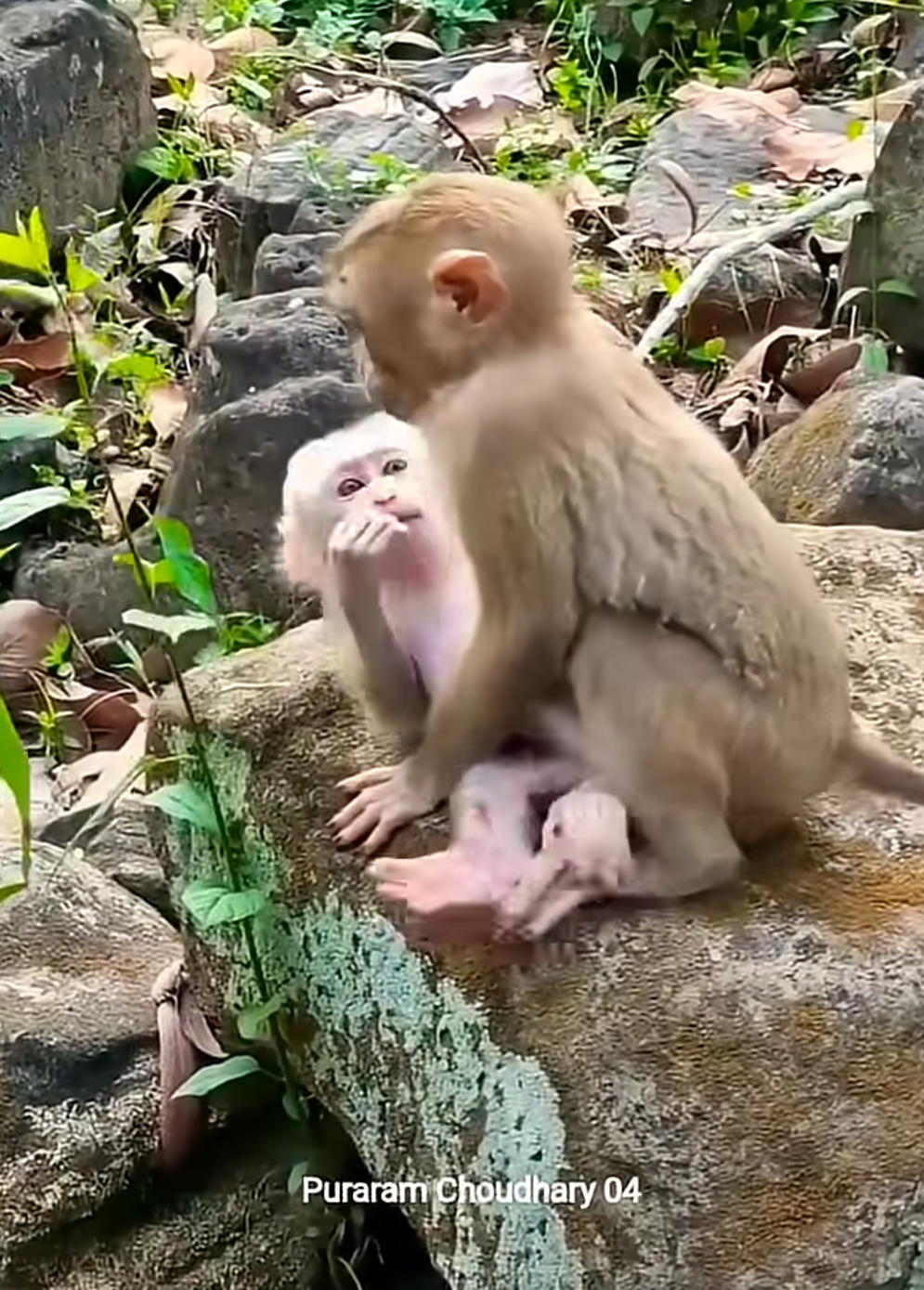
The morning sun spilled gently through the forest canopy, painting golden patches on the ground below. Dew still clung to the leaves, and the air was filled with soft sounds—chirping birds, buzzing insects, and the distant rustle of branches swaying in the breeze. In the middle of this peaceful scene, a group of young monkeys burst into laughter-like calls, their energy lighting up the forest.
The monkeys were playing.
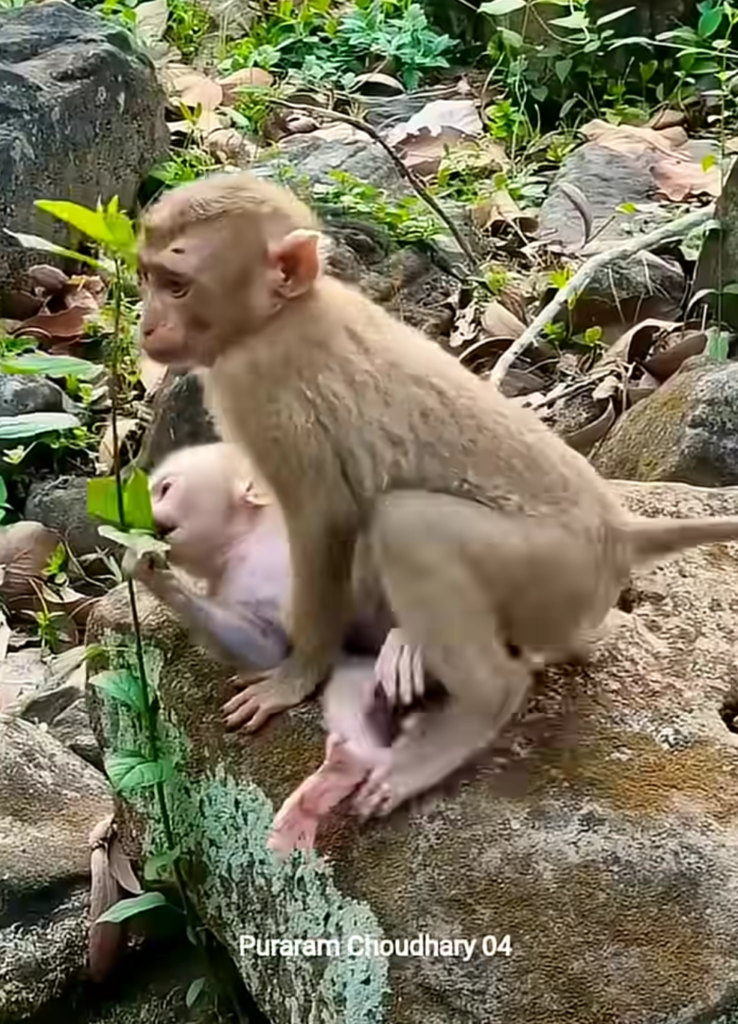
They chased each other across thick branches, their small bodies moving with surprising speed and grace. One little monkey leaped forward, missed his landing slightly, then scrambled back up with a proud shake of his head, as if pretending it had all been planned. The others paused for a moment, then erupted into excited chatter, clearly amused.
Playtime was their favorite part of the day.
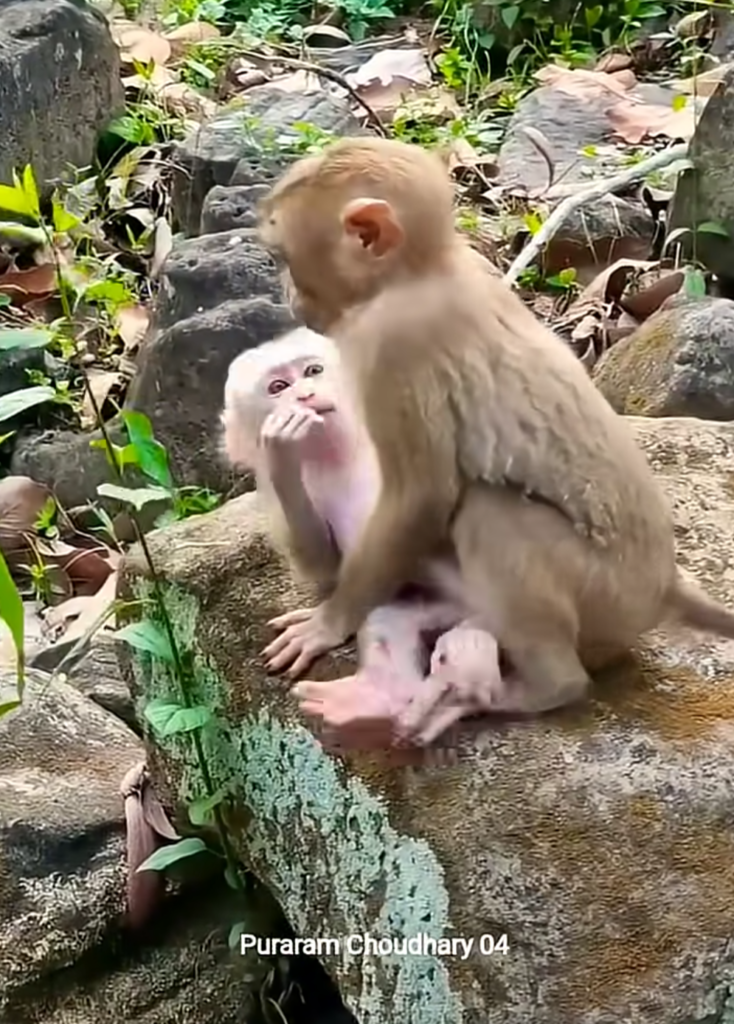
For young monkeys, play is not just fun—it is learning. Through games of chase, gentle wrestling, and jumping contests, they practice balance, strength, and social skills. Every movement teaches them something new about their bodies and about each other.
Two siblings hung upside down from a low branch, swinging back and forth like living pendulums. One reached out and tapped the other’s tail, then squealed and dropped to the ground, landing on all fours. Immediately, the other followed, tumbling into a pile of leaves. Both popped up, wide-eyed and excited, and raced off again.
Nearby, a slightly older monkey tried to look serious, sitting upright and grooming himself like an adult. But his calm act didn’t last long. A younger monkey sneaked up behind him and tugged gently on his fur. Startled, the older one spun around, then chased the troublemaker in circles around a tree trunk. Their playful calls echoed through the forest.
High above, the mothers watched carefully.
They sat on strong branches, occasionally grooming one another or holding younger babies close to their chests. Though they appeared relaxed, their eyes never stopped moving. Play is important, but safety always comes first. If a youngster wandered too far or climbed too high, a sharp warning call would bring them back instantly.
One tiny monkey, the smallest of the group, tried to join the bigger ones. He hesitated at the edge of a branch, looking down at the others racing below. His hands trembled slightly as he tested his grip. After a deep breath, he jumped.
He landed awkwardly, rolled once, then froze.
For a brief moment, the forest went quiet.
Then the little monkey stood up, unharmed, and let out a proud squeak. The others rushed over, touching him, sniffing him, checking him over. When they realized he was fine, they celebrated by bouncing around him, inviting him into the next game.
Confidence bloomed instantly.
Soon, the ground was alive with movement. Leaves flew into the air. Dust puffed up under tiny feet. The monkeys played hide-and-seek behind tree roots, peeked out from bushes, and jumped onto fallen logs as if they were conquering mountains.
One monkey discovered a shiny beetle crawling slowly across a rock. He stared at it in fascination, tilting his head from side to side. Another monkey rushed over and tried to grab it, but the beetle flew away. The two monkeys looked at each other in surprise, then burst into playful chatter and chased each other instead.
Even the simplest things became toys.
A long vine turned into a swing. A hollow log became a tunnel. A pile of leaves became a bed, then a battlefield, then a hiding place. Their imagination transformed the forest into a giant playground.
As the sun climbed higher, their energy seemed endless. They wrestled gently, pushing and pulling, rolling over each other in friendly competition. When one fell, another would pause, check briefly, then continue the game. There was no anger—only excitement and joy.
Occasionally, a monkey would pause to catch their breath, chest rising and falling quickly. They would sit for a moment, looking around, watching the others play. But rest never lasted long. Within seconds, they were back on their feet, drawn irresistibly into the fun.
One mother descended from her branch and gently picked up a baby who had grown tired. The baby protested softly, reaching out toward the playing group. The mother held him close, grooming his head until his eyelids grew heavy. Even as he drifted toward sleep, his fingers twitched, as if still dreaming of running and jumping.
Play builds strong bonds.
The monkeys learned who was fast, who was clever, who liked to lead, and who preferred to follow. They learned when to push and when to stop. These lessons would stay with them for life, helping them navigate their social world as adults.
As afternoon approached, the games slowed slightly. The monkeys gathered near a shaded area where fruit trees stood heavy with ripening food. Some climbed up to nibble, sharing pieces with siblings. Others sat together, grooming one another, removing tiny bits of dirt and leaves from fur.
But even during grooming, play continued.
A sudden playful bite on the ear. A quick tug of a tail. A short chase around the tree trunk. Laughter-like calls filled the air again.
The forest felt alive with happiness.
From a distance, the scene looked chaotic—but it was perfectly balanced. Every leap, every tumble, every squeal was part of a healthy, joyful childhood. These monkeys were not worried about yesterday or tomorrow. They lived fully in the moment.
As the sun began to lower, painting the sky in warm orange tones, the mothers called their young ones closer. One by one, the monkeys gathered, climbing up to safer resting branches. Some protested, still eager to play, but their tired bodies soon relaxed.
The day had been full.
The smallest monkey curled up beside his mother, his chest rising in slow, peaceful breaths. A faint smile seemed to rest on his face. Perhaps he dreamed of vines and chases and flying beetles.
The forest grew quieter, but the joy lingered in the air.
Because today, the monkeys had played.
They had learned.
They had laughed.
And tomorrow, when the sun rose again, the games would begin anew. 😍