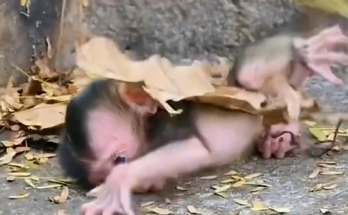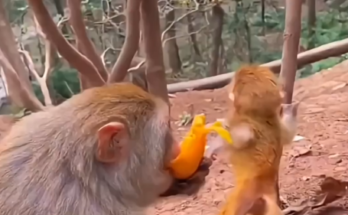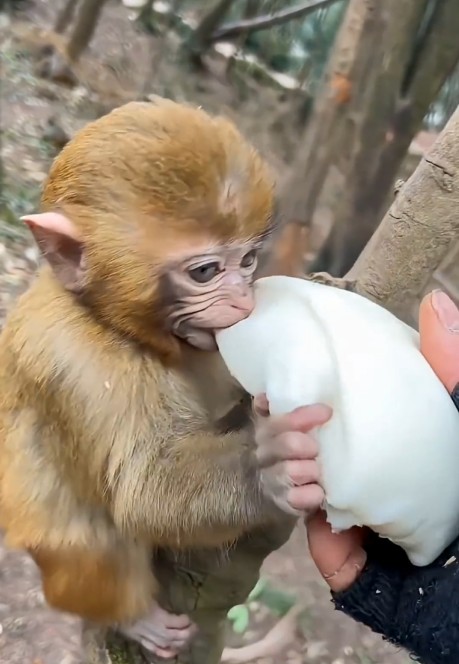
In the dense, green canopy of the forest, sunlight filtered through the leaves in golden beams, illuminating the world of a troop of monkeys who had called these trees home for generations. Life among the branches was a careful mix of play, survival, and learning, and within this troop lived a tiny baby monkey named Kiki, whose world was dominated not just by the wonders of the forest, but by the strictness of her mother, Luma.
Luma was a strong, experienced mother, respected and even feared among the troop. She knew the forest as well as she knew her own heartbeat, understanding where the dangerous snakes slithered, which branches were sturdy, and which foods could sustain her young. But she also believed in discipline. She wanted Kiki to grow strong, cautious, and quick—not spoiled by carelessness or indulgence. Every misstep, no matter how small, was corrected immediately. Every wandering glance or failed attempt at climbing was met with sharp chattering or a firm nudge.
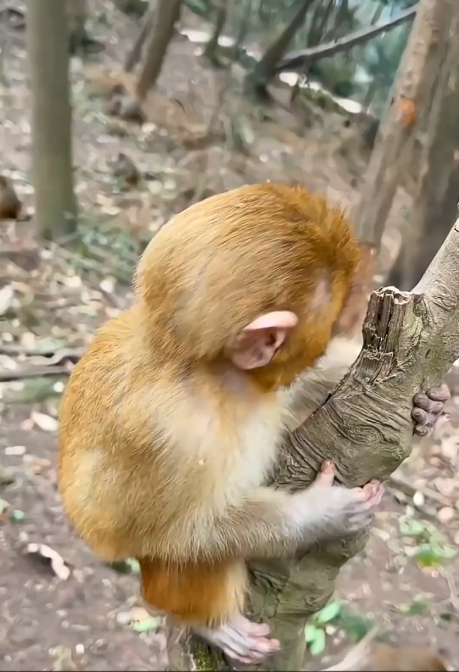
For Kiki, life with her mother was a delicate, exhausting balance. She wanted to explore, to play, to leap with the other juveniles. Yet each time she approached Luma, she was reminded of how dangerous the world could be—and how unrelenting her mother’s strictness was. Kiki’s small heart would pound with anxiety, and her tiny hands would cling to the nearest branch as if holding on for safety from both the forest and her mother’s disapproval.
It was during a bright morning that this fear became painfully clear. The troop had gathered near a fruiting fig tree, where older juveniles tumbled from branch to branch, laughing and squealing in delight. Kiki wanted to join them, her eyes wide with longing, but every time she looked toward Luma, her courage faltered.
“Be careful, Kiki! Don’t let go!” Luma called, her voice sharp with authority. She had already seen Kiki hesitate at the base of the tree. “If you fall, it will be your fault!”
The words, though meant as guidance, felt like a weight on Kiki’s chest. Her tiny body trembled as she clutched the branch, staring down at the forest floor far below. The other juveniles leapt effortlessly, their calls teasing her with freedom she could not yet grasp. Kiki wanted to move, to leap, to play—but fear rooted her in place.
Seeing her hesitation, Luma descended one branch closer, nudging her with a quick, sharp movement meant to encourage—but to Kiki, it felt like punishment. She squeaked, retreating to hide behind the thick trunk of the tree. Her small heart beat wildly, and she kept her gaze firmly on the bark, unwilling to meet her mother’s eyes.
Days passed like this. Kiki’s world shrank as fear grew. She stayed lower in the trees, avoiding her mother’s gaze, watching the troop from a distance. Even when Luma brought food or offered her hand for comfort, Kiki would shy away, unsure whether the gesture would bring warmth or scolding. The other juveniles noticed. They called to her, inviting her to play, but she hesitated. Each invitation was weighed against the possibility of failure and the inevitable discipline that followed.
Life in the forest was not gentle. Predators lurked, and survival depended on both caution and boldness. Kiki’s fear made her hesitant in ways that concerned the troop. One afternoon, while the young monkeys were playing near the riverbank, a snake slithered silently toward the group. Kiki froze, unable to call out or leap away. Luma noticed the danger immediately. She swung down swiftly, loud chattering echoing through the trees, warning the juveniles and striking near the snake to drive it away. The other young monkeys scrambled to safety, but Kiki had been too paralyzed by fear to act.
After the incident, Kiki retreated further, hiding in the lower branches and underbrush, trembling from head to toe. Luma, observing her from above, realized that her strictness—though intended to teach vigilance—had created an unintended consequence. Kiki’s fear was now a barrier, keeping her from learning how to respond to danger or even enjoy the simple pleasures of childhood.
That evening, Luma approached Kiki cautiously. She did not call, chatter, or nudge harshly. Instead, she sat quietly nearby, offering soft, slow blinks—the universal sign of calm in monkey communication. Kiki’s ears twitched. She recognized the gesture but remained still, unsure whether it was safe to move closer.
Minutes passed in silence. Kiki’s trembling slowed slightly as she observed her mother’s steady presence. Luma did not rush her, did not demand obedience. She simply waited, showing patience that had been absent in previous days. Finally, Kiki inched forward, placing a tiny hand on Luma’s arm. The mother responded with a gentle nuzzle, reassuring her that closeness could coexist with safety.
Over the following days, a fragile bond began to rebuild. Luma tempered her strictness with subtle gestures of encouragement, allowing Kiki to explore at her own pace. She continued to correct mistakes but did so with a softening tone, turning discipline into guidance rather than fear. Kiki slowly learned that her mother’s expectations were not threats but lessons, and that mistakes could be corrected without losing trust or love.
The transformation was gradual. Kiki began to climb higher, testing the strength of her small limbs. She ventured closer to the troop during play, joining in short chases and gentle tumbling games. When she stumbled or hesitated, Luma offered support instead of sharp reprimands, letting Kiki regain her balance without fear. The forest, once intimidating, became a place of discovery and learning.
Kiki’s newfound confidence did not mean the fear vanished entirely. She still approached her mother cautiously, especially after missteps. Yet fear had evolved from a paralyzing force into a teacher. It reminded her to move carefully, observe closely, and respect the dangers around her. In combination with Luma’s patient guidance, it became a foundation for resilience rather than an obstacle.
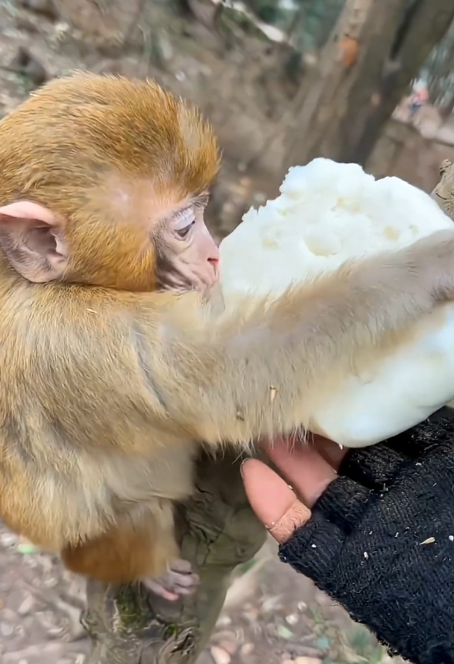
The other juveniles observed this transformation with curiosity. They saw that even in the strictest relationships, care and patience could produce confidence and skill. Kiki’s growth became a lesson for the troop: discipline does not preclude love, and fear does not prevent courage if balanced with understanding.
One day, a challenge tested Kiki’s abilities in a dramatic way. The troop had ventured near the edge of a cliff overlooking the river valley. A sudden gust of wind rattled the branches, and several young monkeys lost their footing. Kiki hesitated, remembering her past fear of failure and her mother’s strict corrections. But Luma’s presence was different this time. She stayed calm, signaling with soft calls and guiding gestures rather than sharp chattering.
Kiki took a deep breath, bracing herself. She leapt carefully to a nearby branch, landing safely. Encouraged, she helped guide another hesitant juvenile along the path, chattering softly to reassure them. Luma watched proudly, understanding that the lessons of discipline, patience, and trust had culminated in this moment. Fear had not disappeared, but it had become wisdom and courage.
As months passed, Kiki’s confidence grew. She climbed higher, explored further, and played more freely with the other juveniles. Yet her relationship with her mother remained nuanced. She still respected Luma’s authority, observed her rules, and responded to guidance—but the fear that once dictated her every movement had transformed into a thoughtful awareness.
In the canopy, life continued its complex rhythm. The forest offered endless lessons in agility, observation, and social interaction. Kiki now approached these lessons with balance: she respected her mother’s authority, followed the troop’s social norms, and responded to challenges with caution tempered by confidence. Luma, in turn, had learned the importance of patience, the value of gentle guidance, and the need to nurture alongside discipline.
The story of Kiki and Luma became part of the forest’s living memory. Other juveniles learned to navigate the balance between caution and exploration, understanding that a strict parent could be both protector and teacher. The troop thrived, its members agile, vigilant, and socially aware, shaped by the interactions between discipline, patience, and trust.
Kiki’s journey illustrates a profound truth about the life of monkeys: fear is not inherently negative. When combined with guidance, love, and patience, it can foster resilience, skill, and respect. Similarly, strictness, when tempered with understanding, can coexist with affection, forming a foundation for growth rather than a barrier to connection.
As the sun set over the forest, casting warm golden light across the canopy, Kiki rested beside Luma, their bodies close yet balanced with mutual respect. The baby monkey no longer hid in fear, and the mother no longer relied solely on discipline. Together, they had found harmony—a relationship that honored both the instincts of the wild and the depth of maternal care.
In the forest, life continued with its mix of danger, play, and learning. Kiki climbed higher, leapt farther, and faced each day with a cautious courage nurtured by a mother whose strictness, tempered with patience, had ultimately taught love, trust, and resilience. The lesson was clear: even when fear dominates, guidance, understanding, and care can transform it into strength, shaping the life of a monkey in ways that echo through the branches and beyond.