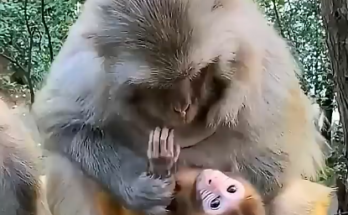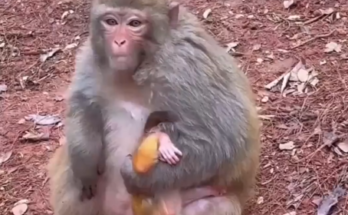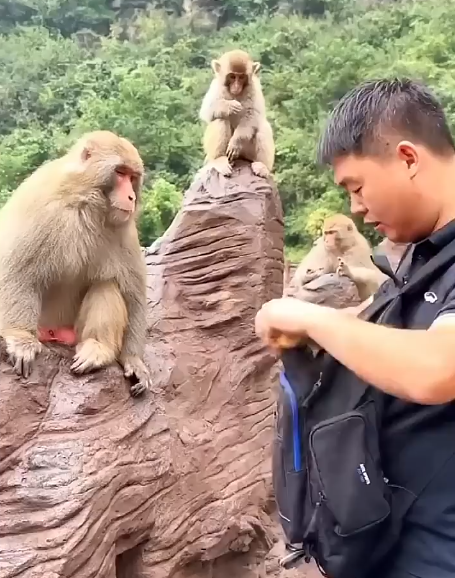
In a dense forest far from human villages, there once lived a monkey known by many names. Some called him The Monkey King. Others whispered The Showman. But those who truly understood the danger behind his glittering tricks had another name for him—the Vicious One.
At first glance, he was magnificent.
His fur shone darker than most, his eyes burned with sharp intelligence, and his movements were fast, confident, almost theatrical. When he leaped from tree to tree, he did it with flair. When he screamed, the forest listened. Other monkeys gathered around him, not out of love, but out of fear mixed with admiration.
He enjoyed being watched.
The Monkey King loved attention more than food, more than rest, more than peace. He performed constantly—loud displays, dramatic fights, exaggerated victories. He wanted the forest to know his power. He wanted every creature to believe he was unstoppable.
And for a long time, it worked.
He bullied weaker monkeys, stealing their food and territory. He attacked animals that posed no threat, simply to prove dominance. His cruelty became entertainment to him. When others ran, he laughed. When they cried out, he felt powerful.
“Look at me,” his actions seemed to say. “Fear me.”
But power without balance always rots.
As seasons passed, the forest grew tense. Birds avoided the trees where the Monkey King ruled. Smaller animals changed their paths. Even the monkeys who followed him did so with lowered heads. Laughter disappeared. Harmony broke.
The elders of the forest sensed something dark growing inside him.
They warned him.
“Strength without kindness turns into poison,” said the old langur.
“You perform too much,” warned the owl. “The forest is not a stage.”
But the Monkey King mocked them. “Spirits fear me,” he screeched. “I will become greater than any of you.”
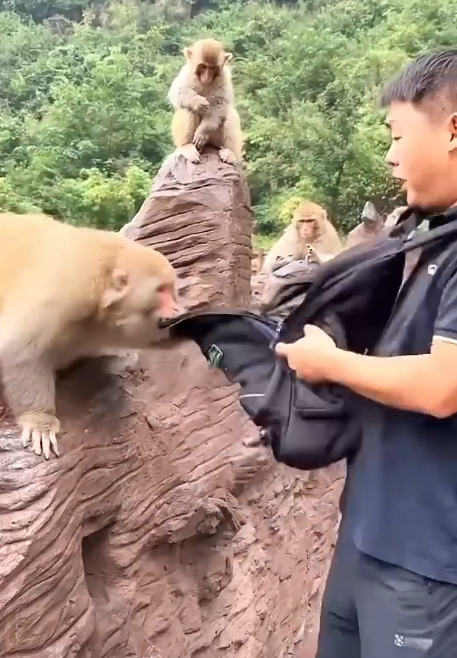
And slowly, that wish began to come true—in the worst way possible.
The Monkey King’s anger grew uncontrollable. He no longer fought for survival, but for pleasure. His screams echoed at night, sharp and unnatural. He attacked even his own kind if they dared question him. Blood stained the roots of the trees where he ruled.
The forest responded.
Fruits dried faster near his territory. The air felt heavy. The wind no longer carried gentle sounds but sharp whispers. Animals avoided his presence entirely. He was feared—but he was also alone.
Loneliness did not soften him. It hardened him.
One night, during a violent storm, the Monkey King climbed to the highest tree, screaming at the sky as thunder roared. He beat his chest wildly, performing for no one.
“I am king!” he howled. “I am above nature!”
Lightning struck nearby.
Not once—but repeatedly.
The forest shook. Trees cracked. The ground trembled. The Monkey King did not run. He laughed.
That was the moment everything changed.
When morning came, the storm had passed, but something felt wrong. The forest was silent in a way it had never been before. Where the Monkey King once ruled, his body was nowhere to be found.
But his presence remained.
Animals began to sense him without seeing him. Branches snapped without wind. Screeches echoed from empty spaces. Shadows moved against the sun. The Monkey King had not died peacefully.
His vicious spirit had lingered.
He became something else—no longer flesh, no longer fully animal. A restless spirit bound to anger, ego, and violence. He could not eat. He could not rest. He could not leave the forest.
And worst of all—he could no longer be admired.
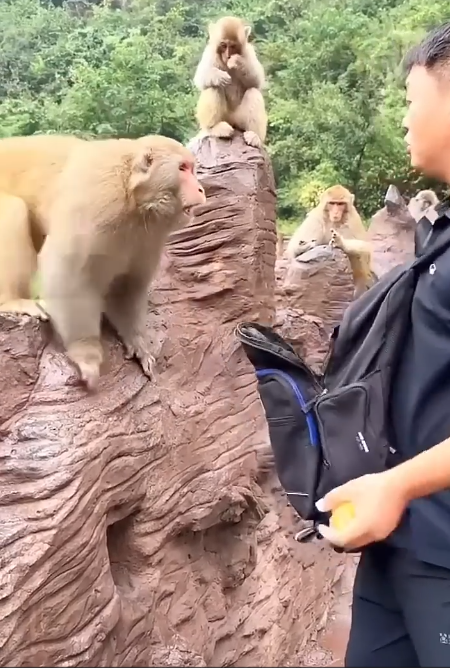
His performances had no audience now. His screams frightened, but inspired no respect. His power existed only as chaos. The monkeys whispered stories of him, warning their young to stay away.
“Do not act like the Showman,” mothers warned.
“Do not bully,” elders said.
“Do not mistake cruelty for strength.”
The spirit of the Monkey King wandered endlessly, trapped in the echo of his own arrogance. He had wanted immortality. He got it—but without joy, without honor, without love.
Sometimes, people near the forest claimed to hear strange sounds at night—half laughter, half rage. They said the air felt heavy, like something was watching.
But no one went closer.
Because this was not a hero’s legend. It was a warning.
The Monkey King could have been great. His intelligence, agility, and leadership could have protected others. His showmanship could have united the forest. But he chose ego over empathy, fear over fairness, dominance over dignity.
And so he became a spirit—not a guardian, not a legend to admire, but a cautionary shadow.
Please do not imitate him.
Do not confuse loudness with strength.
Do not mistake cruelty for power.
Do not believe that being feared is better than being respected.
True leadership protects.
True intelligence listens.
True power knows restraint.
The forest eventually healed. New leaders rose—quieter, kinder, wiser. Life returned to balance. But even now, when the wind moves strangely through the trees, elders pause.
They remember the Monkey King.
Not as a hero.
But as a lesson.
And lessons like this are meant to be remembered—so they never have to be repeated again.