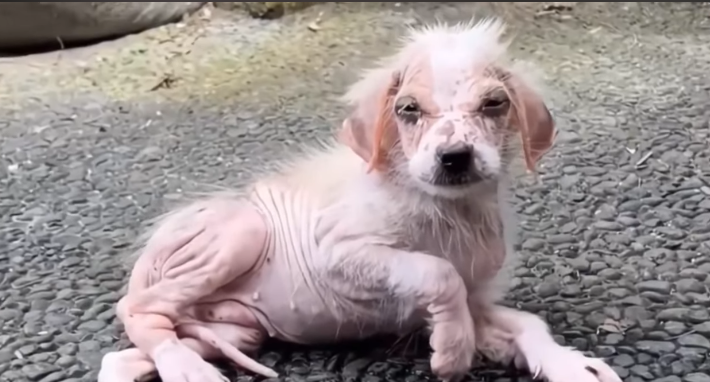
The dog sat curled up in the far corner of the shelter kennel, barely moving. Her skin was exposed and raw, almost completely hairless, covered in patches of redness and scabs. At first glance, it was hard to tell what breed she might have been—or even how old. Her eyes, though dull with exhaustion, followed every movement quietly, without hope or fear, as if she had already accepted that nothing good was coming next.
When the woman first saw her, she felt a sudden tightening in her chest.
Most people walked past this kennel quickly. Some glanced in, then looked away. The dog smelled faintly of antiseptic mixed with sickness, and her appearance was shocking—her ribs visible, her skin cracked, her ears thin and trembling. A small sign on the kennel door read: Severe mange. Malnourished. Needs medical care.
The shelter staff explained that the dog had been found wandering near a construction site. No collar. No microchip. No one had come looking for her. She was weak, feverish, and nearly bald due to advanced mange that had gone untreated for months. They weren’t sure how long she had survived like that.
“She’s gentle,” one volunteer said softly. “But very sick.”
The woman knelt down anyway.
The dog didn’t move. She didn’t bark. She didn’t wag her tail. She simply watched, her breathing shallow, her body still. When the woman reached her hand toward the kennel bars, the dog hesitated—then slowly leaned forward and pressed her nose against the metal.
That small gesture made the decision feel inevitable.
The paperwork was completed quickly, but the weight of what she was doing didn’t fully hit her until the dog was placed in her arms. The dog was lighter than expected, fragile, as if she might break. She didn’t resist being carried. She rested her head against the woman’s chest, eyes closing briefly, like she knew this was her chance.
The car ride home was quiet.
The dog lay curled on a blanket in the back seat, occasionally letting out a weak cough. Every red light gave the woman time to glance back, checking if the dog was still breathing, still awake. She was nervous—but also hopeful.
That hope shattered the moment they stepped into the house.

Under the brighter lights of her living room, the dog’s condition looked far worse than it had at the shelter. The bald patches were more extensive. The skin looked inflamed and painful. As the dog shifted slightly, flakes of dead skin fell onto the floor. The smell became stronger—an unmistakable scent of infection and neglect.
The woman froze.
For the first time, doubt crept in.
Had she made a mistake?
Was she prepared for this?
Could she really help a dog in this condition?
The shock was overwhelming.
She sat down on the floor, the dog still cradled carefully in her arms, and took a deep breath. The dog looked up at her then—really looked at her. Her eyes weren’t pleading. They weren’t fearful.
They were tired.
That was the moment the woman realized something important: this dog didn’t need perfection. She needed patience.
The first night was difficult. The dog refused food at first, sniffing it cautiously before turning away. She was too weak to explore, too uncomfortable to rest properly. When she finally lay down, she scratched herself constantly, whining softly in frustration.
The woman slept on the floor beside her, waking at every small movement. Each scratch felt like a reminder of how much healing lay ahead.
The next morning, they went straight to the veterinarian.
The diagnosis confirmed everything the shelter had suspected—and more. Severe mange, secondary bacterial infections, dehydration, anemia. The vet explained the treatment plan carefully: medicated baths, antibiotics, special food, supplements, weeks—possibly months—of recovery.
“It’s going to get worse before it gets better,” the vet warned. “Her skin will be very uncomfortable. She may lose more hair before it grows back.”
The woman nodded, swallowing hard.
At home, the routine began.
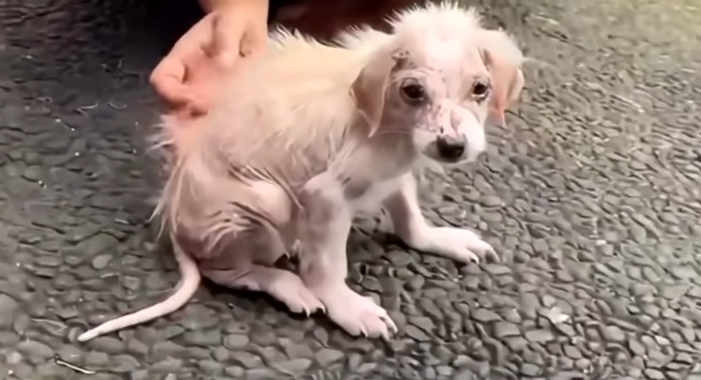
Bath days were the hardest. The dog trembled during the first medicated bath, her body tense, unsure of what was happening. But she didn’t fight. She stood still as warm water ran over her damaged skin, as gentle hands worked the medicine in carefully.
Afterward, she looked exhausted—but slightly relieved.
Day by day, small changes appeared. The dog began eating more. Her eyes grew brighter. She followed the woman from room to room, staying close, as if afraid that safety might disappear if she lost sight of it.
Her personality slowly emerged.
She loved soft blankets. She hated loud noises. She wagged her tail cautiously, as though testing whether joy was allowed. Sometimes she would suddenly stop walking and sit down, overwhelmed, waiting for reassurance.
The woman talked to her constantly—about nothing and everything. The dog listened, ears twitching, eyes focused, absorbing the sound of kindness like medicine of its own.
There were setbacks. Days when the dog scratched until her skin bled. Nights when she whimpered softly, unable to get comfortable. Moments when the woman questioned whether she was doing enough.
But there were victories too.
The first time the dog rolled onto her back, exposing her belly in trust.
The first time she barked—startled by her own voice.
The first time she fell asleep sprawled out, relaxed instead of curled in pain.
Weeks passed. Then months.
Tiny hairs began to sprout along her spine. Then her neck. Then her legs. The redness faded slowly, replaced by healthier skin. The smell disappeared. Her body filled out. Her movements grew confident.

One morning, the woman woke up to find the dog standing beside the bed, tail wagging wildly, eyes shining.
She barely recognized her.
The bald, broken dog from the shelter was gone.
In her place stood a beautiful, happy dog with soft fur, a strong body, and a spirit that felt unbreakable. The shock the woman felt now was different—not from fear or doubt, but from awe.
How could a creature who had suffered so much still love so completely?
The dog never left her side. She followed her everywhere, slept curled against her legs, greeted her with pure joy every time she returned home. She trusted deeply, without hesitation, as if grateful for every ordinary moment.
People who met her now couldn’t believe she was the same dog. They complimented her coat, her gentle nature, her bright eyes. The woman would smile and tell the story, shaking her head at how close she had come to being overwhelmed that first night.
“She rescued her,” people would say.
But the woman knew the truth.
They rescued each other.
Because sometimes, the most shocking transformations don’t happen to the ones we save—but to the ones who choose not to walk away when saving feels hard.