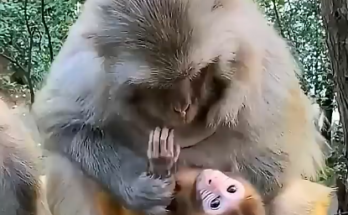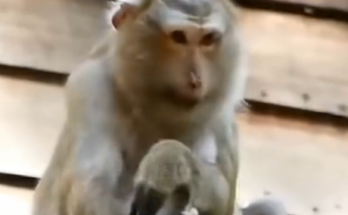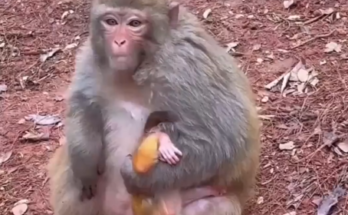
In the lush greenery of tropical forests and the bustling environment of primate sanctuaries, baby monkeys are often seen clinging tightly to their mothers’ legs. This behavior, simple as it may appear, is one of the most crucial aspects of a young monkey’s early life. It is not merely a physical act but a deeply emotional and developmental one, providing the infant with a profound sense of security, comfort, and connection.
From the moment of birth, baby monkeys are completely dependent on their mothers. Their small bodies are fragile, their movements uncoordinated, and the world around them full of unfamiliar sounds, scents, and potential dangers. In this context, clinging is a survival mechanism. By gripping the mother’s legs, the infant ensures it remains close to warmth, nourishment, and protection. In the canopy, where branches sway and predators lurk, proximity to the mother can literally be a matter of life and death.
The act of clinging engages multiple senses. The baby feels the steady pulse of the mother’s body, hears the comforting rhythm of her movements, and smells the familiar scent of her fur. These sensory inputs create a feedback loop of safety, signaling to the infant that the environment is secure. Even when the mother moves through the troop, climbing or foraging, the baby’s firm grip ensures continuity and consistency in a chaotic world.
Emotionally, clinging fosters attachment. Monkeys, like humans, form strong bonds with their caregivers during early life. Attachment theory in primatology suggests that secure bonds with the mother are critical for emotional stability, social learning, and future relationships. A baby monkey that clings confidently is learning that it can trust the world around it—because its primary protector is present.
Observations in both the wild and in rescue centers consistently show that infants who cling less, or are prematurely separated from their mothers, display signs of distress. They cry more frequently, move hesitantly, and struggle to engage in playful interactions. Conversely, babies who can cling comfortably exhibit exploratory behaviors with confidence, knowing that the mother’s support is always within reach.
Physical development is also closely linked to this behavior. Clinging requires the infant to engage its tiny muscles, improving grip strength, coordination, and balance. As the mother moves—walking, climbing, or jumping—the baby learns to adjust its hold dynamically. This builds not only strength but also spatial awareness, critical skills for navigating the treetops safely. Each sway of a branch or turn of a limb is an opportunity for the baby to refine its motor skills, all while remaining anchored in the security of maternal contact.
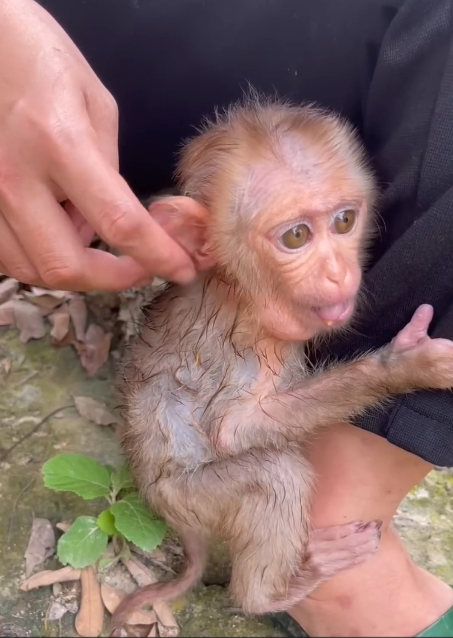
Beyond survival and physical growth, clinging is a form of emotional communication. Baby monkeys often vocalize while clinging, emitting soft squeaks or coos that signal contentment, curiosity, or minor discomfort. Mothers respond to these cues instinctively, adjusting their speed, posture, or grooming behavior. This two-way interaction reinforces the bond and teaches the infant how to communicate needs effectively. Over time, the baby learns that expressing vulnerability while clinging results in reassurance—a lesson that supports emotional intelligence and social integration later in life.
Interestingly, the duration and intensity of clinging vary among species and individual monkeys. Some infants maintain constant contact for weeks, rarely venturing from their mother’s side. Others practice brief separations, testing independence while returning periodically for reassurance. Regardless of pattern, the principle remains the same: the mother’s presence offers a psychological anchor. Even brief separation can trigger heightened alertness or stress, indicating the strength of the infant’s reliance on maternal proximity.
Clinging also plays a critical role in group dynamics. In a troop, mothers and infants move together, with the younger monkeys observing older siblings or other group members. By remaining close to the mother, the baby can safely learn social cues, grooming behaviors, and hierarchical structures. The mother becomes both protector and guide, introducing the infant gradually to the complexities of social life. This careful balance of protection and exposure allows the baby to develop confidence without unnecessary risk.
From a neurological perspective, clinging has measurable effects. Studies of primates show that physical contact with a caregiver releases oxytocin, the hormone associated with bonding, trust, and stress reduction. In baby monkeys, this hormonal response helps regulate heart rate, reduces anxiety, and fosters a sense of calm. It is no exaggeration to say that clinging is not just comforting—it actively shapes the infant’s physiological and emotional development.
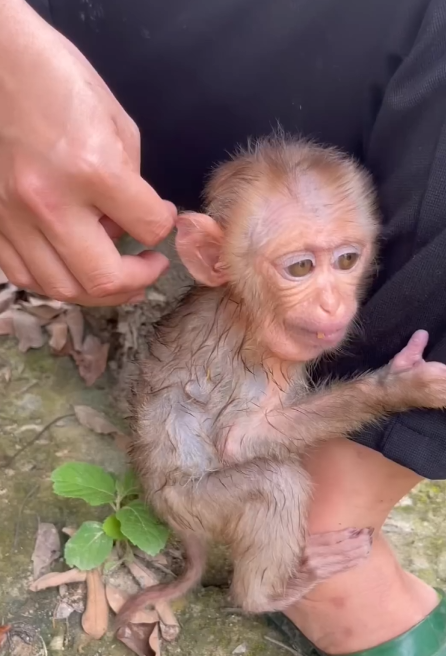
In sanctuaries or rehabilitation centers, the importance of maternal contact is even more evident. Orphaned or rescued baby monkeys often cling to surrogate caregivers, plush objects, or even themselves, demonstrating an innate need for secure attachment. Those provided with consistent physical contact recover faster, display fewer behavioral issues, and develop stronger social skills compared to those deprived of such interaction. This reinforces the idea that clinging is more than instinct; it is a vital foundation for lifelong well-being.
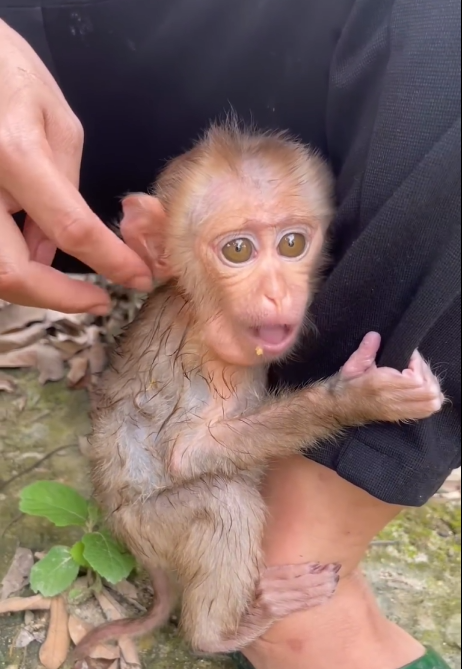
Clinging behaviors also evolve as the baby grows. Early in life, the grip is almost constant, with the infant rarely leaving the mother’s side. As strength, coordination, and confidence improve, brief explorations occur. The mother allows short forays, watching carefully, ready to intervene if necessary. These moments teach independence while maintaining the security of maternal presence—a delicate but essential balance for developing competence and resilience.
The psychological benefits of clinging extend beyond infancy. Monkeys that experience secure attachment early in life tend to exhibit more stable social relationships, better problem-solving skills, and lower stress levels. In contrast, infants deprived of consistent maternal contact may display heightened fearfulness, social withdrawal, or aggression later in life. Clinging, therefore, is not a temporary or superficial behavior; it lays the groundwork for emotional health and social competence that lasts well into adulthood.
From a human perspective, observing baby monkeys cling to their mothers evokes both awe and empathy. The gesture is simple but profound—a reminder that security, love, and connection are universal needs. The tiny hands wrapped around legs, the tail curled for balance, and the eyes fixed on the familiar face of the mother reflect a bond that transcends species. It is an instinctive demonstration of how trust and attachment shape life from the very beginning.
Clinging also teaches patience and mutual respect. The mother must balance her own needs with those of her infant, adjusting speed, foraging patterns, and social interactions. The baby, in turn, learns to coordinate with her movements, developing not only physical skills but also an understanding of boundaries and timing. This dynamic interaction strengthens the social and emotional framework of both mother and child.
In wild habitats, where danger is constant, clinging ensures that infants are less likely to become lost or fall prey to predators. In captivity, it provides comfort during times of change, such as introductions to new environments or interactions with other monkeys. In both settings, the underlying principle is the same: physical proximity to a trusted caregiver fosters safety, confidence, and emotional regulation.
As the baby grows, clinging may gradually decrease, replaced by more independent exploration. Yet the early lessons of trust, attachment, and safety remain embedded in the monkey’s behavior. When challenges arise—whether social conflicts, environmental changes, or physical risks—the infant draws upon these early experiences to navigate the world with greater skill and confidence.
In conclusion, the simple act of clinging tightly to their mother’s legs is far more than a reflex or a survival tactic. It is a complex behavior that combines physical development, emotional security, social learning, and neurological benefits. It teaches the baby monkey about trust, balance, communication, and resilience. It strengthens maternal bonds and prepares the infant for a lifetime of navigating social hierarchies and environmental challenges.
Watching a baby monkey cling evokes wonder, not just for the cuteness of the moment but for the profound lessons it embodies. In the tiny hands gripping fur, in the secure press against legs, and in the calm trust that radiates from the infant’s gaze, we witness the essence of early life: the need for connection, protection, and love. 😚
In essence, clinging is a natural, powerful, and essential part of monkey development. It provides security, fosters attachment, encourages learning, and shapes the emotional and physical well-being of the young. From the dense forests to rescue sanctuaries, the sight of baby monkeys clinging to their mothers remains a timeless symbol of love, trust, and the fundamental need to feel safe in the world.