Middle splits have a reputation. They’re known as one of the hardest flexibility goals—uncomfortable, stubborn, and slow to achieve. Many people try for months or even years, stretching daily, pushing deeper, only to feel stuck at the same painful limit. The truth is, middle splits don’t respond well to force. They respond to smart preparation. And that’s where the idea of a 1-minute fast track comes in.
This isn’t about magically dropping into a full split in sixty seconds. It’s about using one highly focused minute to unlock faster progress, reduce resistance, and teach your body that wide hip opening is safe. When done correctly, that single minute can change how your hips behave during every stretch that follows.
Why Middle Splits Feel So Resistant
Middle splits challenge a complex system, not just one muscle group. The inner thighs (adductors), hip flexors, hamstrings, deep hip rotators, and even the nervous system all play a role. When your legs move wide apart, your brain interprets it as a vulnerable position. Its instinct is to protect you by tightening everything.
This is why simply sitting in a wide straddle and pushing harder often backfires. The more force you use, the more the body resists. Tightness increases, shaking intensifies, and progress slows.
The fastest path to flexibility isn’t forcing the stretch—it’s convincing your body that it’s safe to release.
What “Fast Track” Really Means
The word fast doesn’t mean reckless. It means efficient.
A fast track approach:
- Targets the exact muscles used in middle splits
- Activates them before stretching
- Calms the nervous system
- Uses control instead of pressure
That’s why a focused 1-minute preparation can outperform long, unfocused stretching sessions. It sets the stage for deeper, safer range.
The Power of One Minute
One minute seems insignificant—until it’s done with intention. In that short time, you can:
- Increase blood flow to the hips
- Wake up stabilizing muscles
- Reduce fear-based muscle guarding
- Improve how your body responds to stretching
Think of it like warming clay. Cold clay cracks when forced. Warm clay becomes moldable. That one minute warms and softens the system.
How the Body Opens Faster
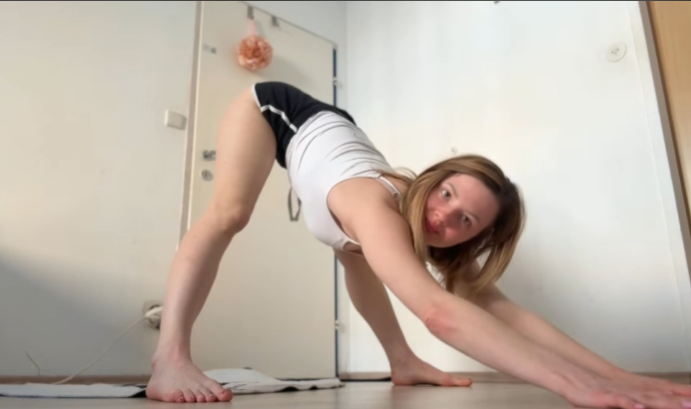
Flexibility improves fastest when three elements work together:
- Activation – muscles engage instead of going limp
- Breath – the nervous system shifts into a relaxed state
- Control – the body trusts the range because it feels supported
When these are present, muscles release more quickly and consistently. This is why dancers, gymnasts, and contortionists don’t just stretch—they prepare.
The Mental Side of Middle Splits
Mental tension directly affects physical tightness. If you approach middle splits expecting pain, your body braces. Shoulders tighten, breathing shortens, and hips lock up.
A fast-track minute works because it changes your mindset. The movements are small, controlled, and non-threatening. Instead of thinking, “This is going to hurt,” your body thinks, “I can handle this.”
That shift alone can create immediate improvement.
Why Activation Beats Passive Stretching
Passive stretching—where you relax and sink into a position—has its place. But without activation, it often leads to instability and fear in extreme ranges. The body doesn’t trust positions it can’t control.
Activation teaches the muscles to support wide positions. When muscles feel strong, they allow more length. This is the secret behind faster progress.
Strong muscles stretch better than weak ones.
Breathing: The Accelerator Most People Ignore
Breath is the fastest way to influence flexibility. Long, slow exhales signal safety to the nervous system. Short, shallow breathing signals danger.
During your one-minute fast track:
- Breathe slowly through the nose
- Let exhales be longer than inhales
- Avoid holding your breath
This tells your body there is no threat—just movement.
What Changes After the Minute
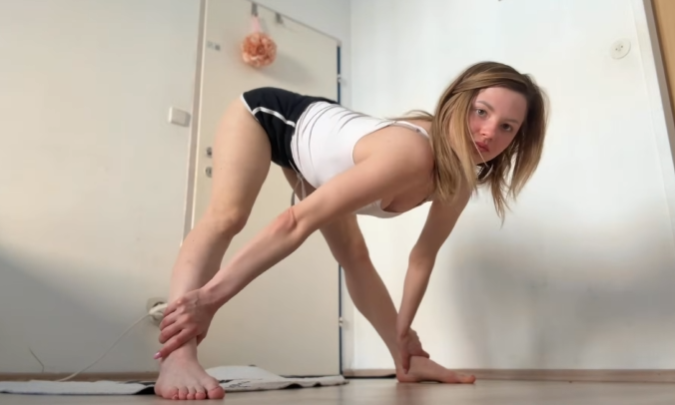
When you follow your preparation minute with actual middle split stretching, you’ll notice:
- Less shaking in the inner thighs
- A smoother descent into the stretch
- Less sharp discomfort
- A stronger sense of control
Your hips won’t suddenly become hyper-flexible, but they will respond differently. That difference compounds over time.
Consistency Over Intensity
Doing one smart minute daily beats doing intense stretches once a week. The body adapts to what it experiences most often. Gentle, frequent exposure creates lasting change.
Middle splits improve when the hips feel safe every day, not shocked occasionally.
Common Mistakes That Slow Progress
Even motivated people sabotage their progress without realizing it. Common mistakes include:
- Stretching cold muscles
- Forcing the legs wider than control allows
- Ignoring pain signals in the groin
- Holding tension in the jaw and shoulders
- Comparing progress to others
Flexibility is highly individual. Bone structure, hip shape, and muscle tone all affect depth. Progress should be measured by comfort and control, not just how low you go.
What Flexible Middle Splits Really Look Like
True flexibility isn’t about collapsing into the floor. It’s about:
- Holding the position without panic
- Breathing calmly
- Engaging muscles instead of shaking uncontrollably
- Entering and exiting the split smoothly
That level of flexibility takes patience—but the right approach speeds it up dramatically.
Who This Fast Track Is For
This method works for:
- Beginners who feel stuck
- Athletes who want safer progress
- Dancers and gymnasts
- Adults who feel stiff in the hips
- Anyone returning after a break
It’s gentle enough to use daily and effective enough to make a difference.
What Progress Feels Like
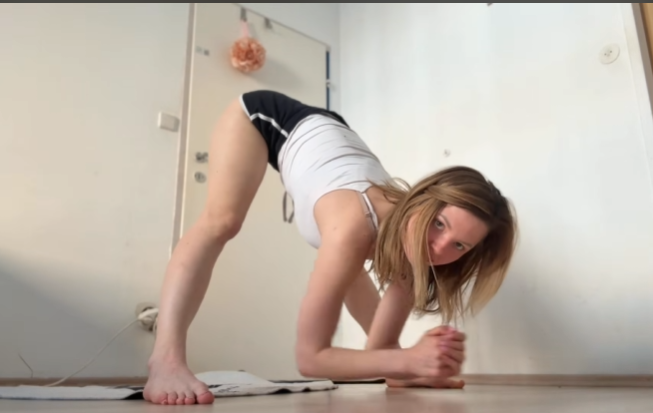
Progress in middle splits often shows up subtly:
- Less soreness afterward
- More even stretch on both sides
- A sense of “space” in the hips
- Deeper range without pushing
These signs mean your body is adapting correctly.
Patience Creates Speed
It sounds ironic, but patience creates faster results. When you stop fighting your body, it stops fighting back. That’s the true fast track.
Middle splits aren’t unlocked by pain.
They’re unlocked by trust.
The Long-Term Payoff
With consistent smart preparation, middle splits become:
- More comfortable
- More stable
- Less intimidating
- Easier to maintain
And that flexibility carries over into better movement, posture, and athletic performance.
Final Thoughts
A single minute won’t give you instant splits—but it can completely change your journey toward them. When you prepare the body instead of attacking it, flexibility becomes something you build, not something you chase.
The real fast track isn’t rushing.
It’s working with your body instead of against it.
One minute.
Every day.
Smart movement.
Real results. 💪