Let’s be honest—the middle splits look impossible until the day they suddenly don’t. One moment your hips feel like locked doors, the next they begin to open. What most people don’t realize is that flexibility isn’t only about time spent stretching. It’s about how you stretch, how your nervous system responds, and how safely you guide your body into new ranges.
So when we say “FAST TRACK to Flexible Middle Splits in 1 Minute”, we’re not promising instant miracles. We’re talking about a smart, focused 1-minute activation sequence that unlocks progress faster than random, forceful stretching ever could. This minute prepares the hips, calms resistance, and trains your body to allow deeper range—especially when done consistently.
This is how real flexibility is built. Let’s break it down.
Why Middle Splits Feel So Hard
Middle splits challenge one of the tightest, most guarded areas of the body: the inner thighs and hips. The adductors, hip flexors, hamstrings, and deep stabilizers all play a role. But the biggest obstacle isn’t muscle length—it’s protection.
Your nervous system treats wide hip opening as risky. If it doesn’t feel safe, it tightens everything. Forcing your way down only reinforces that fear, creating stiffness, pain, and plateaus.
The “fast track” approach works because it:
- Activates muscles before stretching them
- Signals safety to the nervous system
- Uses breath and control instead of force
- Targets middle split–specific mobility
One minute of the right work beats ten minutes of random pulling.
The 1-Minute Fast-Track Sequence (Done Right)
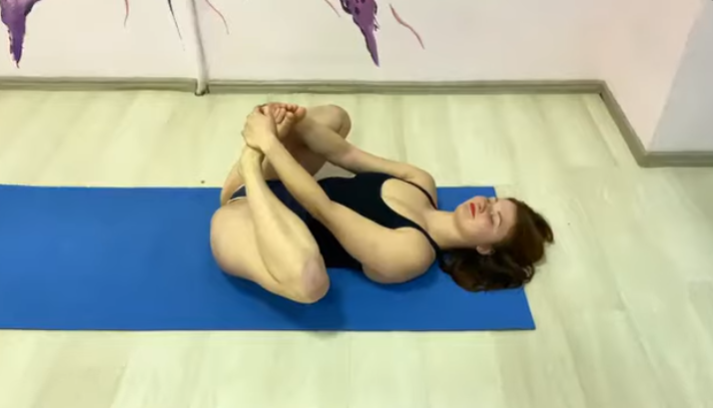
This is a pre-stretch activation flow, not the split itself. Think of it as unlocking the door before pushing it open.
1. Wide Stance Hip Pulses (20 seconds)
Stand in a wide stance, feet turned slightly outward. Knees soft, spine tall.
- Shift weight gently side to side
- Bend one knee while keeping the other leg long
- Keep the pelvis neutral, chest relaxed
- Move slowly, smoothly
This wakes up the adductors and hips without stretching them aggressively. Blood flow increases, and the hips begin to feel warm instead of resistant.
💡 Why it works: Muscles relax faster when they’re active first.
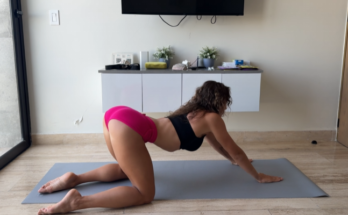
2. Active Frog Rock (20 seconds)
Come down to the floor into a frog position:
- Knees wide
- Feet turned outward
- Elbows under shoulders
Instead of sinking, rock gently forward and back.
- Inhale as you move forward
- Exhale as you move back
- Keep the movement small and controlled
This isn’t about depth—it’s about communication with your hips.
💡 Why it works: Gentle motion reduces the stretch reflex that causes tightening.
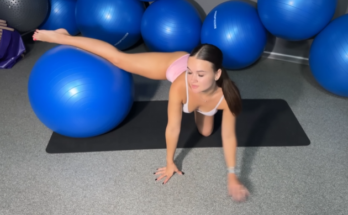
3. Isometric Inner-Thigh Press (20 seconds)
Stay in frog or a wide seated straddle.
- Press your knees or heels gently into the floor
- Hold that pressure for 5 seconds
- Release for 2 seconds
- Repeat
You are contracting the muscles you want to stretch.
💡 Why it works: This uses a principle called reciprocal inhibition—after contraction, muscles naturally release deeper.
That’s the minute.
Not dramatic.
Not painful.
Not flashy.
But extremely effective.
Why This “1 Minute” Changes Everything
This short sequence does three powerful things:
- Turns off fear
- Turns on control
- Prepares the hips for real stretching
After this minute, then your middle split stretches feel easier, safer, and deeper. You’ll notice:
- Less shaking
- Less pain
- Faster progress
- More consistency
That’s the fast track.
What Happens If You Skip Activation?
Most people jump straight into passive splits:
- Sitting and forcing legs wider
- Leaning forward aggressively
- Holding pain instead of breathing
This tells your nervous system: “Danger.”
The result?
- Tightening instead of releasing
- Hip pain
- Groin strain
- Plateaus that last months or years
Flexibility improves when the body feels safe, not when it’s threatened.
How Often to Use the Fast Track
You can use this every day.
- Before split training
- Before workouts
- As a mobility break
- Even before bed (gently)
One minute doesn’t fatigue the body—it prepares it.
Consistency beats intensity every time.
What “Flexible” Really Means in Middle Splits
True middle split flexibility isn’t just how low you go.
It’s:
- Control at the bottom
- No pinching in the hips
- Ability to hold and breathe
- Smooth transitions in and out
This is why gymnasts, dancers, and contortionists train active flexibility, not just passive stretching. They build strength in wide positions so the body trusts them.
Your goal isn’t to collapse into the split.
Your goal is to own it.
Breath: The Hidden Accelerator
During your 1-minute fast track, breath matters more than depth.
- Inhale to expand
- Exhale slowly to release
- Never hold your breath
Long exhales calm the nervous system and signal safety. This alone can increase range instantly—not by forcing, but by allowing.
Signs It’s Working
You’ll know this approach is working when:
- Your hips feel warm, not painful
- You drop lower without trying
- The inner thighs stop shaking as much
- Progress feels smoother week to week
Middle splits should feel challenging—but never sharp, panicked, or forced.
Common Mistakes That Slow Progress
Avoid these if you want real results:
- Forcing depth too early
- Stretching cold
- Ignoring pain signals
- Comparing your progress to others
- Stretching without strength
Flexibility is personal. Bodies open at different rates—and that’s okay.
Who Can Use This Method?
This fast-track approach works for:
- Beginners who feel stuck
- Athletes wanting faster gains
- Dancers and gymnasts
- Anyone with stiff hips
- Anyone returning after a break
As long as you move gently and pain-free, this is a safe entry point.
If you have injuries, modify range and stay shallow.
The Truth About “Fast” Flexibility
There is no shortcut that skips biology.
But there is a shortcut that skips:
- Guesswork
- Unsafe forcing
- Inefficient stretching
That’s what this 1-minute sequence does.
It doesn’t promise instant splits.
It promises faster progress with less struggle.
And that’s real.
Final Thought
Middle splits aren’t unlocked by suffering.
They’re unlocked by strategy.
One focused minute—done with awareness, breath, and intention—can change how your body responds to stretching entirely.
Do the minute.
Then stretch.
Then repeat tomorrow.
That’s the real fast track. 💪