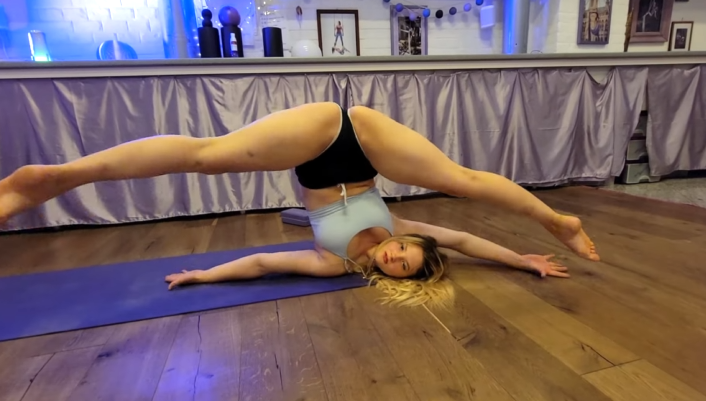
Leg flexibility is one of the most defining elements of contortion and gymnastics. From elegant leaps and powerful kicks to controlled handstands and dramatic lines, the ability to open the legs with strength and precision transforms movement into art. At the heart of this flexibility lie two foundational practices: splits and oversplits. Though visually impressive, these stretches are not about forcing extreme positions—they are about patience, intelligent training, and deep respect for the body.
Understanding Leg Flexibility in Contortion and Gymnastics
Leg flexibility involves the harmonious opening of the hips, lengthening of the hamstrings, quadriceps, hip flexors, adductors, and calves, and the integration of core stability. In contortion and gymnastics, flexibility must be functional, meaning the body can control and support the range of motion rather than collapsing into it.
Splits and oversplits train this functional flexibility by teaching the body to open symmetrically, maintain alignment, and breathe under intensity. When practiced correctly, they increase range of motion while building resilience and body awareness.
Warming Up: The Non-Negotiable First Step
Never attempt splits or oversplits on cold muscles. A proper warm-up is essential to prevent injury and support long-term progress.
Begin with 10–15 minutes of cardiovascular activity such as jogging, skipping, or dynamic movement. Follow with leg swings, hip circles, lunges, and gentle hamstring stretches. The body should feel warm, slightly challenged, but not fatigued.
A well-prepared body opens more safely and responds better to stretching.
Types of Splits
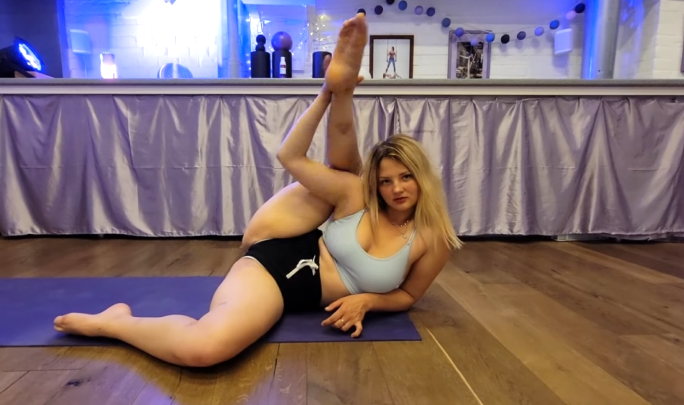
There are two main types of splits used in contortion and gymnastics:
Front splits, where one leg extends forward and the other extends backward, target the hamstrings of the front leg and the hip flexors and quadriceps of the back leg.
Side splits (middle splits) involve opening the legs to the sides and emphasize inner thigh flexibility, hip rotation, and pelvic control.
Both are equally important and should be trained consistently for balanced flexibility.
Front Splits: Technique and Alignment
Start in a low lunge position. Gradually slide the front heel forward and the back knee backward while keeping the hips square and facing forward. This alignment is crucial—twisting the hips may allow you to go lower, but it increases strain and reduces effectiveness.
Engage the core to support the pelvis. Imagine lifting the front hip back and drawing the back hip forward to keep them aligned. Keep the spine tall rather than collapsing forward.
Hold the position for 20–60 seconds, breathing slowly and deeply. Use yoga blocks or hands on the floor for support as needed.
Middle Splits: Technique and Alignment
Begin with legs wide and toes pointing forward or slightly outward, depending on hip structure. Slowly lower the hips toward the floor, maintaining a neutral spine.
Avoid tilting the pelvis backward. Instead, engage the core and imagine the sit bones spreading apart. Support yourself with hands or forearms on the ground or on blocks.
Middle splits require patience and consistent practice, as the adductor muscles often resist opening. Progress may be slow, but steady work yields results.
Introducing Oversplits Safely
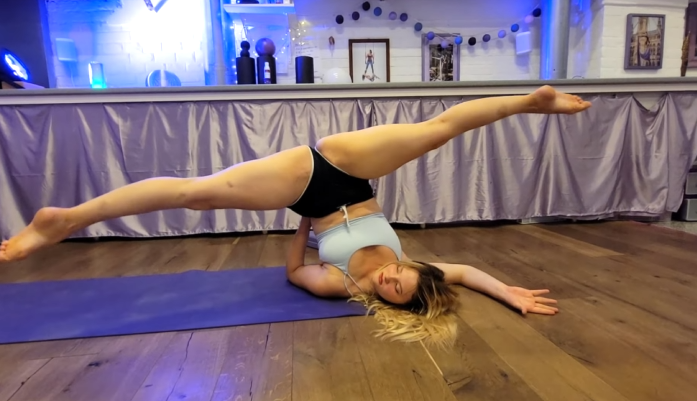
Oversplits are an advanced flexibility technique in which the legs open beyond 180 degrees. They are commonly used in contortion and high-level gymnastics to increase active flexibility and create ease in standard splits.
Oversplits should only be practiced once clean, pain-free splits are achieved on the ground. Attempting oversplits too early can overstretch ligaments and lead to injury.
Front Oversplits
For front oversplits, place the front heel on an elevated surface such as a yoga block, cushion, or low platform. Slowly slide into a split, allowing the elevated leg to increase the stretch.
Keep the hips square and supported. Do not drop into the position suddenly. Use blocks under the hands to control depth and maintain stability.
Hold for short durations—15 to 30 seconds—focusing on controlled breathing and muscle engagement rather than passive sinking.
Middle Oversplits
Middle oversplits are performed by placing one foot on an elevated surface while the other remains on the floor, or by elevating both feet slightly.
These are extremely intense and should be approached with caution. Keep the torso upright and avoid forcing the hips downward. Engage the legs and core to protect the joints.
Active Flexibility: The Key to Safe Progress
Passive flexibility alone is not enough. Active flexibility—the ability to lift, hold, and control the legs in an open position—is what makes splits functional.
After holding a split, practice lifting the legs slightly off the ground or engaging the muscles to “pull” yourself deeper without sinking. This strengthens the muscles in their lengthened state and protects the joints.
In gymnastics, this translates directly into higher kicks, stronger leaps, and cleaner lines.
Breathing and Nervous System Awareness
Flexibility is influenced not only by muscles but also by the nervous system. If the body feels threatened, it will resist opening.
Slow, controlled breathing calms the nervous system and signals safety. Inhale through the nose, expanding the ribcage. Exhale slowly, releasing tension.
Never bounce in splits or oversplits. Movement should be smooth, intentional, and controlled.
Common Mistakes to Avoid
One of the most common mistakes is pushing too hard, too fast. Pain is not progress. Sharp or joint-related pain is a signal to stop.
Another mistake is sacrificing alignment for depth. Twisted hips, collapsed spines, or hyperextended knees may look impressive but create long-term problems.
Comparing your flexibility to others is also counterproductive. Bodies differ in structure, and progress is individual.
Frequency and Recovery
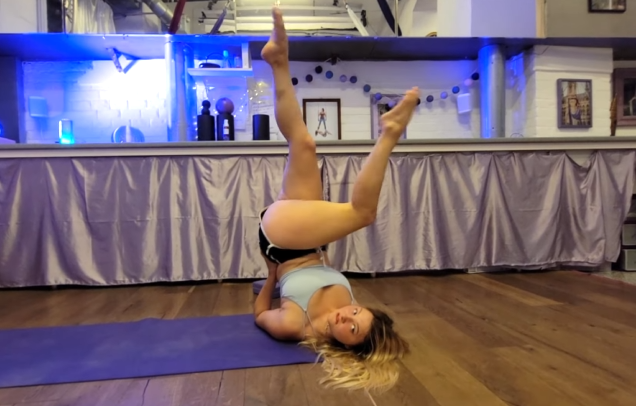
Splits and oversplits can be practiced 3–6 times per week, depending on intensity and recovery. Beginners should start with shorter holds and fewer repetitions.
Recovery is just as important as training. Gentle stretching, foam rolling, hydration, and adequate sleep support muscle repair and growth.
Rest days are not a sign of weakness—they are part of intelligent training.
Mental Approach to Flexibility Training
In contortion and gymnastics, flexibility training is as much mental as physical. Patience, consistency, and self-awareness are essential.
Some days the body opens easily. Other days it feels tight and resistant. This is normal. Approach each session with curiosity rather than expectation.
Celebrate small improvements—better alignment, calmer breathing, increased comfort. These are signs of true progress.
Integrating Splits into Performance
Once flexibility is developed, it must be integrated into movement. Practice entering and exiting splits smoothly, transitioning between positions, and holding splits with control rather than collapse.
In gymnastics routines and contortion sequences, splits are not static poses—they are living expressions of strength, balance, and artistry.
Conclusion
Splits and oversplits are powerful tools for developing leg flexibility in contortion and gymnastics. When practiced with proper warm-up, alignment, active engagement, and mindful breathing, they open the body safely and sustainably.
True flexibility is not about extremes—it is about control, awareness, and respect for the body’s process. With patience and intelligent training, splits and oversplits become not just impressive skills, but foundations for graceful, powerful movement.
Train slowly. Breathe deeply. Move with intention.
Flexibility will follow.