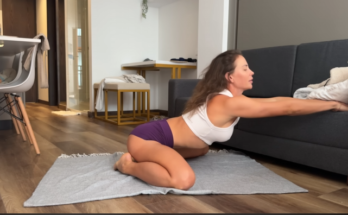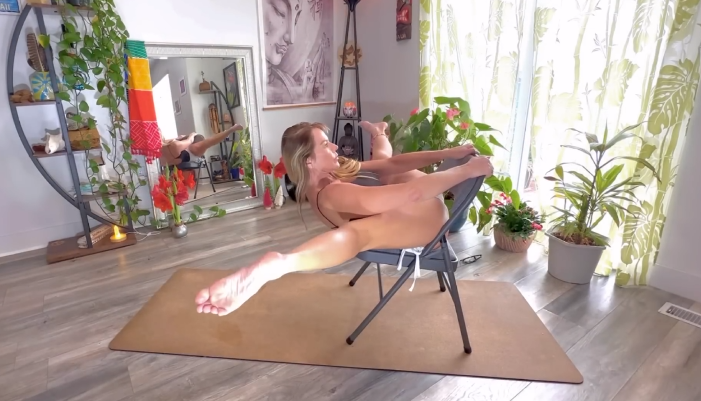
Forward bending and middle splits are two powerful elements of flexibility training that, when combined, create a deep, transformative practice. Together, they ask for openness in the hips, length through the spine, strength in the legs, and a calm, patient mind. In yoga and contortion, these movements are not just about reaching the floor or achieving a dramatic shape. They are about learning how to soften without collapsing, how to go deep while staying present. In this practice, I invite you to train with Penelope—slowly, intentionally, and with respect for your body.
Understanding the Foundation
Middle splits, also known as straddle splits, focus on opening the inner thighs, hips, and pelvis. Forward bending emphasizes length in the hamstrings, calves, and spine. When combined, these two elements require balance. Too much force in one area can block progress in another. True depth comes from even distribution of effort and release.
Before working toward deep forward bends in middle splits, it is essential to understand that flexibility must be supported by strength. Passive stretching alone may create temporary range, but long-term safety and control come from active engagement.
Preparing the Body
Every advanced flexibility session begins with a thorough warm-up. Start by raising the heart rate with gentle movement—flowing yoga, light cardio, or dynamic mobility work for at least 8–10 minutes. Warm muscles respond better to stretching and are less prone to injury.
Next, focus on joint preparation. Circle the ankles, knees, hips, shoulders, elbows, and wrists. Pay special attention to the hips, as they will be under the most demand during middle splits. Gentle hip circles and controlled leg swings help lubricate the joints and prepare them for deeper ranges.
Spinal warm-up is equally important. Cat–cow movements, spinal waves, and gentle seated twists prepare the back for forward folding without strain.
Active Middle Split Preparation
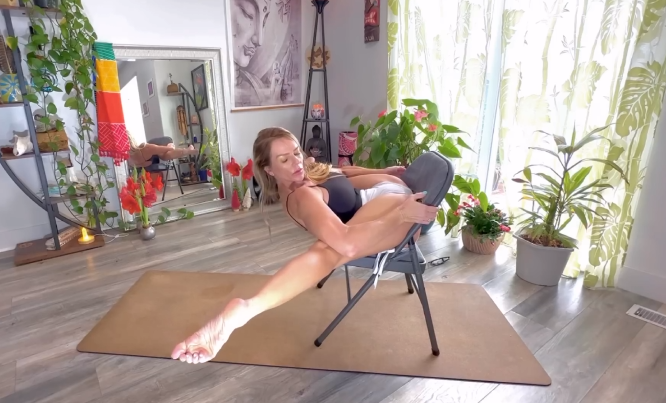
Before sinking into a passive middle split, it is vital to wake up the muscles that will support the position. Begin in a wide-legged stance or seated straddle. Gently press the heels outward into the floor while drawing the legs back toward the center. This engagement activates the inner thighs and creates stability in the hips.
Hold this engagement for several breaths, then relax slightly and allow gravity to assist the stretch. This active–passive cycle teaches the nervous system that the position is controlled and safe, allowing deeper release over time.
For those working in standing middle splits, sliding the feet apart slowly with support can be effective. Always maintain the ability to engage the legs and lift yourself out of the position without assistance.
Forward Bending Mechanics
Forward bending in a middle split is not about collapsing the chest toward the floor. The goal is length, not force. Begin by sitting upright in a wide straddle with the pelvis neutral. Place the hands in front of you and hinge forward from the hips, keeping the spine long.
Imagine the chest reaching forward rather than down. This mental cue prevents rounding in the lower back and directs the stretch into the hips and hamstrings where it belongs. If the spine begins to round, pause, breathe, and back off slightly.
Advanced practitioners may lower the forearms or chest toward the floor, but only if the spine remains long and the breath stays calm.
Breath as a Guide
Breath is your most important tool in this practice. Inhale to create space through the spine and ribs. Exhale to soften the inner thighs and hips. Long, slow exhales tell the nervous system that it is safe to release tension.
If your breath becomes shallow or strained, you have gone too far. Depth without breath is not progress—it is resistance. Penelope’s approach to yoga and contortion emphasizes listening inward before pushing outward.
Strength Within Flexibility
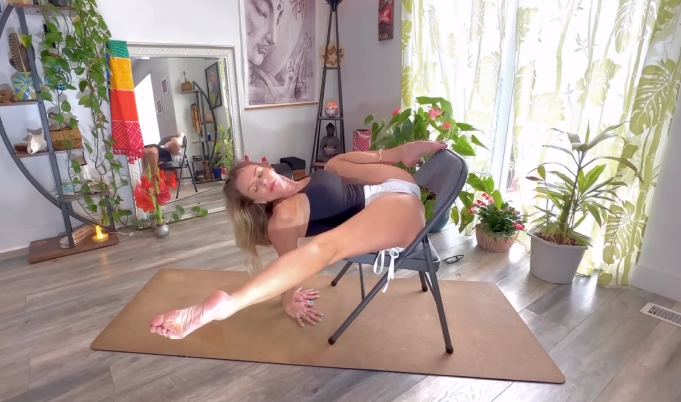
Middle splits and forward bends demand more strength than they appear to require. Without strength, the body collapses into the joints, increasing the risk of injury. To build active flexibility, include exercises such as:
- Seated straddle leg lifts
- Isometric holds pressing the legs into the floor
- Controlled forward fold lifts, lifting the torso slightly and lowering with control
These movements strengthen the hip flexors, adductors, and deep core muscles, allowing the body to support itself in deep ranges.
The Role of the Spine
In forward bending with middle splits, spinal integrity is essential. The spine should feel long and decompressed, not compressed or jammed. Engage the core lightly to support the lower back. Imagine lengthening from the tailbone through the crown of the head.
Upper back mobility also plays a role. Tight shoulders and upper spine can limit how far the torso can hinge forward. Gentle shoulder opening and thoracic extension work can greatly improve comfort and depth in the fold.
Contortion Elements
For contortion practitioners, forward bending in middle splits becomes a bridge between basic flexibility and advanced shapes. This position builds awareness of pelvic alignment, hip rotation, and spinal control—all necessary for complex contortion transitions.
Advanced variations may include folding with the chest fully grounded, reaching the arms forward or behind the legs, or transitioning from middle splits into backbend shapes. These variations should only be explored once the foundational position feels stable and controlled.
Penelope emphasizes that contortion is not about forcing extreme shapes, but about refining transitions and control. Each movement should feel deliberate and reversible.
Common Mistakes to Avoid
One of the most common mistakes in middle splits is forcing the legs wider than the hips can safely allow. Pain in the knees or lower back is a sign to stop. Another common error is collapsing forward without spinal length, which places unnecessary strain on the lower back.
Patience is key. Middle splits often take months or years to develop fully. Progress comes from consistency, not intensity.
Mental Focus and Presence
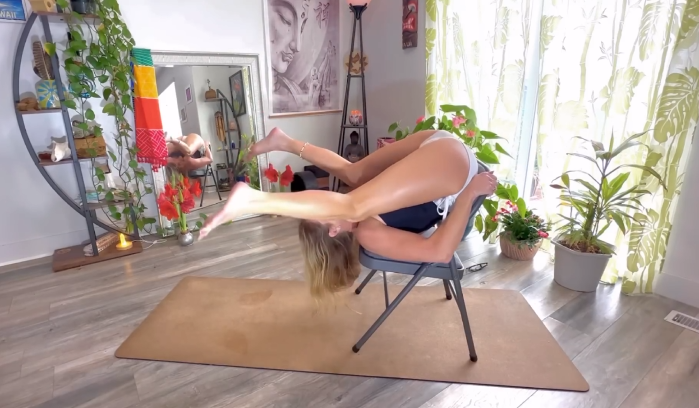
Forward bending invites introspection. It is a posture of surrender, asking the practitioner to soften mentally as well as physically. Many people hold emotional tension in the hips and inner thighs. When stretching these areas, emotions may arise. This is normal.
Penelope encourages practitioners to stay present, breathe, and allow sensations to pass without judgment. Flexibility training becomes a form of moving meditation when approached with awareness.
Recovery and Integration
After deep middle split work, it is essential to counterbalance the body. Gentle backbends, hip extensions, and neutral poses help restore balance. Supine twists and relaxed forward folds allow the nervous system to settle.
Hydration, rest, and proper nutrition support connective tissue recovery. Flexibility gains solidify during rest, not during the stretch itself.
Training with Penelope
Yoga and contortion with Penelope is about longevity, not shortcuts. It is about honoring where your body is today while patiently guiding it toward greater freedom. Forward bending with middle splits becomes not just a physical goal, but a practice of trust—trust in your breath, your body, and the process.
Some days will feel open and expansive. Others will feel tight and resistant. Both are part of the journey. Progress is not measured by how low you fold, but by how present you remain.
Closing Reflection
Forward bending with middle splits is a powerful teacher. It teaches humility, patience, and self-awareness. It reminds us that depth comes from softness, not force, and that true flexibility is a balance of strength and release.
As you practice yoga and contortion with Penelope, remember that every body is different. Celebrate small changes. Respect your limits. And above all, move with kindness toward yourself.
In that kindness, flexibility grows naturally—strong, sustainable, and free.