I told myself it was temporary.
Just a few days. Maybe a week. Long enough to make sure she was safe, fed, and warm before someone else—someone better prepared—could take over. I wasn’t looking for another responsibility. My life was already full, busy, carefully balanced. I had rules for myself, and one of them was simple: don’t get attached.
Then she looked at me.
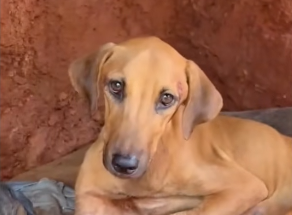
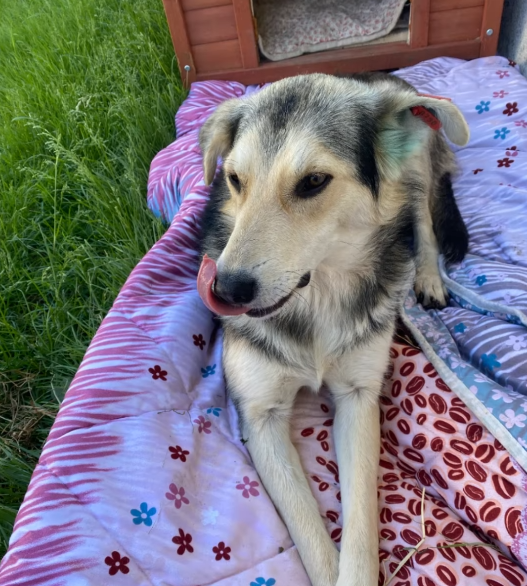
She was sitting quietly in the corner of the shelter kennel, not barking, not begging, just watching. Her fur was dull, her body thin, and one ear bent slightly forward like it never quite healed right. When I knelt down, she didn’t rush toward me the way other dogs did. She stayed still, eyes cautious but soft, as if she had learned that hope should be handled carefully.
The volunteer beside me sighed. “She’s going back tomorrow,” she said.
“Back where?” I asked.
The answer came hesitantly. “To the owner who surrendered her. They said they ‘changed their mind.’”
Something about the way she said it made my stomach tighten.
I asked more questions than I meant to. The story didn’t sit right. The owner had brought her in claiming they couldn’t afford her anymore. No medical emergency. No sudden crisis. Just inconvenience. Now, a few days later, they wanted her back.
“She hasn’t adjusted well,” the volunteer continued. “She barely eats. She shuts down when people raise their voices.”
I looked at the dog again. She lowered her head slightly, avoiding my gaze, as if she expected disappointment.
“I can foster her,” I heard myself say before I had time to think.
It wasn’t part of any plan. It just felt… necessary.
That night, she came home with me.
She walked through the door carefully, like the floor might disappear beneath her paws. Every sound made her flinch—the hum of the refrigerator, the creak of the couch, even my footsteps. I showed her the water bowl, the bed I’d set up, the corner she could claim as her own. She didn’t touch any of it at first. She just stood there, frozen, waiting for something bad to happen.
I kept reminding myself: This is temporary.
The first night, she didn’t sleep. She lay curled tightly on the floor, eyes open, watching me like she was afraid I might vanish—or worse, change. I sat nearby, pretending to read, giving her space. Around 3 a.m., I felt a light pressure against my leg. She hadn’t climbed into my lap or leaned fully into me. She had just rested her paw there, barely touching, testing.
Something in my chest cracked.
The next few days were quiet. She followed me from room to room but kept her distance. She ate slowly, pausing after every few bites to look up, as if checking whether it was really allowed. When I reached for something too quickly, she startled and backed away, eyes wide with apology. As if she were the one afraid of doing something wrong.
That’s when the doubt started to creep in.
What kind of life had she come from if kindness made her nervous?
The shelter called on the third day. The owner was ready to take her back.
I looked at her lying on the rug, chin resting on her paws, finally relaxed enough to sleep. Her breathing was slow and even. Peaceful. For the first time.
My stomach twisted.
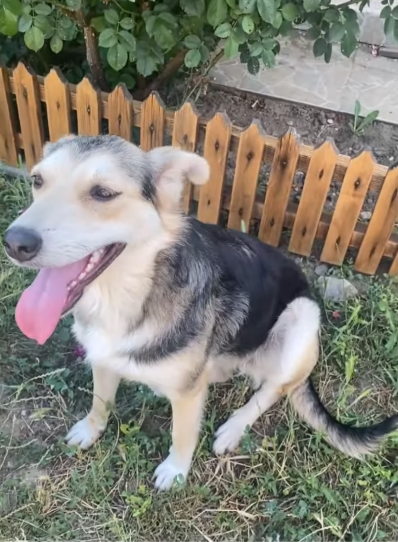
“I just need a little more time,” I said. “She’s still adjusting.”
They agreed—another few days.
Those days changed everything.
She began to bloom in small, quiet ways. Her tail wagged when I picked up the leash. She discovered toys and carried one around proudly, even though she didn’t quite know how to play. She learned that my hand meant gentle scratches, not sudden pain. That food would come regularly. That she didn’t have to earn safety.
One afternoon, she rolled onto her back and exposed her belly, then froze—eyes locked on mine—waiting to see what I’d do.
I knelt down and scratched her chest softly.
She let out a long sigh, the kind that sounds like relief, like something heavy being set down after a long time. Her eyes closed. Her body went loose.
I sat there longer than I needed to, afraid to move, afraid to break the moment.
That night, I barely slept—not because she was restless, but because my mind wouldn’t stop racing.
She was supposed to go back.
But back to what?
To a place where she learned to flinch at raised voices. To a home where affection was inconsistent, where being quiet was safer than being seen. To people who had already shown they could give her up once.
I tried to be logical. Maybe they had made a mistake. Maybe they really had changed their minds. Maybe I was projecting.
But every time I imagined handing her leash back to them, my chest tightened and my throat burned.
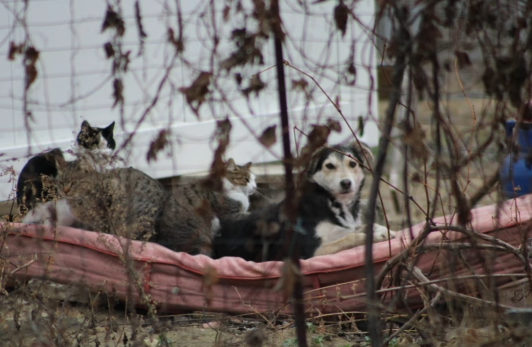
The next morning, I noticed something that broke me completely.
I had accidentally dropped a pan in the kitchen. The sound echoed sharply. She bolted—straight to me. Not away. Not to hide.
To me.
She pressed her body against my legs, shaking, trusting that I would protect her.
That was it.
I realized then that this wasn’t about whether I planned to keep her.
It was about whether I could live with myself if I didn’t.
When the shelter called again, I heard my own voice before I fully understood the words. “I don’t think she should go back,” I said quietly. “I’d like to adopt her.”
There was a pause. Then relief. The shelter staff had their doubts too. Paperwork was started immediately.
When it was official, I sat on the floor and cried. She came over and licked my face, confused but gentle, tail wagging uncertainly like she was saying, Is this good? Did I do okay?
She did more than okay.
She saved me in ways I never expected.
Life with her isn’t perfect. She still startles sometimes. She’s cautious with strangers. Loud arguments make her nervous. But every day, she grows braver. Every day, she chooses trust again.
And every day, I’m grateful I listened to that quiet voice inside me—the one that said love doesn’t always come with a plan.
Sometimes it comes as a “temporary” promise that turns into forever.
I wasn’t planning to keep her.
But when the moment came, when the choice was real, I realized something simple and powerful:
I couldn’t let her go back.
Because she was already home.