The sound of rushing water fills the air long before the waterfall comes into view. It grows louder with every step, a deep, rhythmic roar that seems to echo through the body as much as through the landscape. Mist floats gently in the air, cooling the skin and softening the light. This is not a studio with mirrors and polished floors—this is nature’s yoga hall, alive and constantly moving. Practicing balancing vinyasa yoga at a waterfall is more than a workout; it is an experience of connection, presence, and flow.
Vinyasa yoga is built on movement synchronized with breath. Each inhale opens space, each exhale grounds and stabilizes. At a waterfall, this rhythm feels amplified. The water never stops moving, yet it remains perfectly itself. Watching it reminds the body how to transition smoothly, how to stay strong without becoming rigid. Balance here is not about stillness—it is about adaptability.
The practice begins by standing at the edge of the natural space, feet rooted firmly into the earth. The ground may be uneven, slightly damp, alive beneath the soles. This alone demands awareness. Mountain Pose becomes more than a posture; it becomes a dialogue between the body and the land. The legs engage, the core awakens, and the spine lengthens as the breath slows to meet the pulse of the surroundings.
As the flow begins, arms sweep upward with an inhale, reaching toward the sky as mist brushes the fingertips. On the exhale, the body folds forward, surrendering tension to gravity. Each movement feels intentional, guided not by music but by the natural cadence of falling water. The waterfall becomes a metronome, setting a steady pace that encourages mindfulness rather than speed.
Balancing poses take on new meaning in this environment. When shifting into Tree Pose, the challenge is immediate. The sound, the breeze, the uneven ground—all test focus. One foot roots down while the other lifts, resting lightly against the calf or thigh. Hands come to heart center, and the gaze softens. The body sways gently, just like the trees nearby. Balance is found not by fighting the movement, but by allowing it.
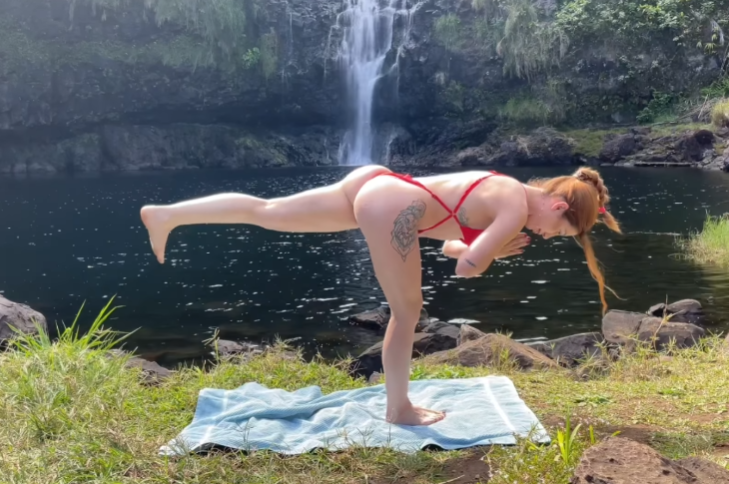
Flowing into Warrior III, the body extends forward, one leg lifting behind like a counterweight. Arms reach ahead, parallel to the earth, creating a long line of energy from fingertips to toes. The core engages deeply to stabilize. The roar of the waterfall is constant, powerful, yet calming. It reminds the practitioner that strength and softness can exist together.
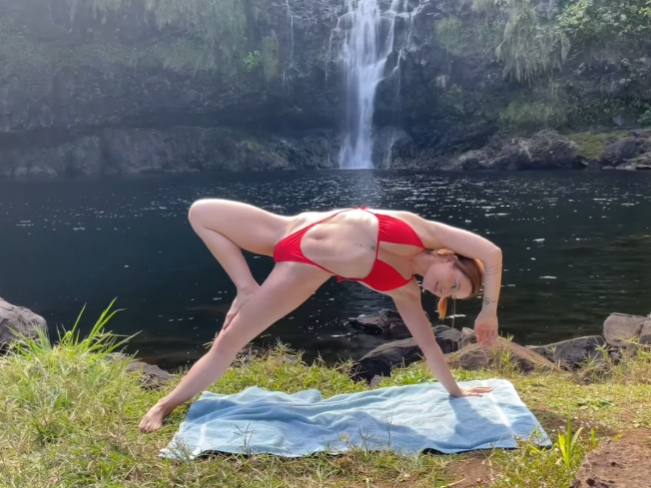
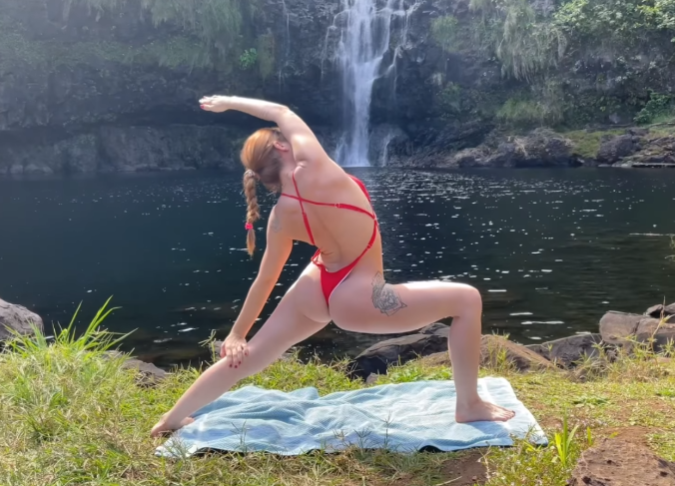
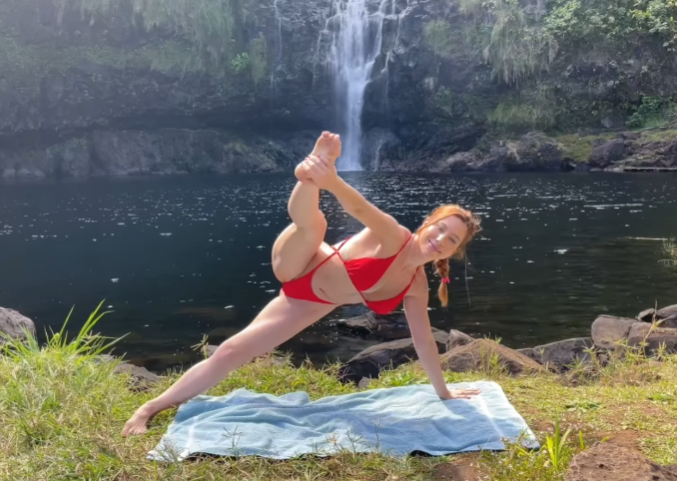
Flexibility unfolds naturally in this setting. Warmed by movement and inspired by the openness of nature, the muscles release more willingly. A slow transition into Half Moon Pose challenges both balance and flexibility, opening the hips and chest while demanding steady focus. The body learns to trust itself, to hold space even when conditions are unpredictable.
As the vinyasa continues, breath remains the anchor. Inhale to lift, exhale to fold. Inhale to expand, exhale to ground. Moving through a gentle sequence of lunges and twists, the spine becomes fluid, rotating smoothly like the water cascading over rock. Twists feel cleansing here, as if stagnant energy is being rinsed away by the sound and sensation of flowing water.
Practicing near a waterfall also heightens sensory awareness. Cool mist lands on warm skin. Sunlight reflects off moving water, creating dancing patterns of light. The air feels cleaner, richer. These sensations pull attention fully into the present moment. There is no room for distraction—only breath, movement, and nature.
One of the most powerful moments comes in a balancing backbend, such as Dancer Pose. Standing tall, one hand reaches back to catch the foot, the chest opening forward while the lifted leg presses gently into the hand. It is a pose of trust and vulnerability. The waterfall stands as a reminder that surrender does not mean collapse—it means allowing support to come from unexpected places.
As the sequence gradually slows, the body transitions to the ground. Seated stretches feel deeper, more nourishing. Forward folds invite introspection, while gentle hip openers release stored tension. The sound of water becomes almost meditative now, wrapping the body in a sense of safety and continuity.
Ending the practice in Savasana beside a waterfall is a profound experience. Lying still on the earth, the body fully supported, the mind softens completely. Breath becomes effortless. The waterfall continues its endless flow, unconcerned with time, achievement, or perfection. In this stillness, flexibility is no longer just physical—it is mental and emotional. The ability to let go, to be present, to rest.
Balancing vinyasa yoga at a waterfall teaches lessons that extend beyond the mat. It shows that balance is dynamic, not fixed. That flexibility comes from patience, not force. That strength grows when we listen rather than resist. Nature becomes both teacher and partner, offering constant reminders through sound, movement, and sensation.
When the practice ends and the body rises slowly, there is a lingering sense of clarity. Muscles feel open, joints feel free, and the mind feels quiet yet alert. The waterfall continues to flow, unchanged, while something inside has shifted. Carrying that rhythm back into daily life—moving with breath, adapting with grace, and staying grounded even in motion—is the true gift of this practice.
Balancing vinyasa yoga at a waterfall is not just a flexibility flow. It is a conversation with nature, a meditation in motion, and a reminder that when we move in harmony with our breath and surroundings, balance becomes a natural state. 🌊