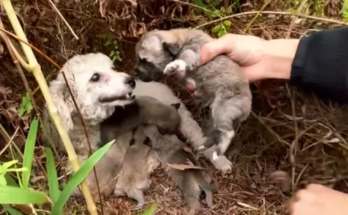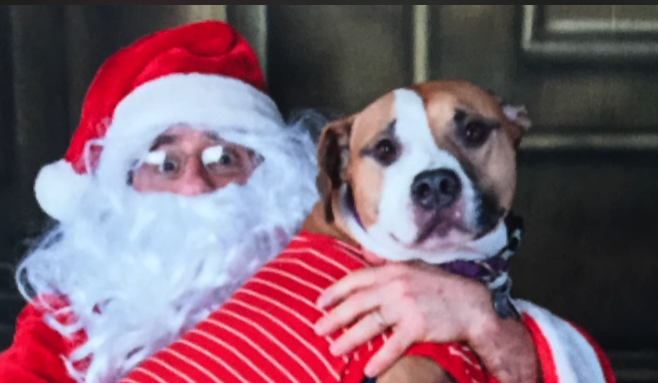
Everyone in the neighborhood knew Chuggington.
Some knew him by the gentle thump of his tail against the fence every morning. Others recognized him by the way he sat proudly at the corner, chest puffed out, watching the world like it was his job to keep everything in order. Children knew him as the dog who waited patiently for head pats. Elderly neighbors knew him as the quiet companion who walked beside them without pulling, as if he understood their pace mattered.
But long before Chuggington became that dog, he was just a scared, nameless stray trying to survive.
The name “Chuggington” came later—after people saw how he moved through life. Not fast. Not flashy. Just steady. Always chugging along, no matter how hard the road got.
When Chuggington first appeared on the streets, he looked like he’d already lived a lifetime. His coat was rough and uneven, marked by patches where fur had fallen out. One ear flopped permanently forward, the other torn at the edge. His ribs showed when he stretched, and his eyes—those eyes—carried a quiet seriousness that made people pause.
He didn’t beg.
He didn’t bark.
He simply existed, moving from block to block with slow determination, as if he had somewhere important to be but wasn’t in a hurry to get there.
Chuggington survived on scraps and kindness that came in small, unpredictable doses. A piece of bread tossed from a window. A bowl of water left out on a hot day. A hand that reached down once, quickly, before pulling away again. He never assumed generosity would last. He accepted it when it came and kept moving when it didn’t.
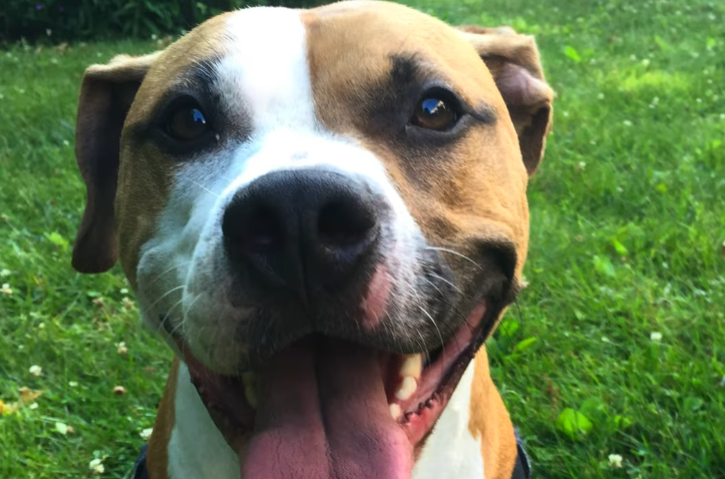
Nights were the hardest.
Cars passed too close. Thunderstorms shook the ground. The cold crept into his bones during winter, and summer heat burned his paws on the pavement. Still, Chuggington pressed on. He found shelter under porches, behind dumpsters, near old warehouses where the walls blocked the wind. Every morning, he stood up, stretched stiff legs, and walked on.
That was his gift.
Resilience.
The rescue volunteers noticed him because he was always there. Always walking the same routes, always calm, never aggressive. When they stopped their van near him for the first time, he looked up—not startled, not fearful—just curious. His tail wagged once, slow and thoughtful.
That single wag changed everything.
They approached carefully, speaking softly. Chuggington sat down on his own, like he’d been waiting for instructions all his life. When they offered food, he accepted politely. When they reached for his collar, he stiffened—but he didn’t pull away.
It was as if he knew.
The ride to the shelter was quiet. Chuggington rested his head against the side of the crate, watching the city move past. He didn’t cry. He didn’t pace. He simply rode along, trusting the motion to take him somewhere better.
At the shelter, the staff quickly realized what kind of dog he was.
Chuggington wasn’t young, but he wasn’t old either. His body carried signs of wear—arthritis starting in his hips, old scars from fights he probably never wanted—but his spirit was intact. He greeted everyone with the same calm energy. He didn’t jump or demand attention. He waited.
During his first bath, he stood perfectly still, eyes half-closed, as warm water washed months of hardship away. When someone scratched behind his ears, he leaned into the touch with a sigh that sounded like relief.
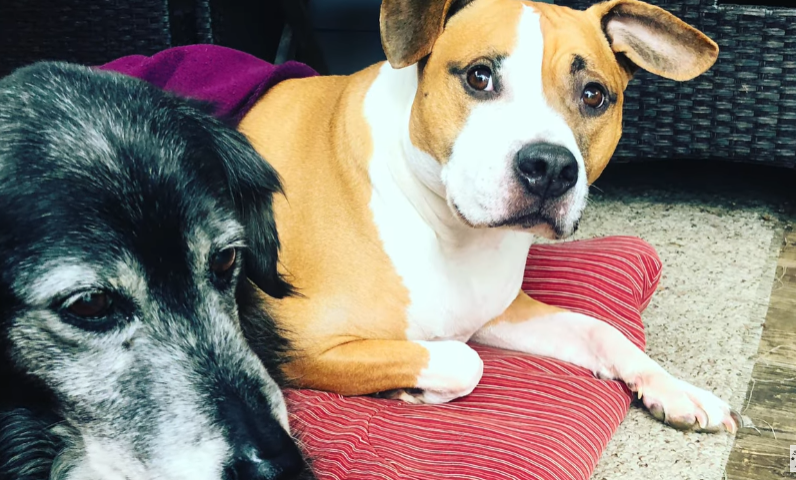
“Good boy,” someone whispered.
The words landed deeply.
From that day on, Chuggington seemed to bloom. Not loudly, not dramatically—but steadily. His coat grew shinier. His posture straightened. His tail wagged more often. He began following volunteers around, offering quiet companionship rather than chaos.
He became the dog who calmed others.
When nervous dogs arrived, Chuggington sat nearby, unbothered, showing them there was nothing to fear. When puppies barked and bounced, he watched patiently, like a wise uncle. Staff members often joked that he should be on payroll.
But adoption day didn’t come quickly.
People walked past his kennel, drawn to younger dogs, fluffier dogs, dogs who pressed their faces against the bars and begged to be chosen. Chuggington didn’t do that. He sat. He watched. He waited.
Some asked about him.
“Is he friendly?”
“Oh yes.”
“Is he trained?”
“He’s very well-mannered.”
“Any issues?”
“He’s older. Some joint stiffness.”
And just like that, people moved on.
Chuggington never seemed discouraged. Each evening, he returned to his blanket, curled up, and slept deeply. He trusted that what was meant for him would come when it was time.
It did.
A man named Daniel came to the shelter on a quiet Tuesday afternoon. He wasn’t looking for a puppy. He wasn’t even sure what he was looking for at all. He had recently lost his old dog, a companion who had walked beside him for nearly a decade. The house felt too quiet now. Too empty.
When Daniel reached Chuggington’s kennel, something stopped him.
The dog looked up slowly. Their eyes met. Chuggington’s tail wagged once.
That was enough.
Daniel sat down. Chuggington walked over and sat beside him, leaning his weight gently against Daniel’s leg. No hesitation. No fanfare. Just belonging.
“This one,” Daniel said. “This is my boy.”
Home life suited Chuggington perfectly.
He learned the layout of the house within a day, mapping out sunny spots for naps and quiet corners for rest. He followed Daniel from room to room at first, just to make sure this wasn’t temporary. When it became clear that Daniel wasn’t going anywhere, Chuggington relaxed.
Their walks became neighborhood events.
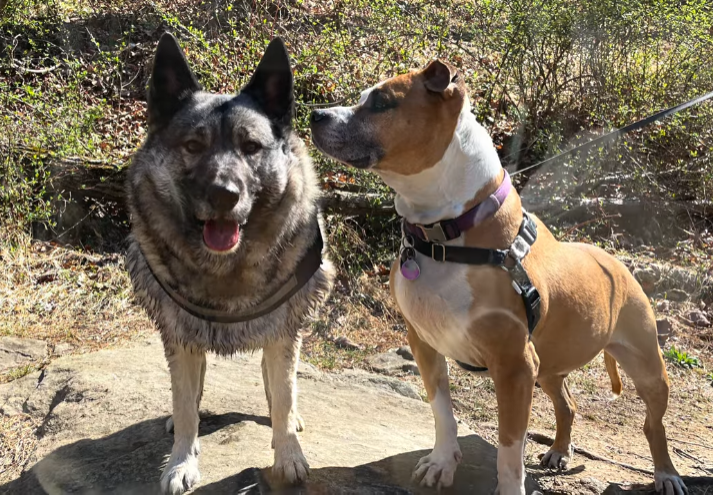
Chuggington walked at Daniel’s pace, never pulling, never rushing. He greeted neighbors politely, sat when children approached, and waited patiently at crosswalks like he understood the rules. People smiled when they saw him.
“That’s a good boy,” they’d say.
And he was.
Chuggington didn’t chase squirrels. He didn’t chew furniture. He didn’t demand constant attention. What he offered instead was presence—steady, grounding, comforting. He lay near Daniel’s feet while he worked. He rested his head on Daniel’s knee during quiet evenings. He seemed to know when Daniel needed company and when he needed space.
As the years passed, Chuggington slowed down a little more. His steps grew careful. His naps grew longer. Daniel adjusted everything—shorter walks, softer beds, ramps near stairs. Chuggington accepted these changes with grace, never complaining, never resisting.
One winter evening, as snow fell softly outside, Daniel sat on the couch with Chuggington’s head resting on his lap. He stroked the familiar fur and whispered, “You’re a good boy. You know that, right?”
Chuggington’s tail thumped gently in response.
He had lived a hard life. He had survived without bitterness. He had loved without conditions. He had shown that goodness doesn’t need noise or drama—it just needs consistency.
Chuggington didn’t save lives in dramatic ways. He didn’t perform tricks or make headlines. What he did was show up, every day, with loyalty and quiet courage.
And sometimes, that’s the greatest heroism of all.
Chuggington was a good boy.
Not just because he behaved well.
But because he lived well.
Steadily.
Kindly.
Always chugging along.