No one noticed the dog at first—not until the scream broke through the afternoon noise. It wasn’t a human scream, but it cut just as deep. A sharp, panicked cry echoed between concrete walls, followed by a dull, sickening thud that silenced the courtyard below an aging apartment building.
People looked up.
From the fourth-floor balcony, a man stood frozen, hands still clenched, as if he couldn’t believe what he had just done. Below him, on the cracked pavement, lay a small dog—her body twisted unnaturally, her breathing shallow and uneven. For a heartbeat, the world stopped. Then chaos rushed in.
Someone shouted. Someone else ran. A woman dropped her groceries and sprinted across the courtyard, kneeling beside the dog. “She’s alive,” she cried, her voice trembling. “She’s still alive!”
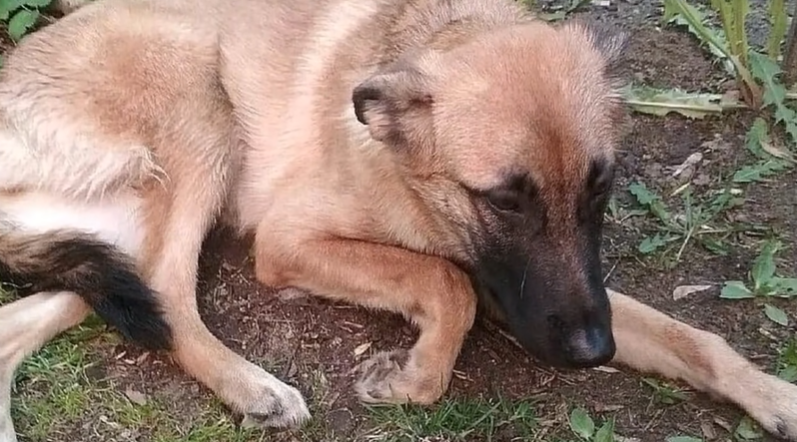
The dog—white with patches of brown—barely moved. One eye fluttered open, unfocused and confused. Pain surged through her body, pain she didn’t understand. A few minutes earlier, she had been inside her home, standing near her owner’s feet, wagging her tail uncertainly as his voice rose in anger. She didn’t know what she had done wrong. She only knew the sound of shouting, the sudden grip around her small body, the terrifying rush of air—and then darkness.
She had trusted him.
Neighbors gathered as the woman wrapped the dog in her sweater, trying to keep her warm. Blood stained the fabric, but the injuries were not obvious. That somehow made it worse. The dog whimpered softly, a sound so weak it seemed like an apology for existing.
An ambulance was called—not for her, but for the anger that exploded among the witnesses. Phones came out. Fingers pointed upward. Someone yelled that the man should be arrested. The balcony door slammed shut above them.
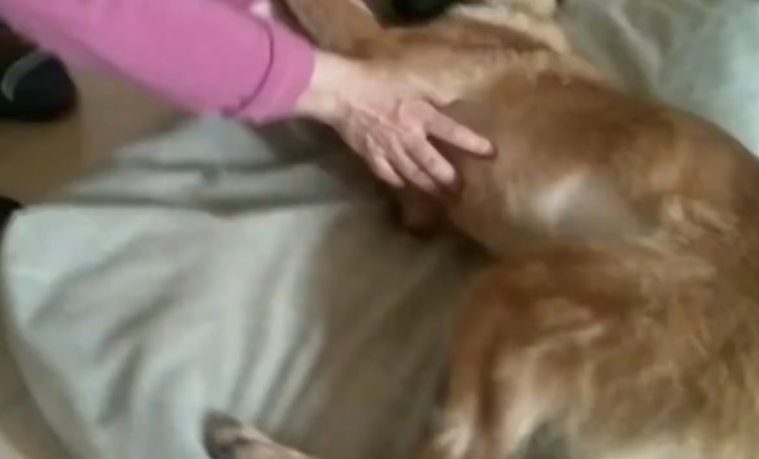
A local rescue volunteer arrived within minutes, alerted by frantic messages. She knelt carefully, checking the dog’s breathing, her pulse. “We have to move fast,” she said. “Internal injuries are likely.”
At the veterinary clinic, time became fragile.
X-rays revealed fractured ribs, a shattered pelvis, internal bleeding. The vet’s face was grim but focused. “She’s been through severe trauma,” he said. “We can try, but it won’t be easy.”
The rescue volunteer nodded without hesitation. “Do everything.”
Surgery lasted hours. Machines beeped steadily, fighting against the silence that threatened to take over. The dog lay still under anesthesia, her body battered, her spirit hovering somewhere between leaving and staying. No one knew what she was thinking—if she was thinking at all—but later, those who believed in miracles would swear she chose to live right then.
When she woke up, pain greeted her like a wave. Tubes surrounded her. Her legs wouldn’t move the way she wanted them to. Panic rose, but a gentle hand rested on her head, steady and warm. She relaxed just enough to breathe.
Days passed slowly. Each sunrise was a victory. The dog—now called Hope by the clinic staff—ate small amounts of food, drank water, and slept. Sometimes she cried in her sleep, small whimpers escaping her as if she were falling again and again. Volunteers stayed with her during the night, whispering comfort, reminding her she was safe.
News spread.
The story of the dog thrown from the fourth floor ignited outrage across the city. People demanded justice. Authorities investigated. The owner was identified, questioned, and charged. But for those caring for Hope, justice wasn’t just about punishment—it was about survival.
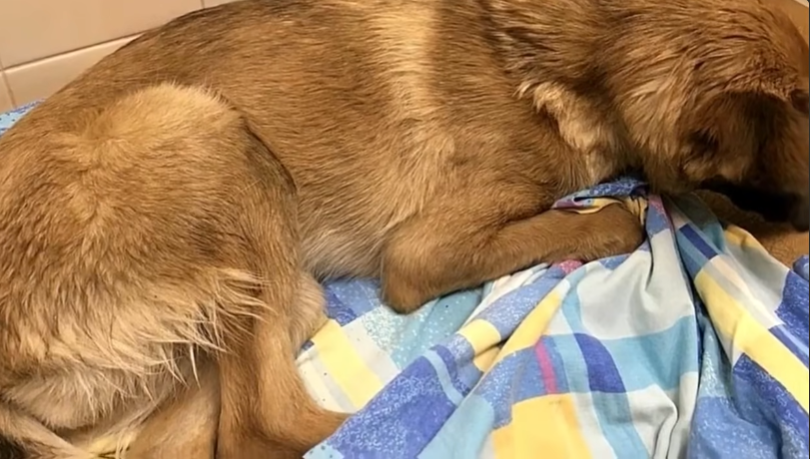
Hope learned to endure pain with quiet strength. Physical therapy was introduced gently. Her back legs trembled, uncertain whether they remembered how to work. Some days she tried. Other days she didn’t. No one pushed her. Healing, they knew, was not a straight line.
What amazed everyone most was her trust.
Despite what had been done to her, Hope still leaned into human hands. She wagged her tail when volunteers entered the room. She licked fingers that fed her, as if thanking them for something she believed she had been denied forever. It was impossible to understand how a heart so abused could remain so open.
Weeks later, she stood.
It was only for a second, her legs shaking violently, her body unsure—but she stood. Applause filled the rehab room. Tears flowed freely. Hope tilted her head at the sound, confused but pleased, as if she had done something wonderful without realizing it.
Recovery continued for months. She would never move quite the same way again. She walked with a limp, her steps careful and deliberate. But she walked. She played gently with toys. She basked in the sun. She slept deeply—without fear of being lifted, without fear of falling.
Then came adoption day.
Many people applied. Everyone wanted to give her the love she deserved. The rescue team chose carefully. They wanted someone patient, calm, and deeply committed. In the end, they chose a quiet couple who had no children, no other pets—only time and tenderness to offer.
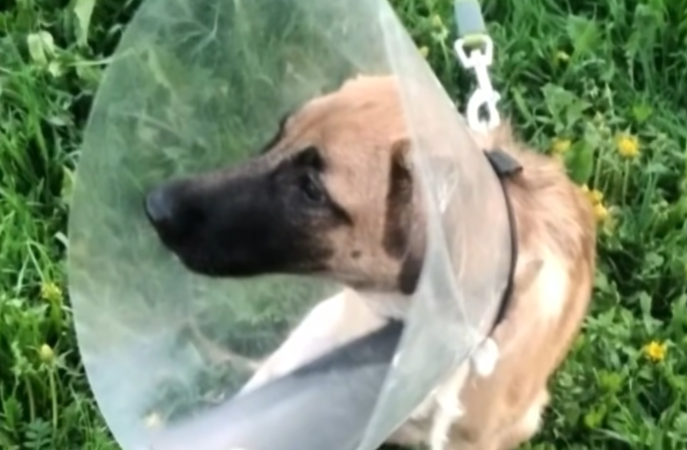
When Hope met them, she approached slowly, sniffed their hands, and then sat down between their feet. She looked up—not fearful, not uncertain—just ready.
Her new home had no balconies.
It had soft rugs, low furniture, and windows that opened safely to fresh air. Her bed sat in a corner filled with light. She learned routines: morning walks, gentle stretches, evening cuddles. The past did not disappear, but it loosened its grip.
Sometimes, when startled by loud voices or sudden movements, she froze. Her eyes widened, her body tense. But then a hand would reach for her, slow and reassuring, and she would breathe again.
The owner’s heartless act had nearly ended her life.
Instead, it exposed the worst of humanity—and the very best.
Hope became a symbol. Not just of cruelty, but of resilience. Of the truth that even when trust is shattered in the most violent way, it can be rebuilt piece by piece.
She survived the fall.
And in doing so, she rose higher than anyone ever expected.