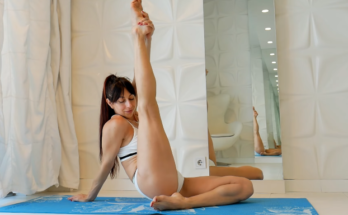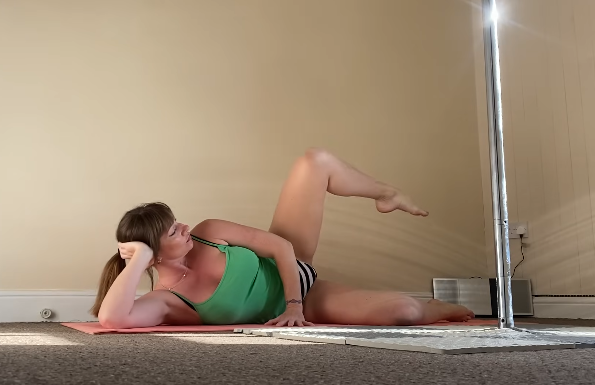
In the world of health and fitness, mobility is often overlooked. Many people focus on strength, endurance, or weight loss, but forget about one of the most important elements of a healthy body—mobility. Mobility refers to the ability of a joint to move freely and efficiently through its full range of motion. When your joints move well, your body feels lighter, more balanced, and more capable.
Among all the joints in the body, the hips play a crucial role. They connect the upper body to the lower body and support nearly every movement we perform each day. Walking, running, bending, sitting, standing, and even twisting all depend on healthy hips. That’s why performing a hip mobility check through yoga can be one of the best ways to understand how well your body moves.
A hip mobility check is not about judging yourself or pushing beyond your limits. Instead, it is a simple way to observe how your body feels, identify tight areas, and gently improve flexibility and stability.
Why Hip Mobility Matters
The hips are large ball-and-socket joints designed to move in multiple directions—forward, backward, sideways, and rotationally. When hip mobility is good, movement feels smooth and natural.
However, modern lifestyles often limit this mobility.
Many people spend long hours sitting at desks, driving cars, or using electronic devices. Sitting for extended periods shortens the hip flexor muscles and reduces natural movement. Over time, the hips become tight and less flexible.
When hip mobility decreases, other parts of the body begin to compensate.
The lower back may become strained.
The knees may experience extra pressure.
Even the ankles and posture can be affected.
A regular hip mobility check through yoga helps prevent these issues by encouraging movement and awareness.
Starting Your Hip Mobility Check
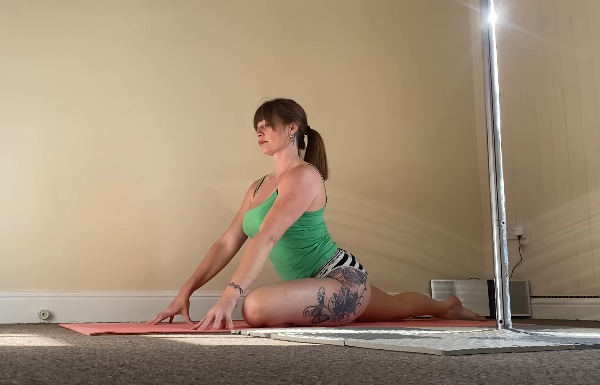
Before beginning any mobility test or yoga practice, find a comfortable space where you can move freely. A yoga mat or soft surface will help support your joints.
Start by standing tall with your feet hip-width apart. Take a few deep breaths and allow your body to relax. This simple moment of stillness helps you connect with your breathing and prepare your muscles for movement.
Now the mobility check begins.
Test 1: Deep Squat Position
The deep squat is one of the most natural human movements. It tests the coordination of the hips, knees, and ankles.
Slowly bend your knees and lower your hips toward the floor. Keep your chest upright and your heels on the ground if possible.
Ask yourself these questions:
- Do your heels lift off the ground?
- Does your back round excessively?
- Do your knees collapse inward?
If you can sit comfortably in a deep squat, it is a good sign that your hips have strong mobility and stability.
If the position feels tight or unstable, your hips may need more flexibility work.
Test 2: Seated 90/90 Hip Position
Sit on the floor with one leg bent in front of you and the other bent behind you, forming two 90-degree angles.
This position is often called the 90/90 stretch in yoga and mobility training.
Notice how your hips feel in this position.
Are you able to sit upright comfortably?
Does one side feel tighter than the other?
This check helps reveal limitations in internal and external hip rotation—two movements that are essential for healthy joint function.
Test 3: Hip Rotation
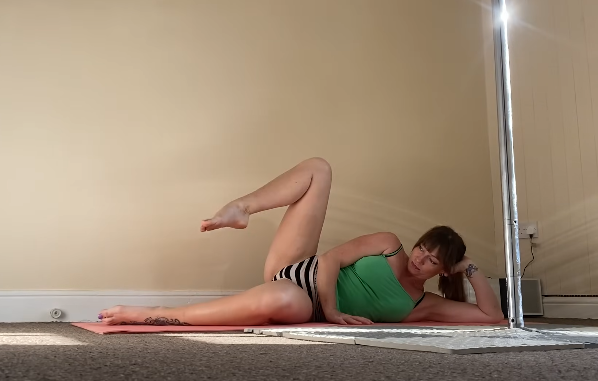
From the 90/90 position, gently rotate your knees from one side to the other without using your hands if possible.
Move slowly and focus on control.
If your knees move smoothly across the floor, it indicates good hip rotation.
If the movement feels stiff or uneven, it simply means your hips need more practice and attention.
Mobility improves with time and consistency.
Test 4: Hip Flexor Stretch
Tight hip flexors are extremely common due to prolonged sitting.
To check them, move into a simple kneeling lunge position.
Place one knee on the floor and step the other foot forward. Gently push your hips forward while keeping your chest upright.
You should feel a stretch along the front of the hip of the kneeling leg.
If the stretch feels intense or uncomfortable immediately, it may indicate tight hip flexor muscles.
With regular yoga practice, this area can gradually open and lengthen.
The Role of Yoga in Hip Mobility
Yoga is one of the most effective ways to improve mobility because it combines movement, breathing, and body awareness.
Unlike aggressive stretching routines, yoga encourages gentle exploration of range of motion.
Common yoga poses that support hip mobility include:
- Low Lunge
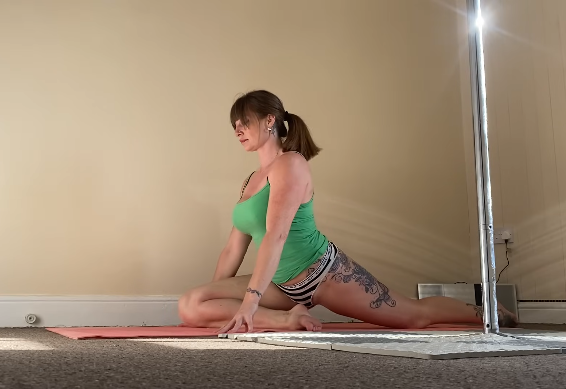
- Pigeon Pose
- Butterfly Stretch
- Lizard Pose
- 90/90 Rotations
These poses target different muscles surrounding the hips, helping release tension and increase flexibility.
Over time, they help restore natural movement patterns that may have been lost through inactivity.
Listening to Your Body
During a hip mobility check, it is important to approach the process with curiosity rather than judgment.
Every body is different.
Some people naturally have greater flexibility, while others may have tighter joints due to lifestyle, past injuries, or genetics.
Mobility is not a competition.
The goal is simply to understand where your body currently stands and gradually improve it.
Pain should never be forced. A gentle stretch sensation is normal, but sharp discomfort is a signal to ease back.
Building a Daily Habit
Improving hip mobility does not require long workouts or complicated routines.
Even five to ten minutes of daily yoga can produce noticeable changes.
A simple routine may include:
- Deep squat hold – 30 seconds
- 90/90 stretch each side – 30 seconds
- Hip rotations – 10 slow repetitions
- Kneeling hip flexor stretch – 30 seconds each side
- Relaxed breathing
Consistency is far more important than intensity.
Small daily efforts create lasting improvements.
The Benefits of Healthy Hips
As hip mobility improves, many people begin to notice positive changes in everyday life.
Walking feels smoother and more natural.
Sitting becomes more comfortable.
Lower back tension may decrease.
Athletic performance can improve as movements become more efficient.
Even posture may improve because the pelvis and spine can align more naturally.
Healthy hips support the entire body.
Final Thoughts
A hip mobility yoga check is a powerful reminder that our bodies are designed to move. In a world where sitting has become the norm, taking a few moments each day to reconnect with movement can make a huge difference.
Through simple tests like squats, rotations, and gentle stretches, you gain insight into how your body functions.
More importantly, you create an opportunity to improve it.
Mobility is not about perfection.
It is about progress.
With patience, mindful movement, and consistent yoga practice, your hips can become stronger, more flexible, and more balanced.
And when the hips move well, the entire body moves better. ✅