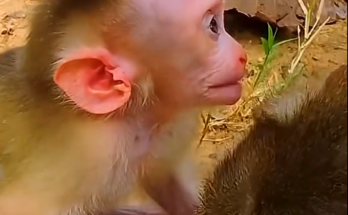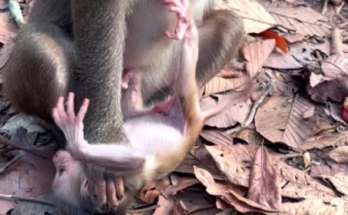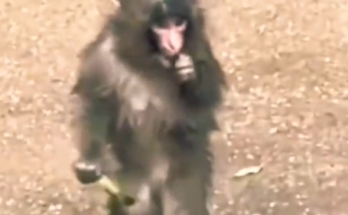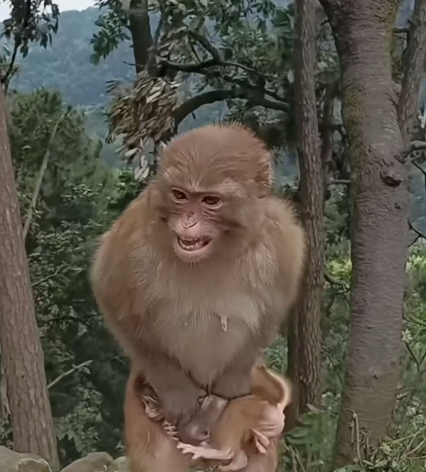
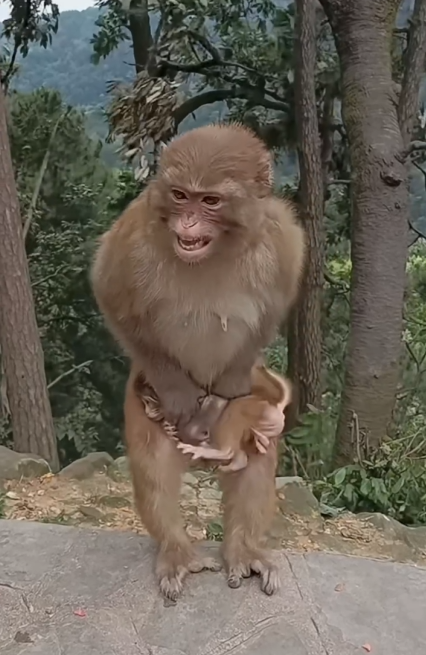
At first glance, the scene can be difficult to watch. A mother animal appears tense, restless, and unusually focused on her baby. Her movements may seem rough or strange to someone unfamiliar with animal behavior. To a concerned observer, it might even look like she is hurting her baby. But in reality, the situation is very different. She is scared, yes—but she is not harming her baby. What she is actually doing is something deeply natural and instinctive: scent marking.
In the animal kingdom, scent is one of the most powerful ways of communication. Many species rely far more on smell than on sight or sound. To them, scent carries information about identity, safety, territory, and family bonds. A mother marking her baby with her scent is not an act of aggression. It is an act of protection.
When a mother animal becomes frightened or feels that her environment is unsafe, her instincts immediately shift toward protecting her offspring. Fear can come from many sources: unfamiliar humans nearby, new smells in the environment, predators in the distance, loud noises, or even changes in weather. For animals that live in the wild or semi-wild environments, survival depends on reacting quickly to these threats.
In these moments of stress, the mother’s behavior may become more intense. She may repeatedly touch, lick, rub, or move her baby. To someone watching without understanding the context, the behavior might look alarming. However, these actions are actually part of a biological system that strengthens the bond between mother and child.
Scent marking works by transferring the mother’s smell onto her baby. This smell acts almost like an invisible signature. It tells other animals that the baby belongs to her. In many species, this scent helps the mother identify her own offspring among others. In social animals—like monkeys, dogs, cats, and many mammals—this identification is crucial. Without scent recognition, confusion could occur, especially in environments where multiple babies are present.
Another important purpose of scent marking is protection. Predators and other animals often rely on smell when hunting or exploring territory. When a baby carries the strong scent of its mother, it can signal that the baby is not alone. In some cases, it may even discourage other animals from approaching.
For primates in particular, scent and touch are essential components of maternal care. Mothers frequently groom their babies, hold them close, and rub against them. Grooming is not just about cleaning—it is also about bonding and communication. When a mother grooms or marks her baby with scent, she is reinforcing the relationship between them.
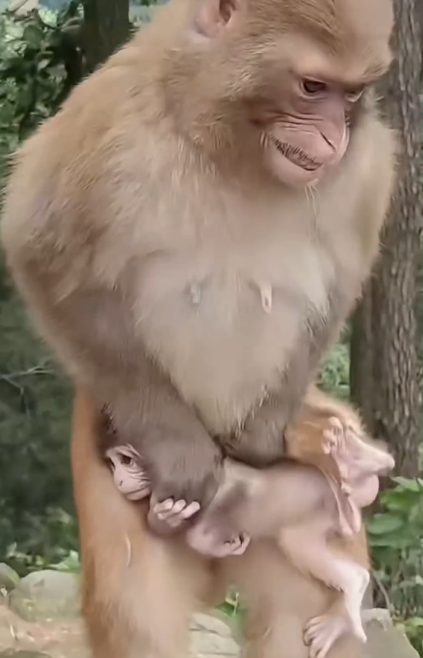
Fear can make these behaviors more frequent or more urgent. Imagine being responsible for a fragile newborn in a world full of potential dangers. The mother’s instincts push her to ensure that her baby smells like her, stays close to her, and remains under her protection at all times.
It’s also important to remember that animals do not express fear in the same way humans do. When people are scared, they might freeze, run away, or call for help. Animals, however, often respond through heightened activity. Their bodies are flooded with adrenaline, sharpening their senses and triggering instinctive actions designed to keep their offspring safe.
Observers sometimes misinterpret these instinctive behaviors. Social media videos and short clips can make situations look more dramatic than they really are. Without context, viewers might assume that a mother animal is acting aggressively toward her baby. But those who are familiar with animal behavior often recognize the signs of scent marking and protective grooming.
In fact, many wildlife experts and caretakers point out that such behaviors are signs of a strong maternal instinct. A mother who ignores her baby or shows no interest would actually be far more concerning. Attention, grooming, scent marking, and close contact all demonstrate that the mother is actively caring for her young.
Another factor to consider is that babies themselves are often quite resilient. They may squeak, wiggle, or protest when their mother handles them, but that does not necessarily mean they are being harmed. Young animals frequently vocalize even during normal grooming or repositioning.
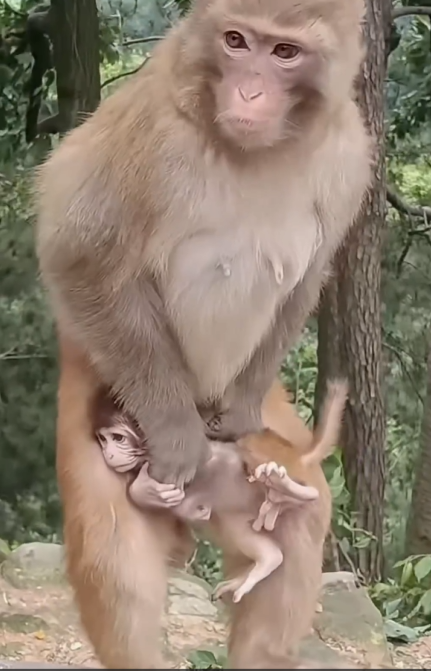
From a biological perspective, the relationship between mother and baby is one of the most powerful forces in nature. Evolution has shaped countless instincts to ensure that mothers protect their young. Scent marking is simply one of the many tools animals use to achieve that goal.
When we observe animals, it’s important to approach the situation with patience and understanding. Human emotions can sometimes lead us to project our own interpretations onto animal behavior. While compassion is valuable, accurate knowledge helps us interpret what we are seeing more clearly.
In this case, the mother is scared. Her environment may feel threatening or unfamiliar. But her reaction is not cruelty—it is instinct. She is reinforcing the bond with her baby, ensuring that her scent is strong and recognizable, and preparing to protect her child if danger appears.
Rather than harming her baby, she is doing exactly what nature designed her to do.
Watching these moments can actually offer a powerful reminder of how deeply maternal instincts run throughout the animal world. Whether it is a monkey holding her infant tightly, a dog licking her puppies, or a cat grooming her kittens, the underlying message is the same: protection, recognition, and love.
So while the scene may initially look worrying, understanding the behavior reveals something very different. The mother is afraid, but she is not hurting her baby. She is marking, protecting, and caring for it in the only way she knows how—through instinct, scent, and the timeless bond between mother and child.